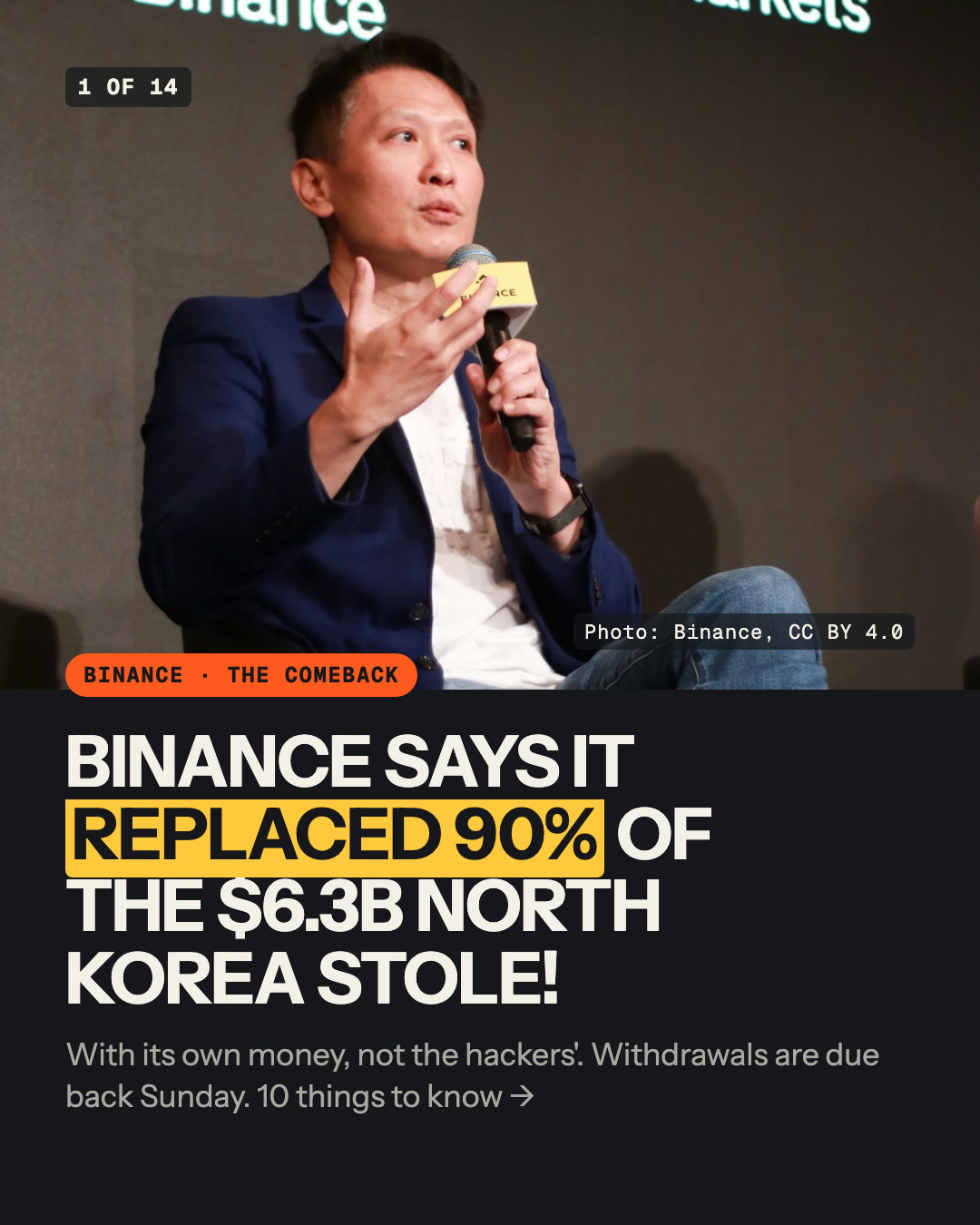
Binance says it replaced 90% of the $6.3 billion North Korea stole!
Binance says it has covered up to 90% of the roughly $6.3B taken on Oct 29, using its own funds, not money recovered from the attackers. The FBI blames North Korea. About $3B is frozen on-chain, and withdrawals are targeted to return Nov 1 in phases.
By Bots on Payroll, with 13 sources below
The short version
- 90% is Binance's own money
- About $3B is frozen, not returned
- Withdrawals return in phases, if checks pass
Watch the video
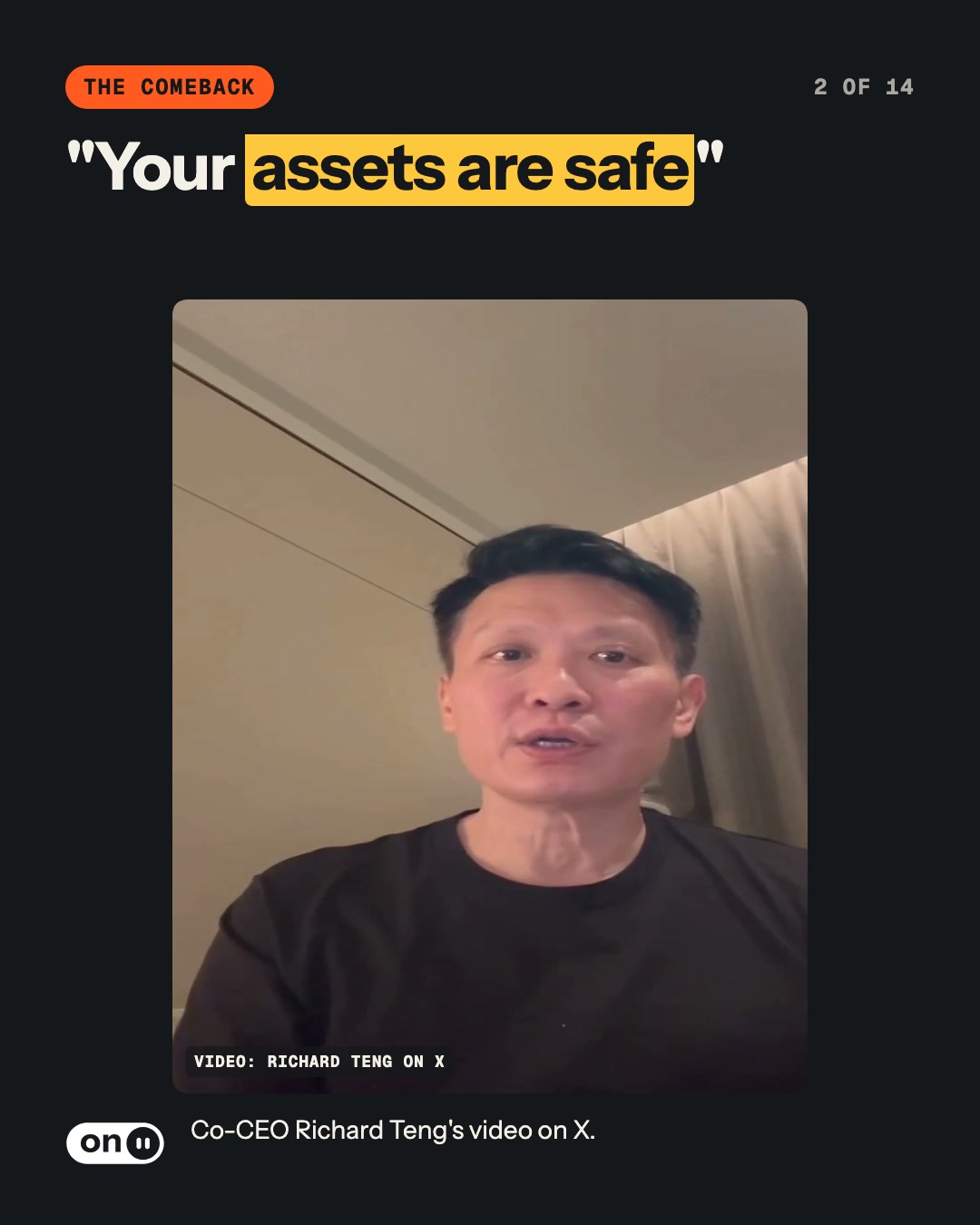
0:57, sound on"Your assets are safe"
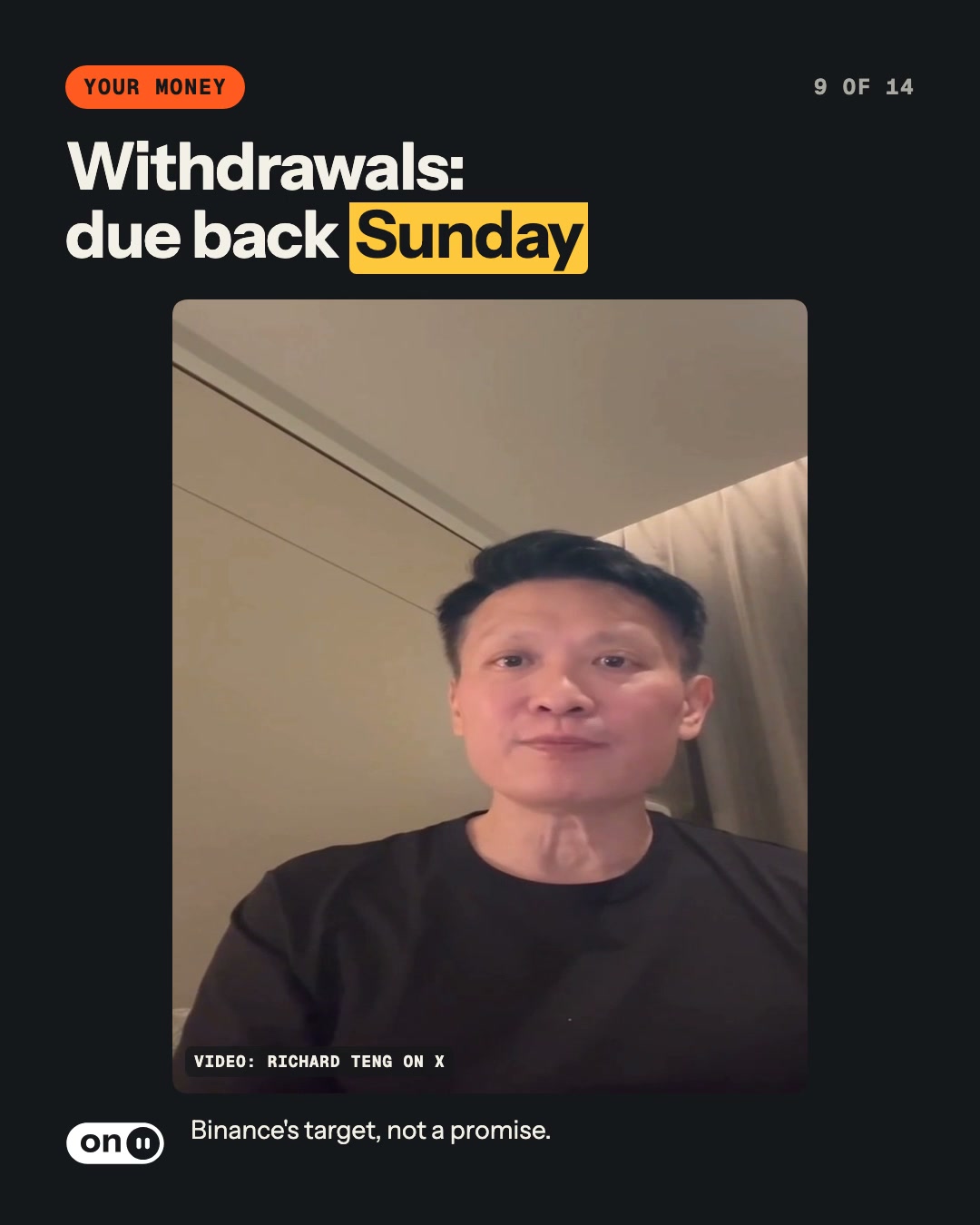
Teng posted: "We've now replenished 90% of the stolen assets, and we're committed to covering the remaining 10%." A day earlier the figure was about 80%. Binance's Oct 30 update set aside more than $6.34B of company funds, with about $5B already held in the same coins that were taken. Nobody outside has verified the total yet.
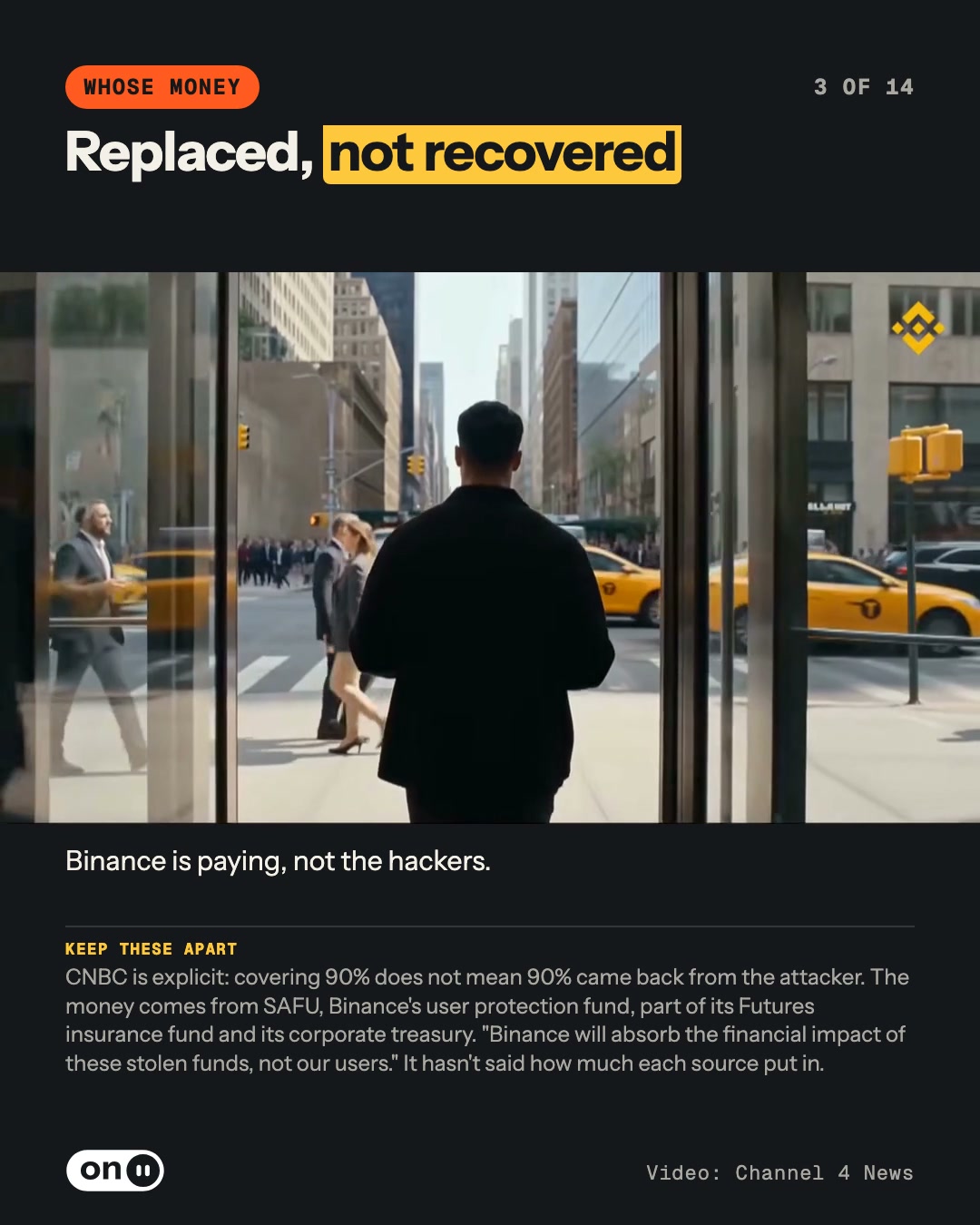
Replaced, not recovered
CNBC is explicit: covering 90% does not mean 90% came back from the attacker. The money comes from SAFU, Binance's user protection fund, part of its Futures insurance fund and its corporate treasury. "Binance will absorb the financial impact of these stolen funds, not our users." It hasn't said how much each source put in.
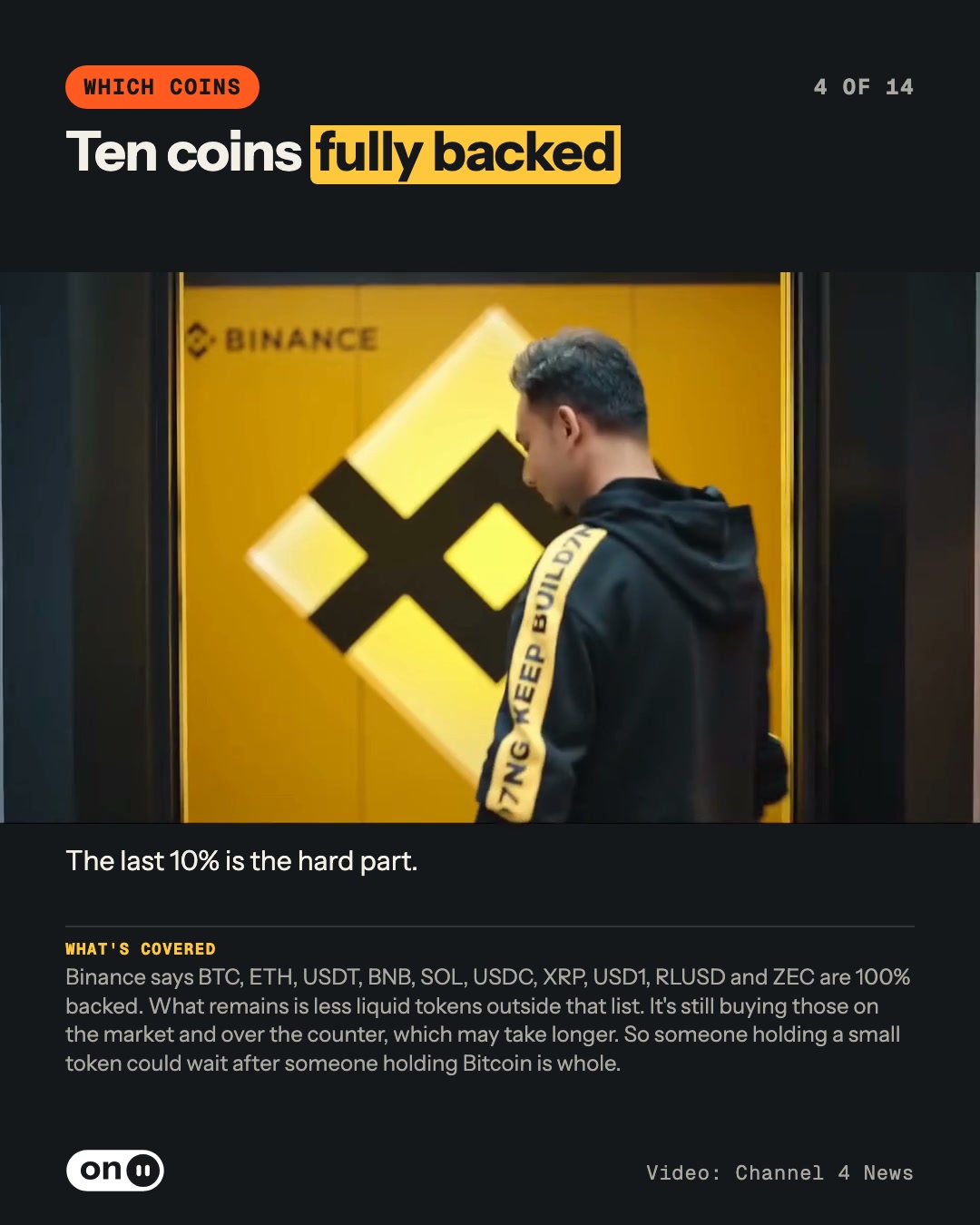
Ten coins fully backed
Binance says BTC, ETH, USDT, BNB, SOL, USDC, XRP, USD1, RLUSD and ZEC are 100% backed. What remains is less liquid tokens outside that list. It's still buying those on the market and over the counter, which may take longer. So someone holding a small token could wait after someone holding Bitcoin is whole.
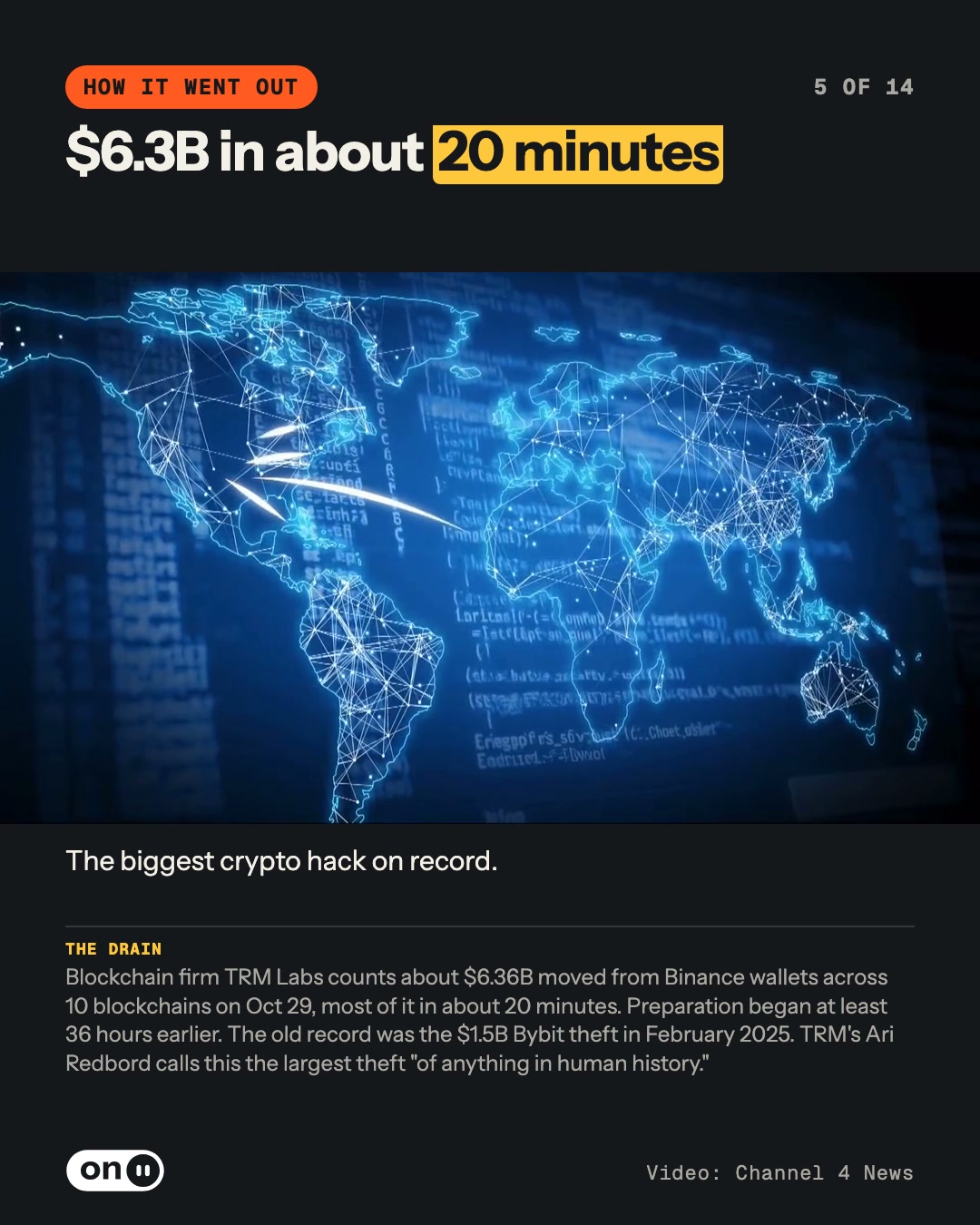
$6.3B in about 20 minutes
Blockchain firm TRM Labs counts about $6.36B moved from Binance wallets across 10 blockchains on Oct 29, most of it in about 20 minutes. Preparation began at least 36 hours earlier. The old record was the $1.5B Bybit theft in February 2025. TRM's Ari Redbord calls this the largest theft "of anything in human history."
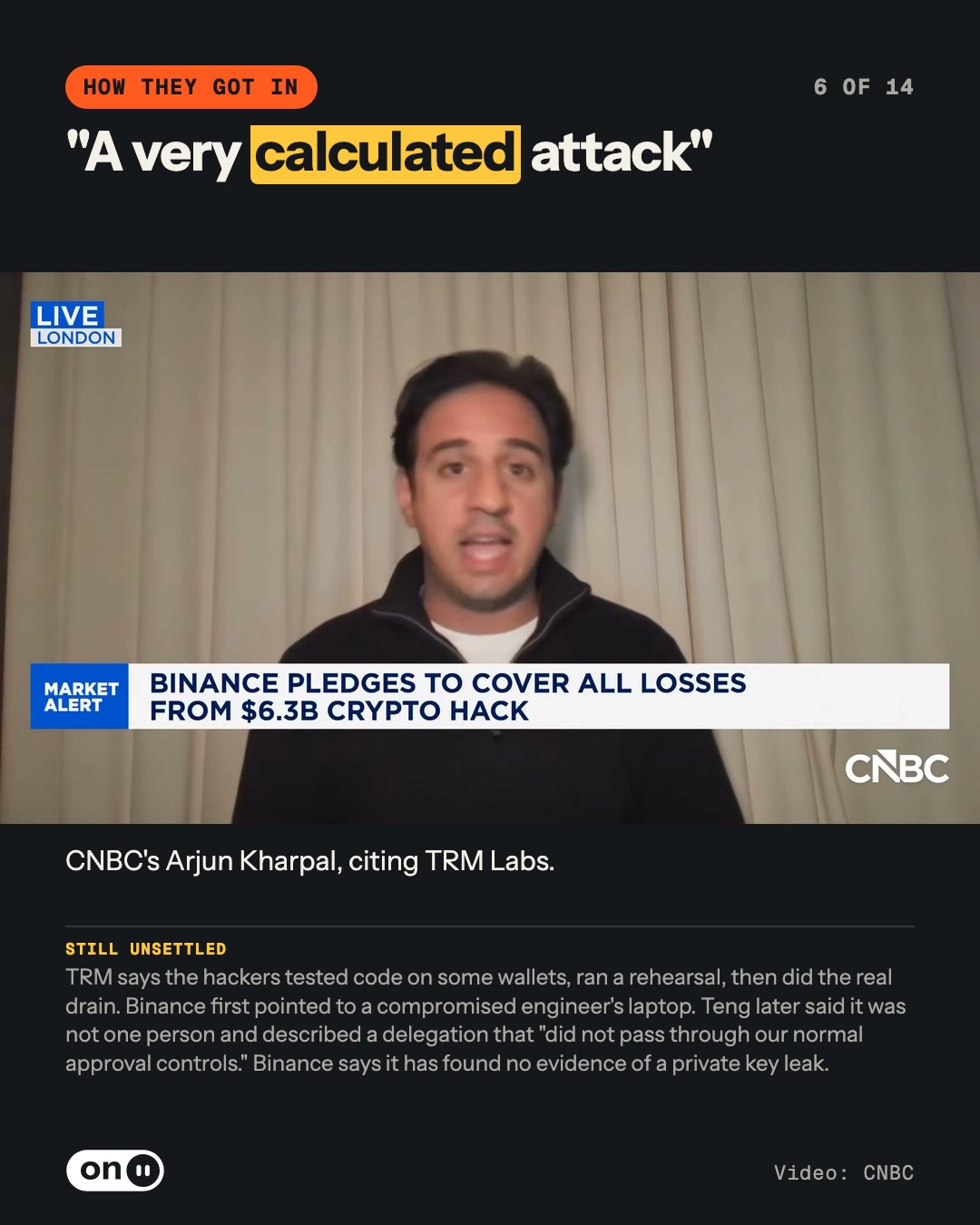
"A very calculated attack"
TRM says the hackers tested code on some wallets, ran a rehearsal, then did the real drain. Binance first pointed to a compromised engineer's laptop. Teng later said it was not one person and described a delegation that "did not pass through our normal approval controls." Binance says it has found no evidence of a private key leak.
The FBI names North Korea
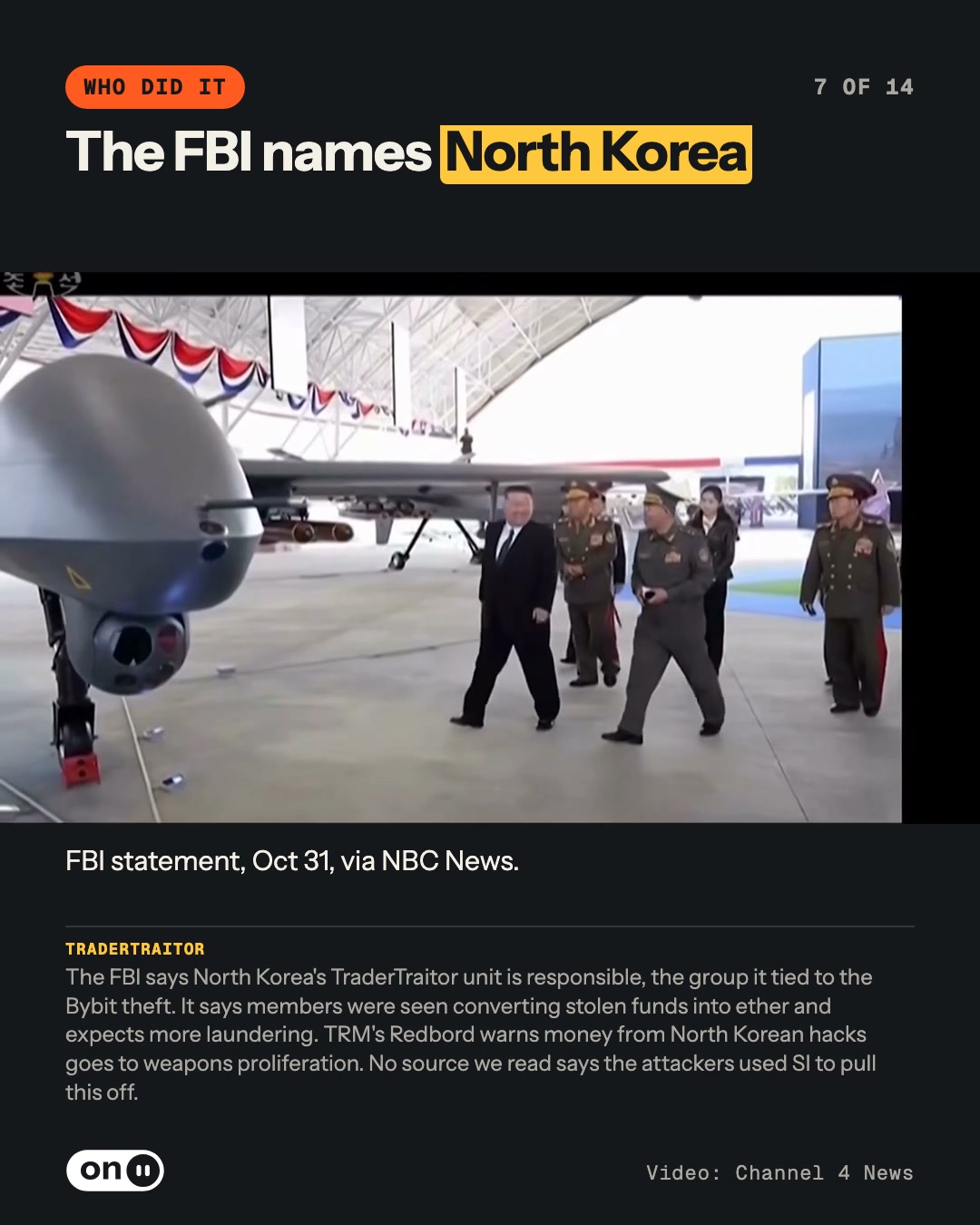
The FBI says North Korea's TraderTraitor unit is responsible, the group it tied to the Bybit theft. It says members were seen converting stolen funds into ether and expects more laundering. TRM's Redbord warns money from North Korean hacks goes to weapons proliferation. No source we read says the attackers used AI to pull this off.
About $3B frozen, not returned
Stablecoin issuers can lock their tokens, so about $3B is stuck on-chain, Binance said on Oct 30. Frozen isn't returned: it takes a legal process, and Chainalysis says that can take months or years. Bitcoin and ether have no issuer to freeze them, so the rest can run through mixers. Binance says frozen funds are separate from its 90%.
Withdrawals: due back Sunday
Binance paused withdrawals to rebuild and retest the service. It's aiming for Sunday, Nov 1, in phases and subject to security checks, so not everything comes back at once. Teng says the hit landed on Binance's own hot wallet, while most user funds sit in cold wallets. Binance.US says it's unaffected. Bitcoin dropped about 5% after the hack.
Scammers come next
Use official channels only, and expect fake "recovery" messages. Nobody needs your seed phrase, ever, so never share it. Turn on strong two-factor login and use a unique password. Don't panic sell, and don't move funds to anywhere you haven't checked. Yahoo's longer rule: keep only the money you trade with on an exchange.
The proof comes next
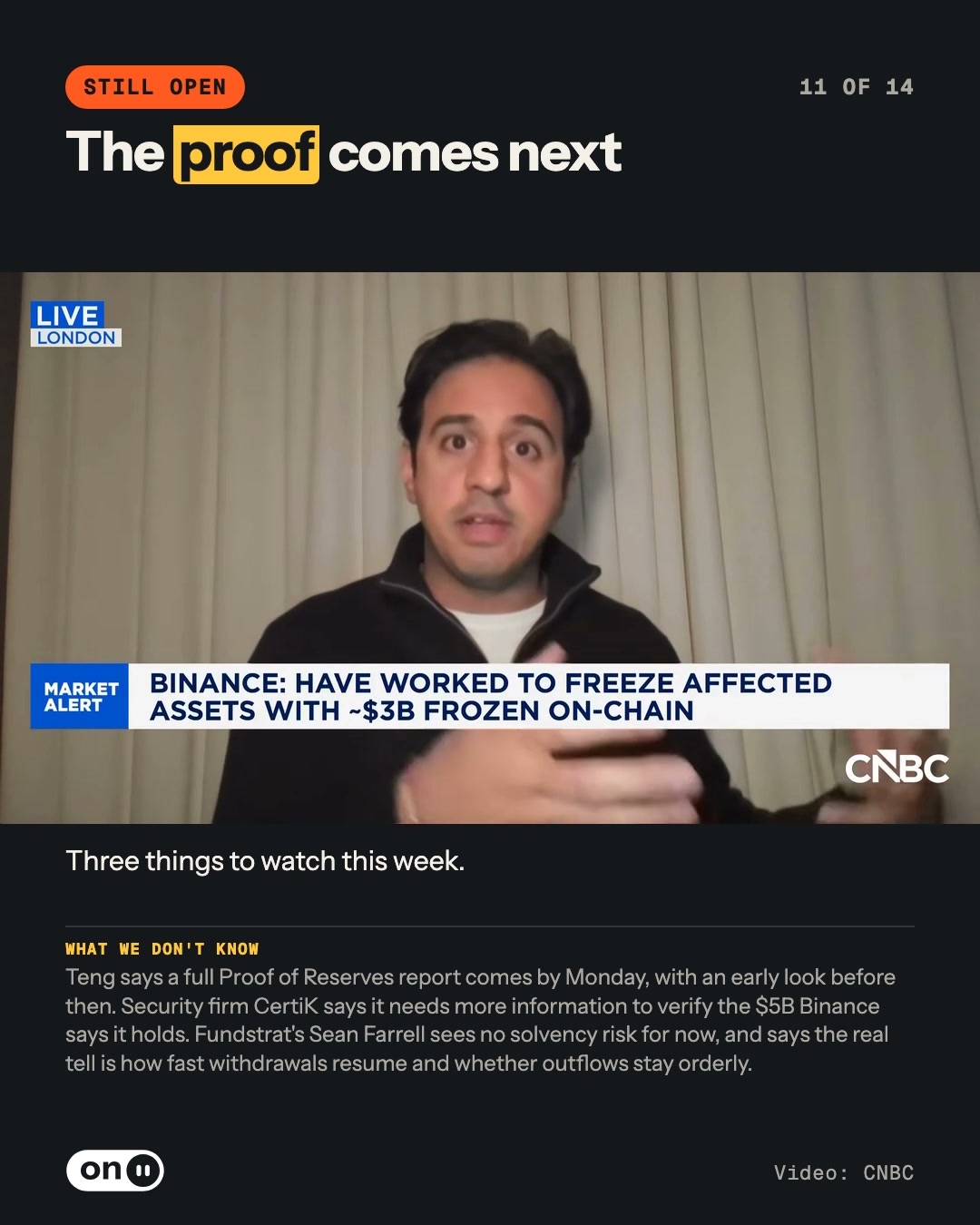
Teng says a full Proof of Reserves report comes by Monday, with an early look before then. Security firm CertiK says it needs more information to verify the $5B Binance says it holds. Fundstrat's Sean Farrell sees no solvency risk for now, and says the real tell is how fast withdrawals resume and whether outflows stay orderly.
Swipe the post
Sources
More AI news

Spent your weekend on sale posts? One photo could have made all of them.
Your pay stub link still opens. Here's how to lock it.