$86 billion in Bitcoin, and still no name on it!
Researchers tie about 1.1 million coins to Satoshi Nakamoto, about $86B at the Nov 1 price, and they have never moved. The New York Times used AI tools to name Adam Back, who denies it. A new film says it was two people.
By Bots on Payroll, with 9 sources below
The short version
- The whitepaper was emailed out on Oct 31, 2008
- The coins tied to Satoshi have never moved
- No one has produced a signature from Satoshi's keys
Watch the video
0:59, sound onOne email changed money
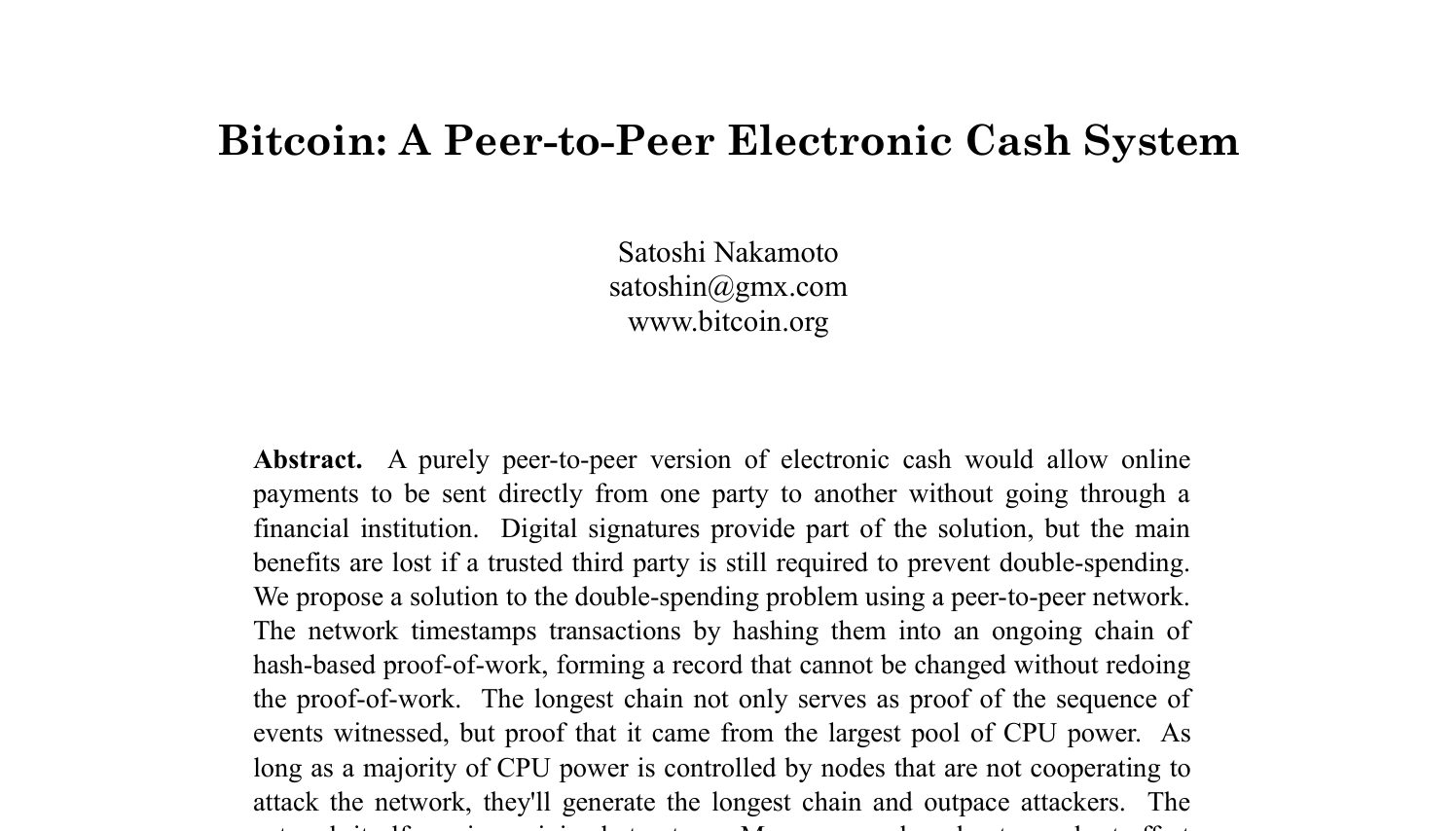
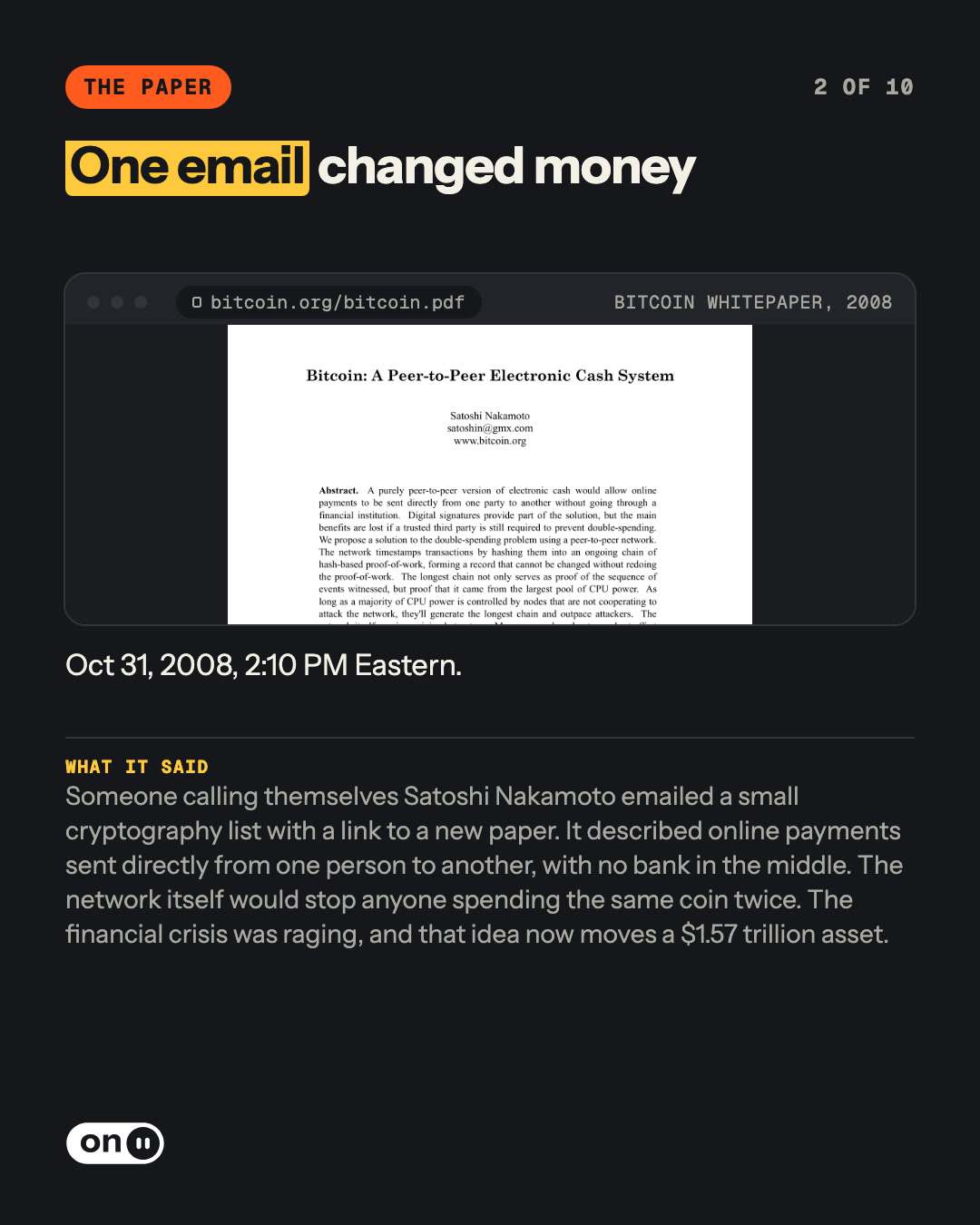
Someone calling themselves Satoshi Nakamoto emailed a small cryptography list with a link to a new paper. It described online payments sent directly from one person to another, with no bank in the middle. The network itself would stop anyone spending the same coin twice. The financial crisis was raging, and that idea now moves a $1.57 trillion asset.
Then Satoshi went dark
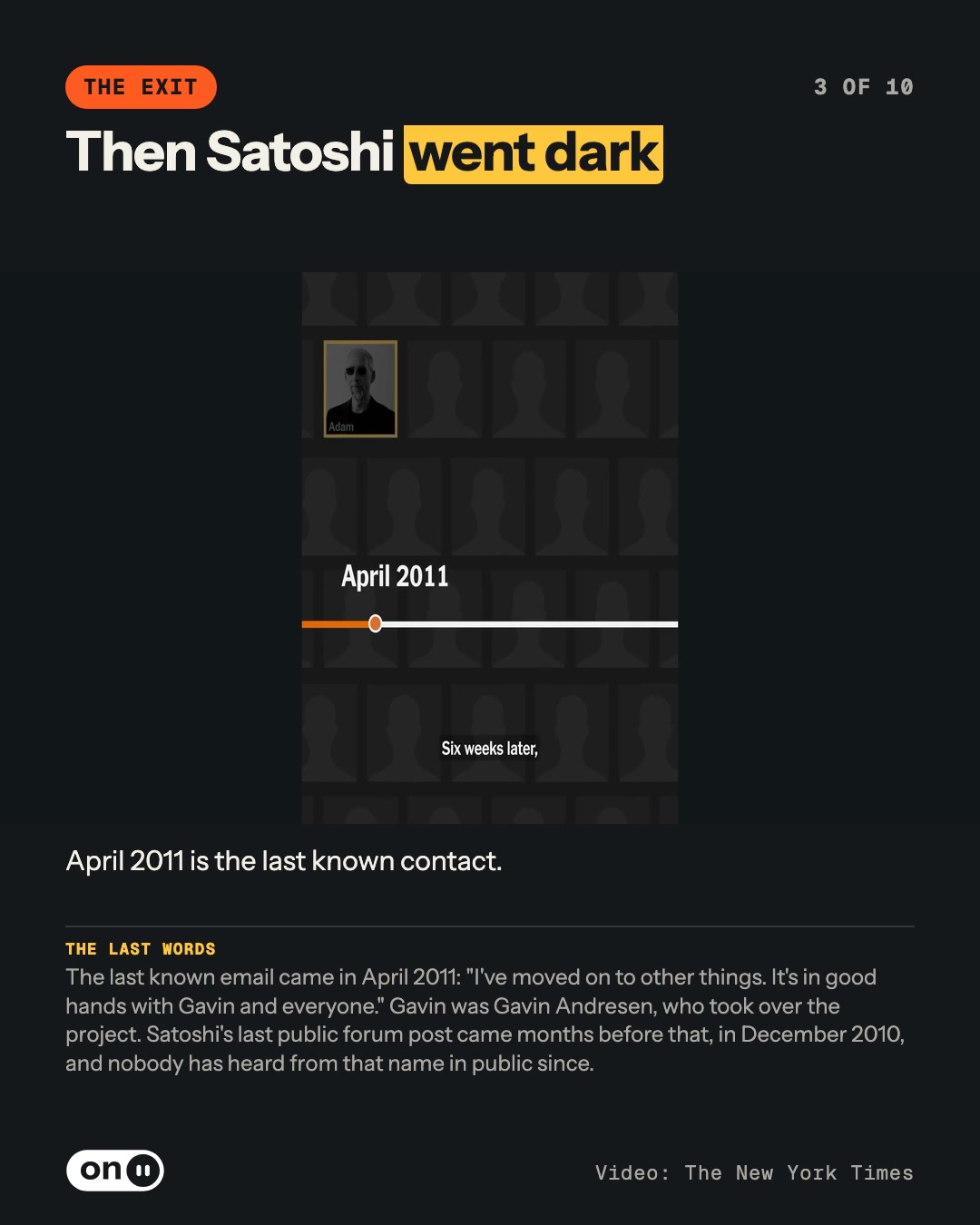
The last known email came in April 2011: "I've moved on to other things. It's in good hands with Gavin and everyone." Gavin was Gavin Andresen, who took over the project. Satoshi's last public forum post came months before that, in December 2010, and nobody has heard from that name in public since.
About 1.1M coins, never moved
Researcher Sergio Lerner spotted a pattern in about 22,000 early blocks that looks like one miner. At 50 coins a block, that is an estimated 1.1 million Bitcoin, and none of it has ever moved. That link to Satoshi is an inference, not a proven fact. Spending any of it would take the private keys, so it just sits there in public view.
AI tools, one name
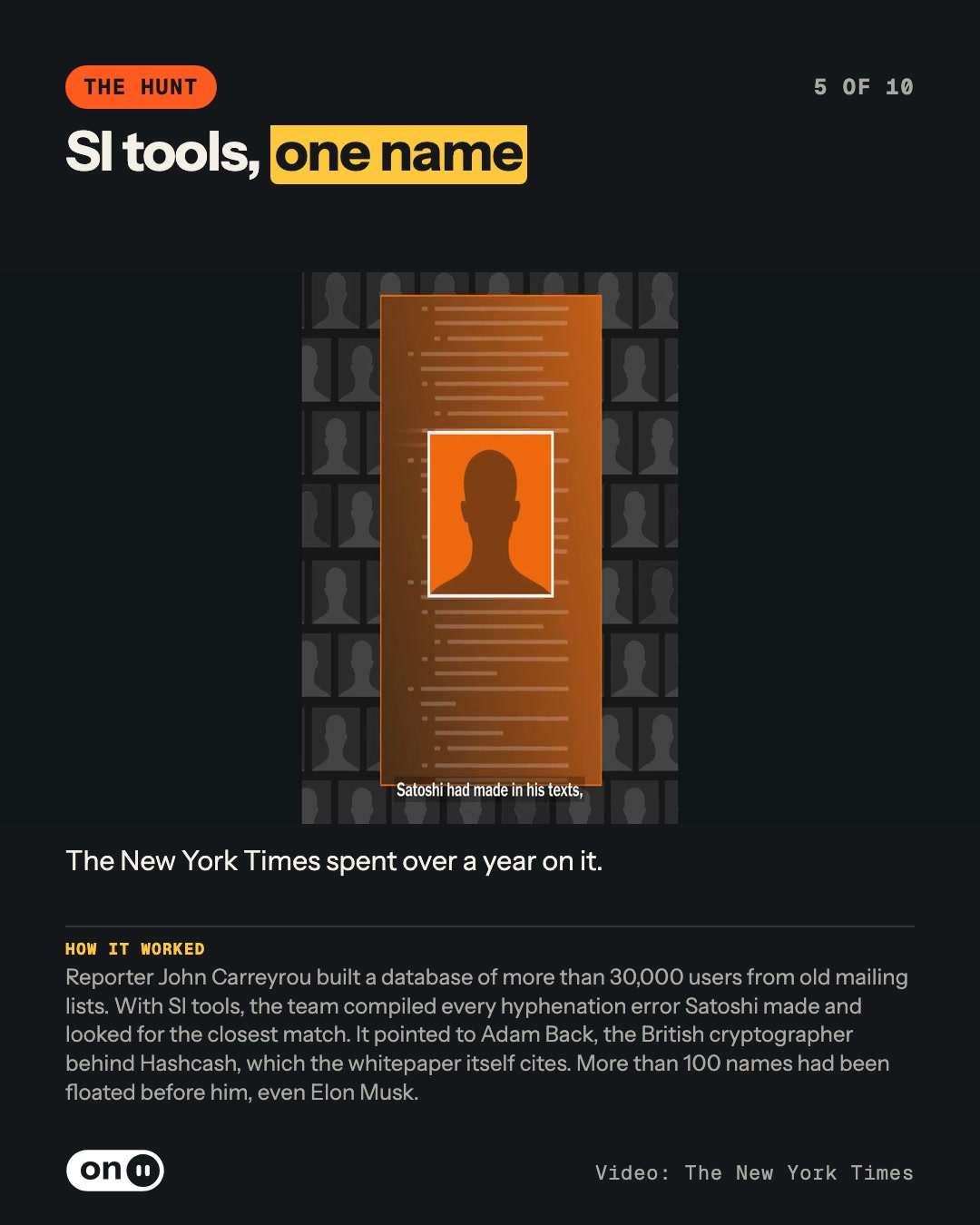
Reporter John Carreyrou built a database of more than 30,000 users from old mailing lists. With AI tools, the team compiled every hyphenation error Satoshi made and looked for the closest match. It pointed to Adam Back, the British cryptographer behind Hashcash, which the whitepaper itself cites. More than 100 names had been floated before him, even Elon Musk.
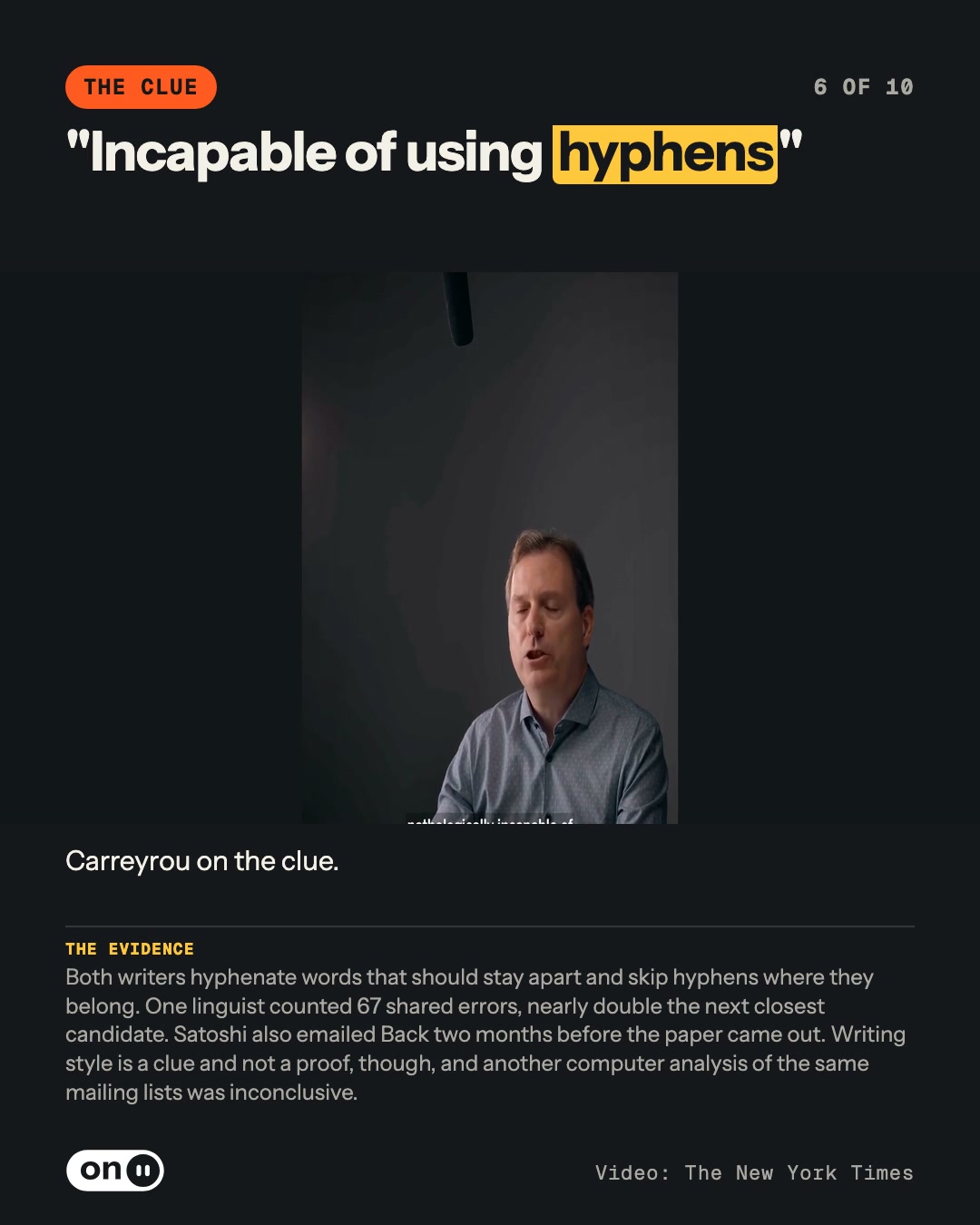
"Incapable of using hyphens"
Both writers hyphenate words that should stay apart and skip hyphens where they belong. One linguist counted 67 shared errors, nearly double the next closest candidate. Satoshi also emailed Back two months before the paper came out. Writing style is a clue and not a proof, though, and another computer analysis of the same mailing lists was inconclusive.
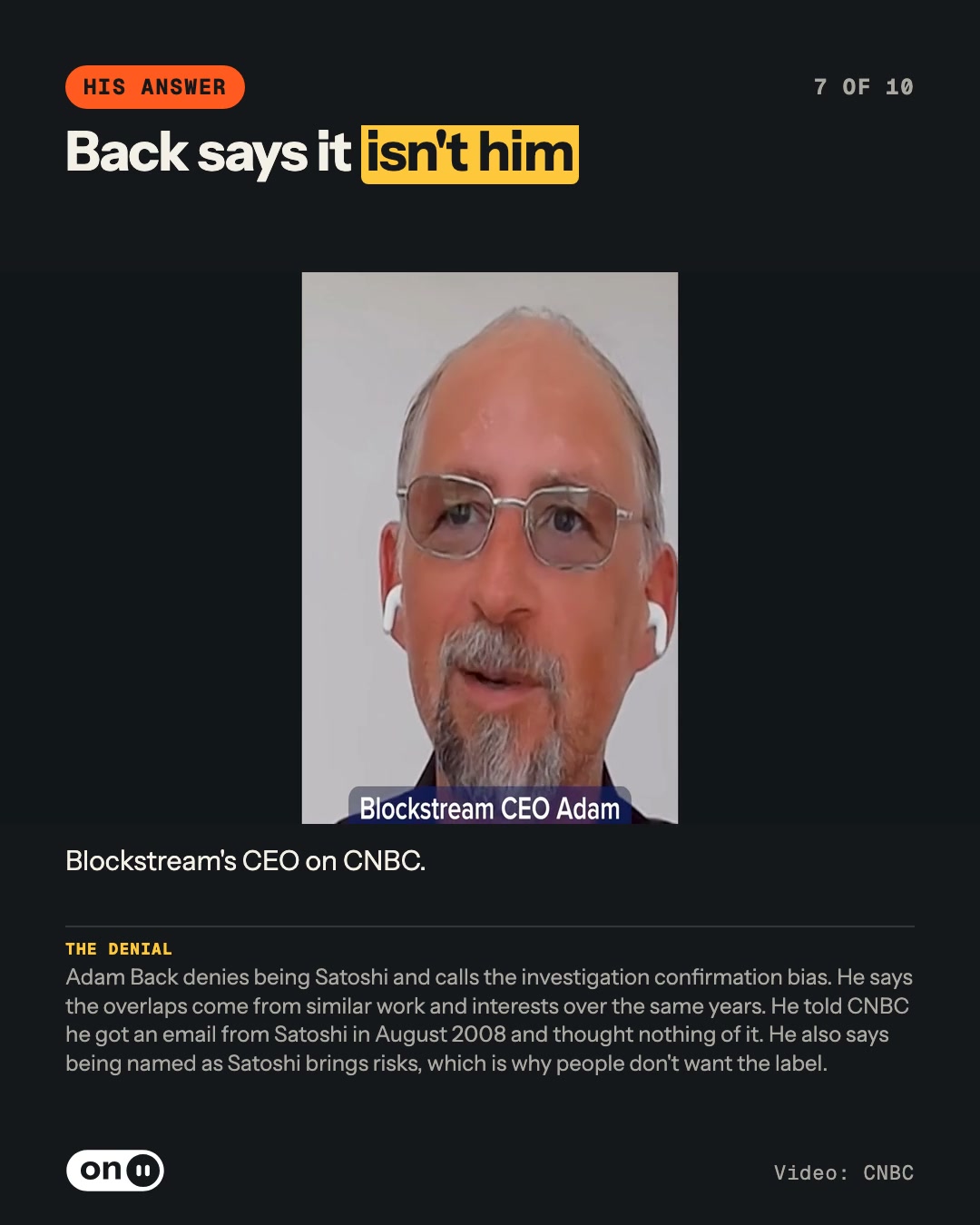
Back says it isn't him
Adam Back denies being Satoshi and calls the investigation confirmation bias. He says the overlaps come from similar work and interests over the same years. He told CNBC he got an email from Satoshi in August 2008 and thought nothing of it. He also says being named as Satoshi brings risks, which is why people don't want the label.
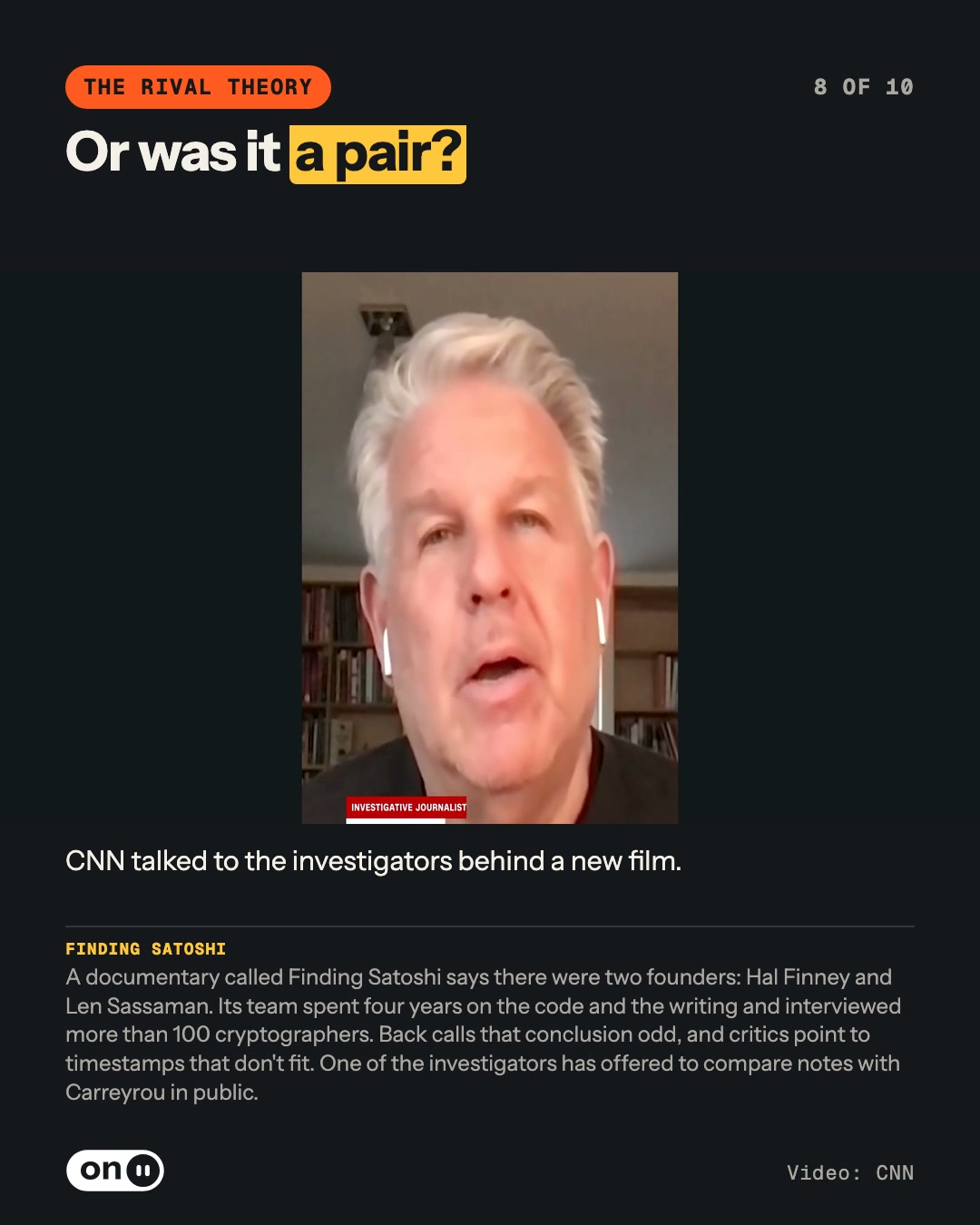
Or was it a pair?
A documentary called Finding Satoshi says there were two founders: Hal Finney and Len Sassaman. Its team spent four years on the code and the writing and interviewed more than 100 cryptographers. Back calls that conclusion odd, and critics point to timestamps that don't fit. One of the investigators has offered to compare notes with Carreyrou in public.
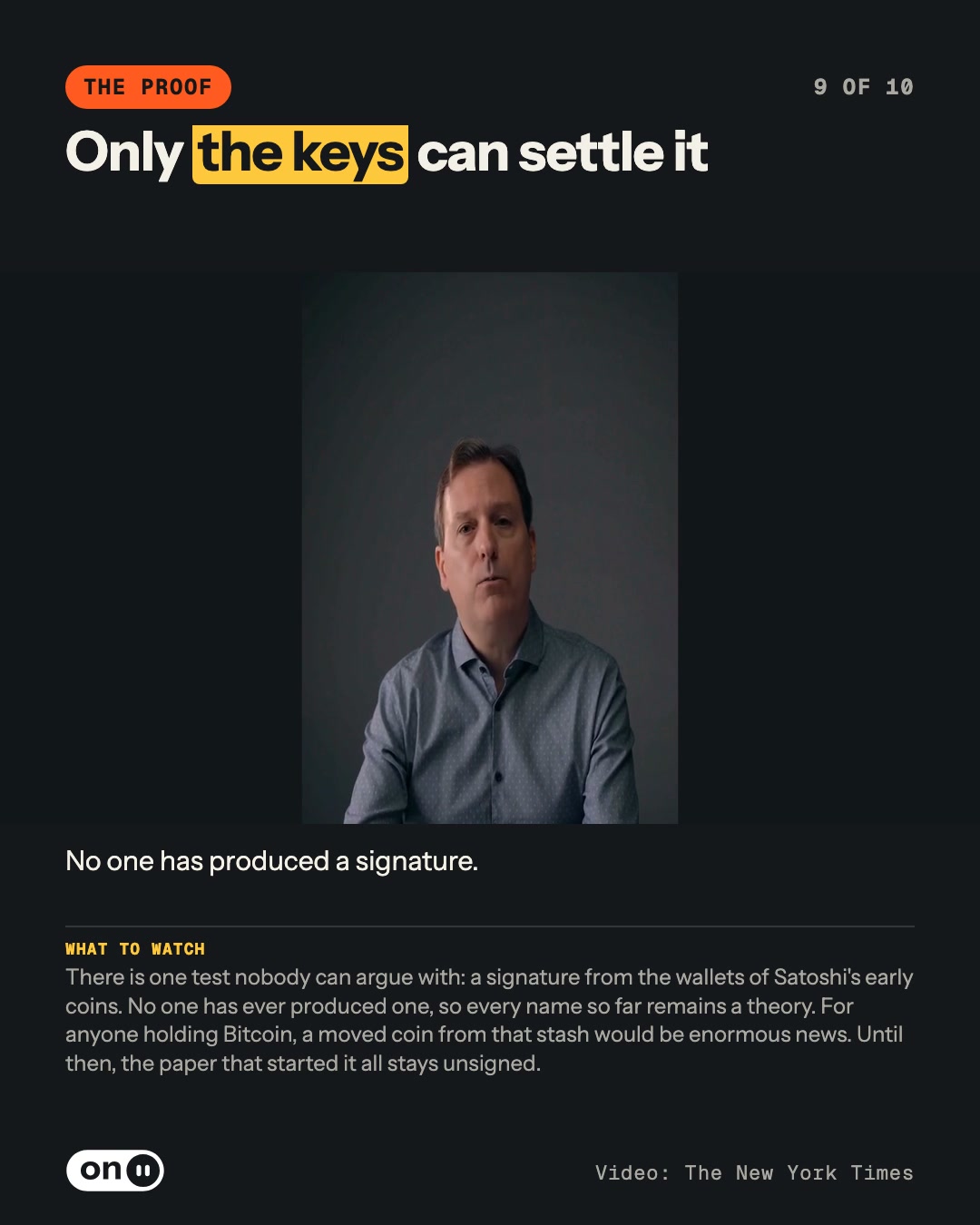
Only the keys can settle it
There is one test nobody can argue with: a signature from the wallets of Satoshi's early coins. No one has ever produced one, so every name so far remains a theory. For anyone holding Bitcoin, a moved coin from that stash would be enormous news. Until then, the paper that started it all stays unsigned.
Swipe the post
Sources
More AI news

Spent your weekend on sale posts? One photo could have made all of them.
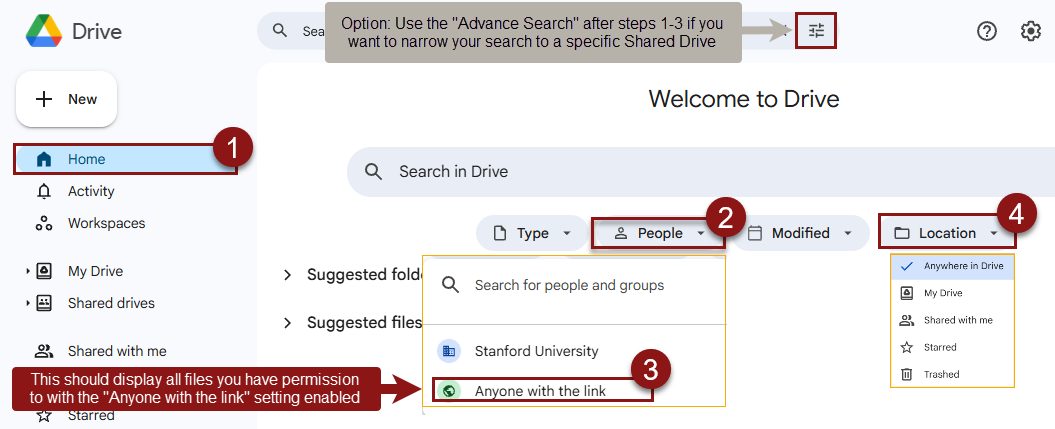
Your pay stub link still opens. Here's how to lock it.