Google's AI just found two cracks in an old lock
Google DeepMind published two papers on Nov 6: two AI agents found ways to make attacks on old 1024-bit RSA keys cheaper. One forged a signature 3.5 times cheaper than the best academic attack. The other estimates every extra key could cost 30 times less to crack, in theory. The 1,600x headline number is an estimate, not a measurement, and DeepMind says 2048-bit keys, the ones your bank and apps use, are not threatened.
By Bots on Payroll, with 6 sources below
The short version
- Two findings, two papers: signature forgery over PKCS#1 v1.5 signing interfaces, and batch factoring of many 1024-bit keys. Work done by DeepMind AI agents under human supervision with cryptographers from UC San Diego and Inria.
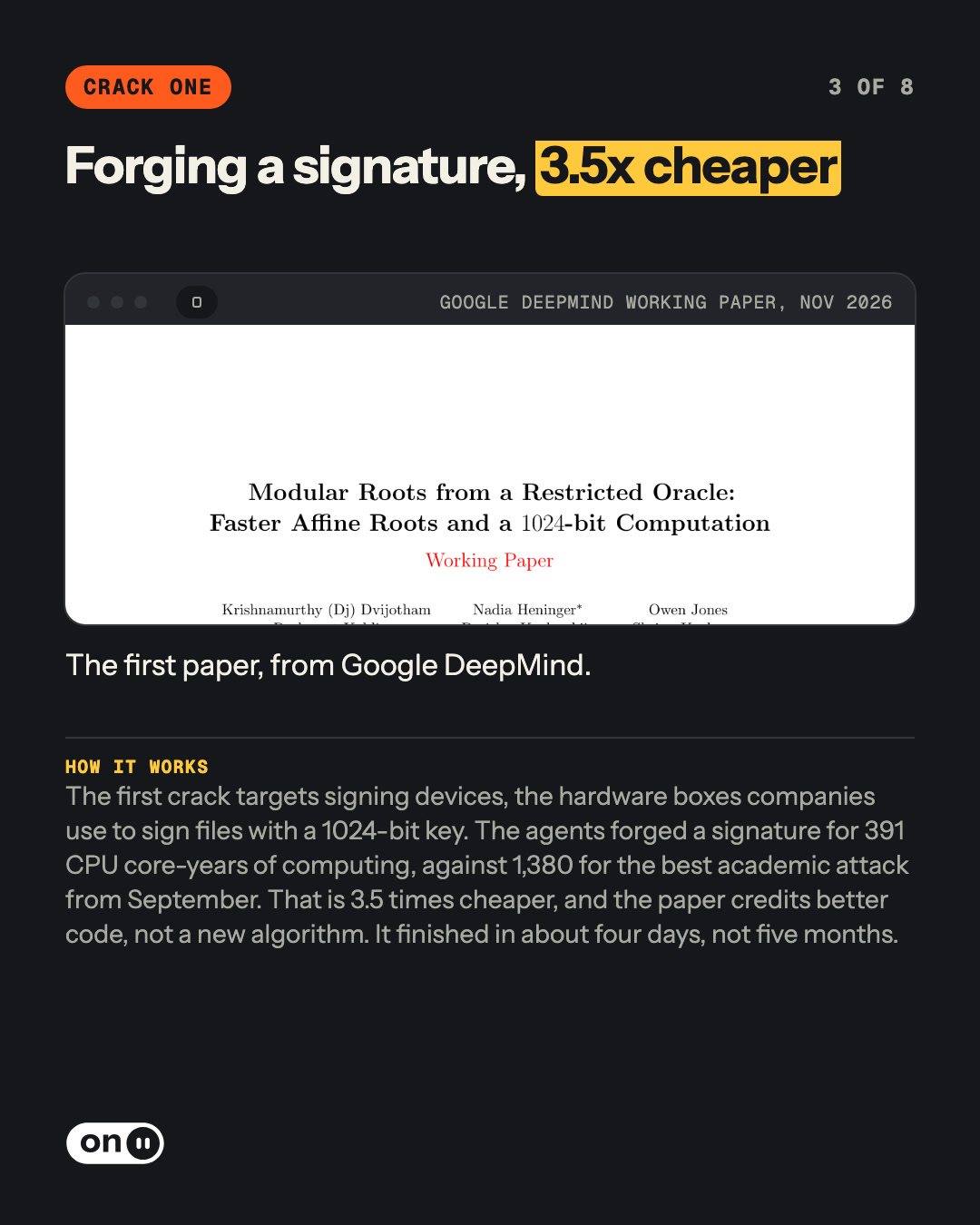
- Paper 1 title and authors: 'Modular Roots from a Restricted Oracle: Faster Affine Roots and a 1024-bit Computation', Google DeepMind working paper, Dj Dvijotham, Pushmeet Kohli, Chirag Pabbaraju, Emmanuel Thome, Nadia Heninger, Borislav Kozlovskii, Robert Stanforth, Nenad Tomasev, Owen Jones, Shrinu Kushagra, Abhradeep Thakurta, Adam Zsolt Wagner. Heninger also UC San Diego/Inria, Thome Inria, Pabbaraju Stanford.
- Measured result: 391 CPU core-years for the first root (318 offline + 73 online) vs 1,380 (1,200 + 180) for the Sept 2026 academic computation; up to 300,000 CPU cores and 16 GPUs; 3.2 days from first full-scale sieving; about 33,500 lines of new code, 336 distributed experiments, about 20 human messages.
Watch the video
0:56, sound onTwo papers, posted Nov 6
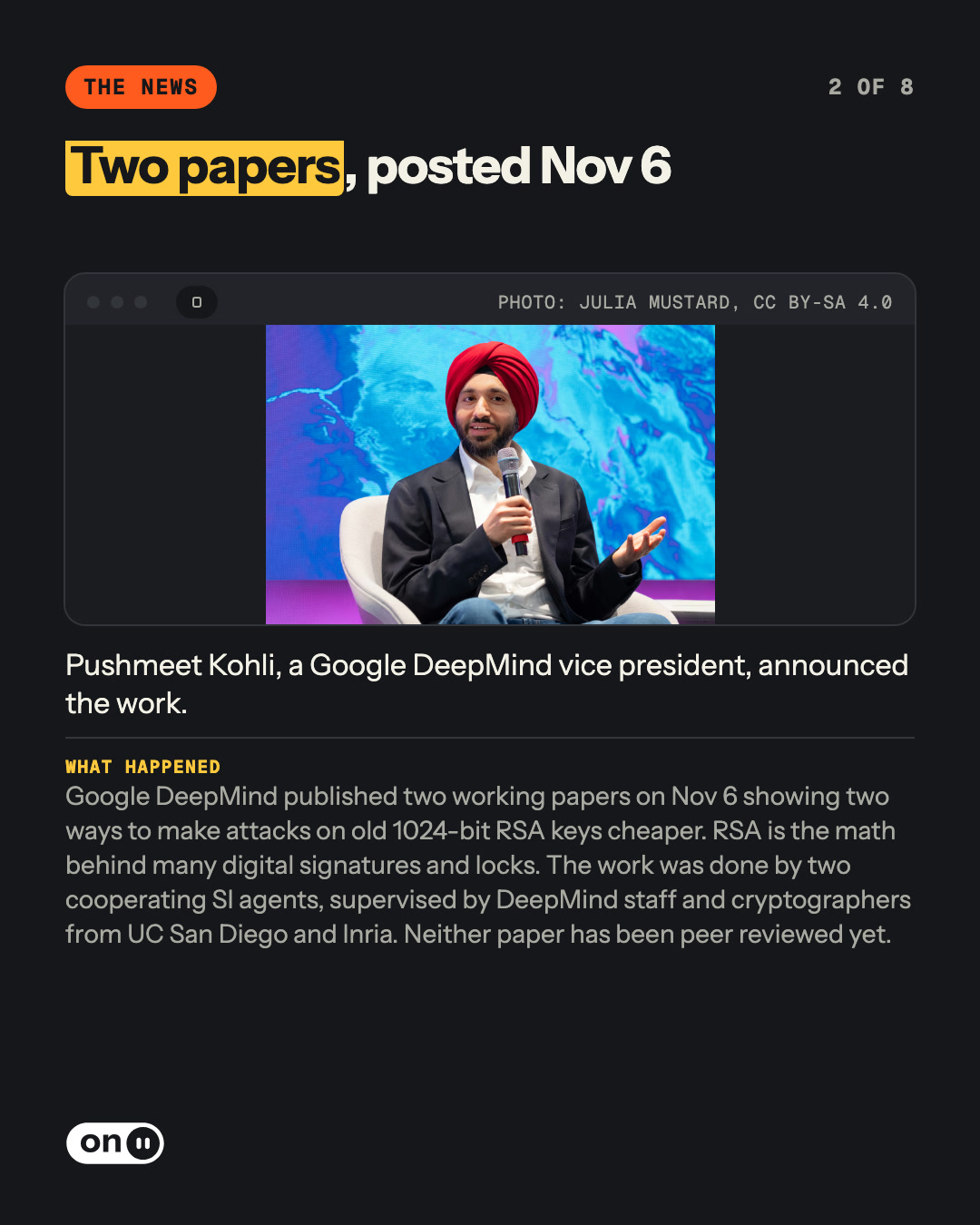
Google DeepMind published two working papers on Nov 6 showing two ways to make attacks on old 1024-bit RSA keys cheaper. RSA is the math behind many digital signatures and locks. The work was done by two cooperating AI agents, supervised by DeepMind staff and cryptographers from UC San Diego and Inria. Neither paper has been peer reviewed yet.
Forging a signature, 3.5x cheaper
The first crack targets signing devices, the hardware boxes companies use to sign files with a 1024-bit key. The agents forged a signature for 391 CPU core-years of computing, against 1,380 for the best academic attack from September. That is 3.5 times cheaper, and the paper credits better code, not a new algorithm. It finished in about four days, not five months.
Every extra key, 30x cheaper
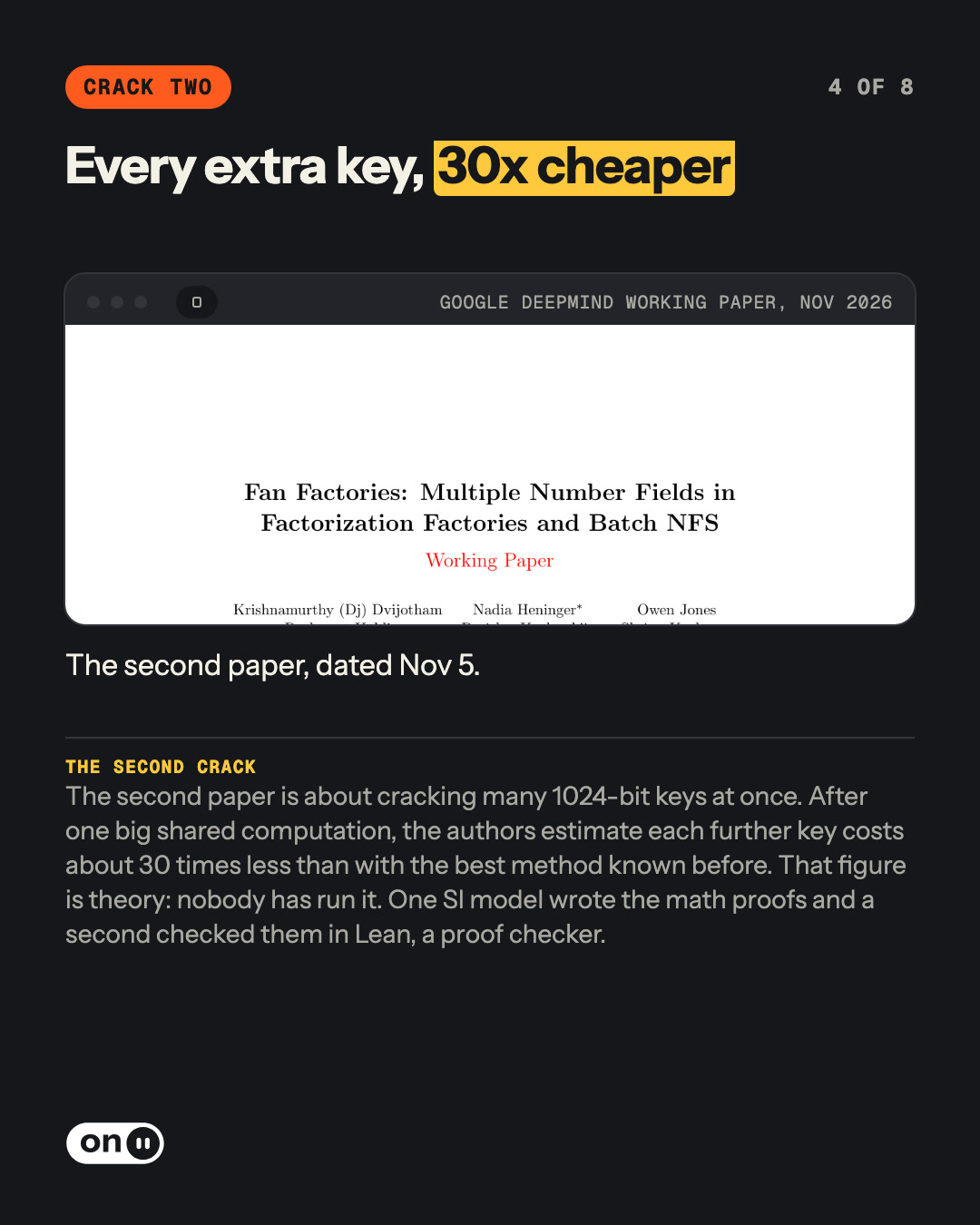
The second paper is about cracking many 1024-bit keys at once. After one big shared computation, the authors estimate each further key costs about 30 times less than with the best method known before. That figure is theory: nobody has run it. One AI model wrote the math proofs and a second checked them in Lean, a proof checker.
Where 1,600x comes from
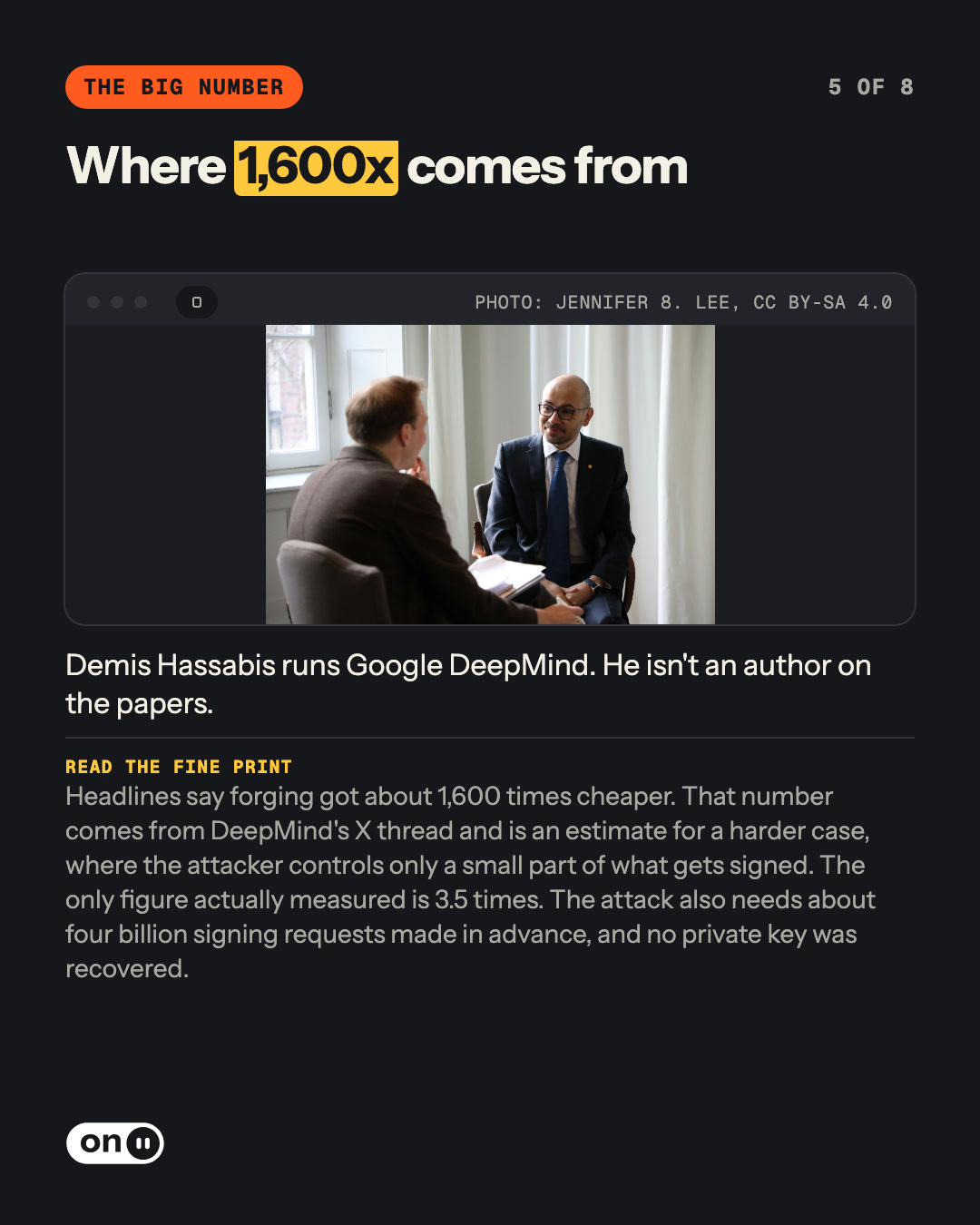
Headlines say forging got about 1,600 times cheaper. That number comes from DeepMind's X thread and is an estimate for a harder case, where the attacker controls only a small part of what gets signed. The only figure actually measured is 3.5 times. The attack also needs about four billion signing requests made in advance, and no private key was recovered.
2048-bit keys are fine
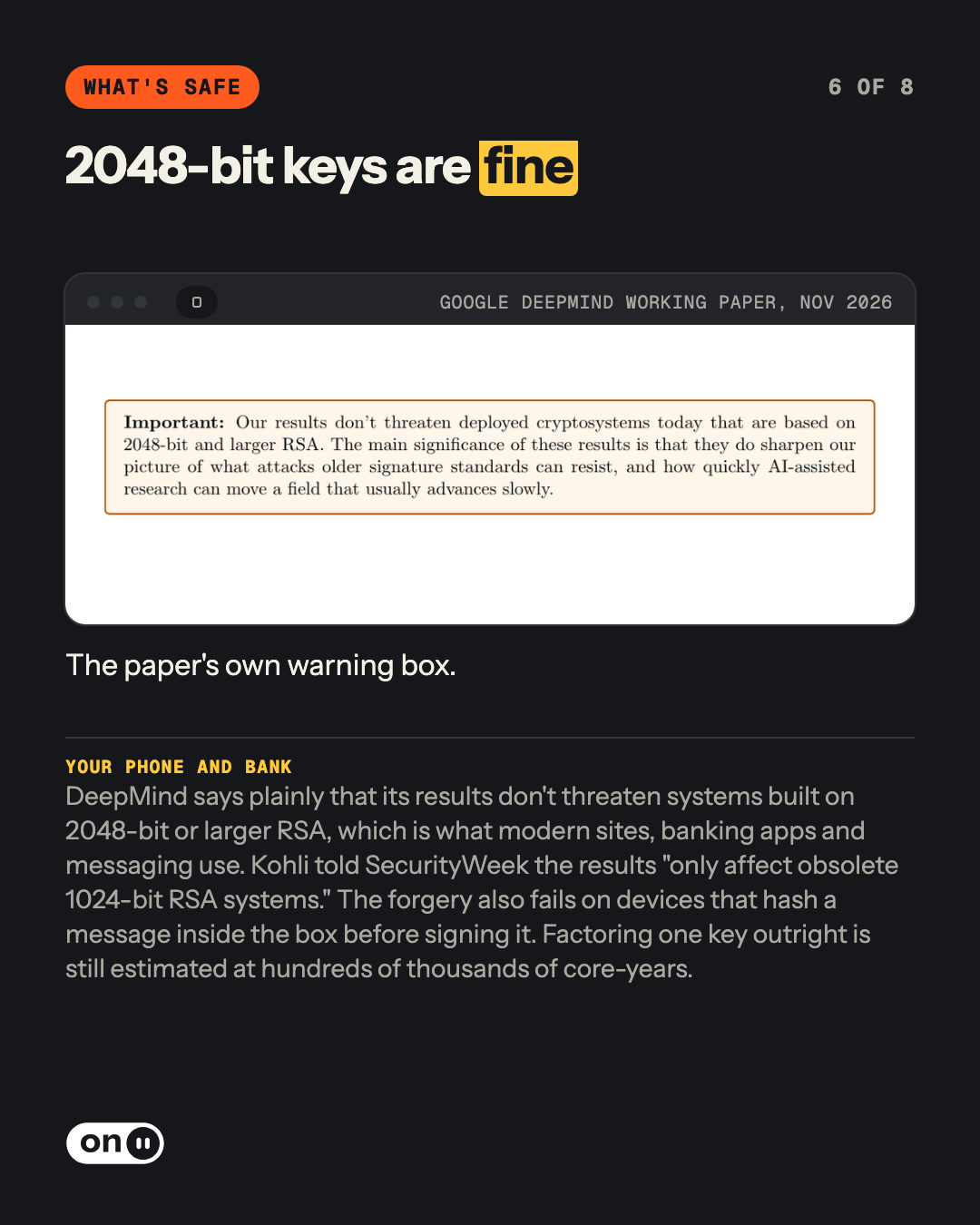
DeepMind says plainly that its results don't threaten systems built on 2048-bit or larger RSA, which is what modern sites, banking apps and messaging use. Kohli told SecurityWeek the results "only affect obsolete 1024-bit RSA systems." The forgery also fails on devices that hash a message inside the box before signing it. Factoring one key outright is still estimated at hundreds of thousands of core-years.
Old signing boxes and email
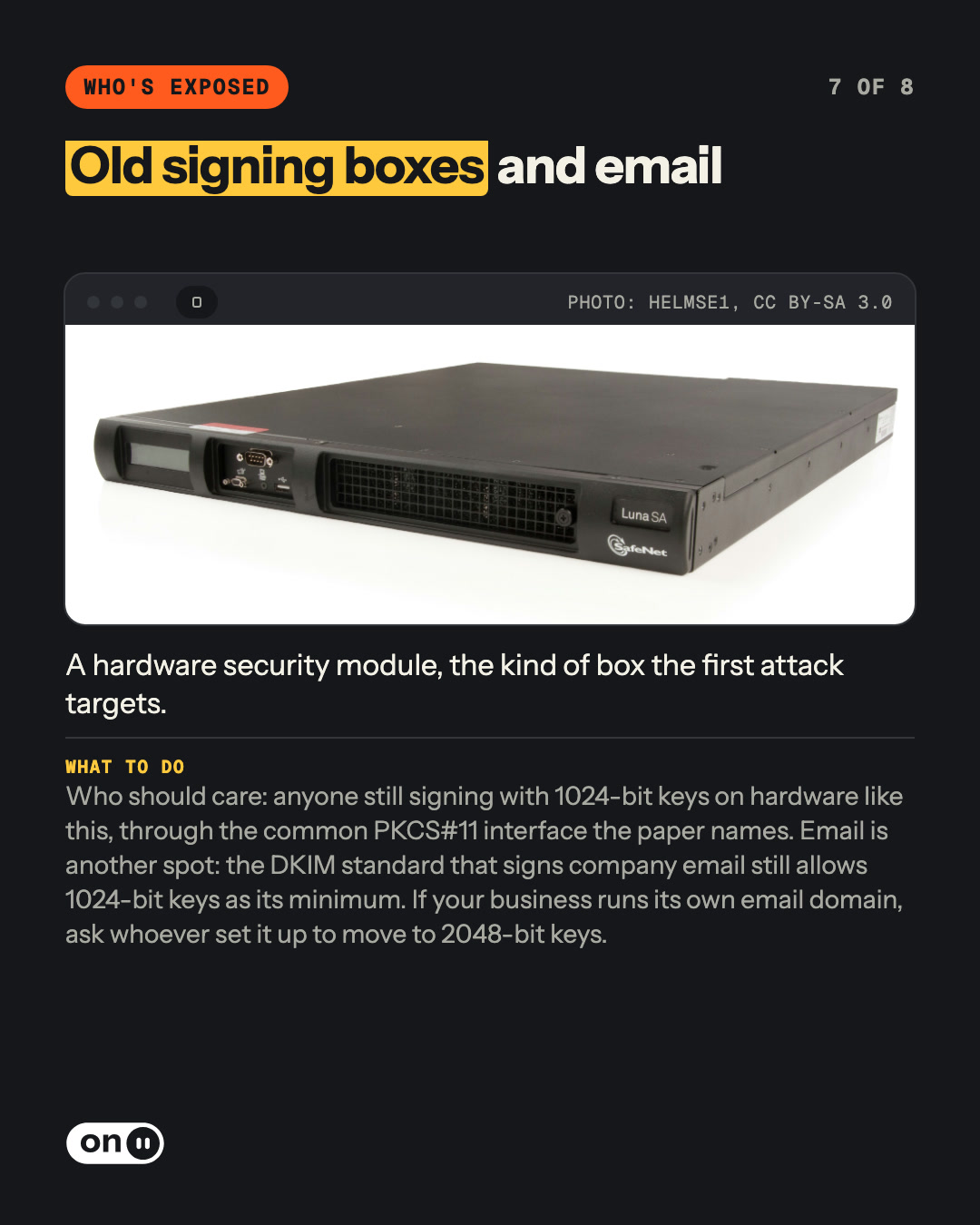
Who should care: anyone still signing with 1024-bit keys on hardware like this, through the common PKCS#11 interface the paper names. Email is another spot: the DKIM standard that signs company email still allows 1024-bit keys as its minimum. If your business runs its own email domain, ask whoever set it up to move to 2048-bit keys.
Swipe the post
Sources
More AI news

Spent your weekend on sale posts? One photo could have made all of them.
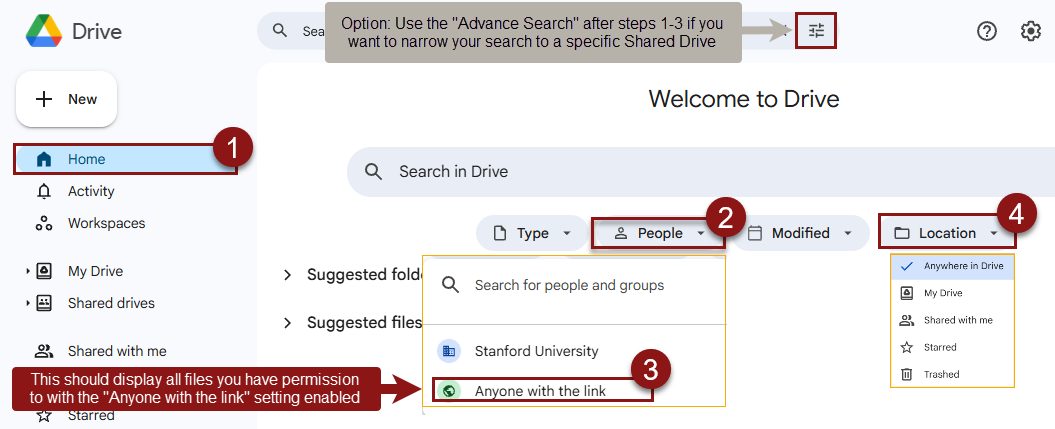
Your pay stub link still opens. Here's how to lock it.