Google's glasses see everything. They show you nothing.
Google opened pre-orders on Nov 12 for its Intelligent Eyewear, built with Samsung: Warby Parker frames from $395, Gentle Monster from $449, on sale Dec 10 in the US and South Korea. There's a 12 MP camera, open-ear speakers and Gemini, but no screen. Against Meta's Ray-Ban Meta Gen 3 ($449, on sale now): same camera and nine-hour battery, Google's frames are lighter (about 41 g), and Google adds more privacy controls (the light stops recording if covered, an off switch, bystanders' faces blurred). Meta has more styles, more mics, and you can buy it today. Early hands-ons split: Tom's Guide favors Google's assistant, Android Authority couldn't find a task they do that your phone can't.
By Bots on Payroll, with 10 sources below

The short version
- Google opened pre-orders for its Intelligent Eyewear on Nov 12, built with Samsung and designed by Warby Parker and Gentle Monster.
- Google's Warby Parker frames start at $395, and the Gentle Monster frames at $449.
- On paper they're close.
- Google says a light shows when it's capturing, recording stops if you cover the light, every pair has an off switch, and bystanders' faces are blurred before processing.
- The first hands-ons split.
- Google wins on price, weight and privacy controls, on paper.
Watch the video
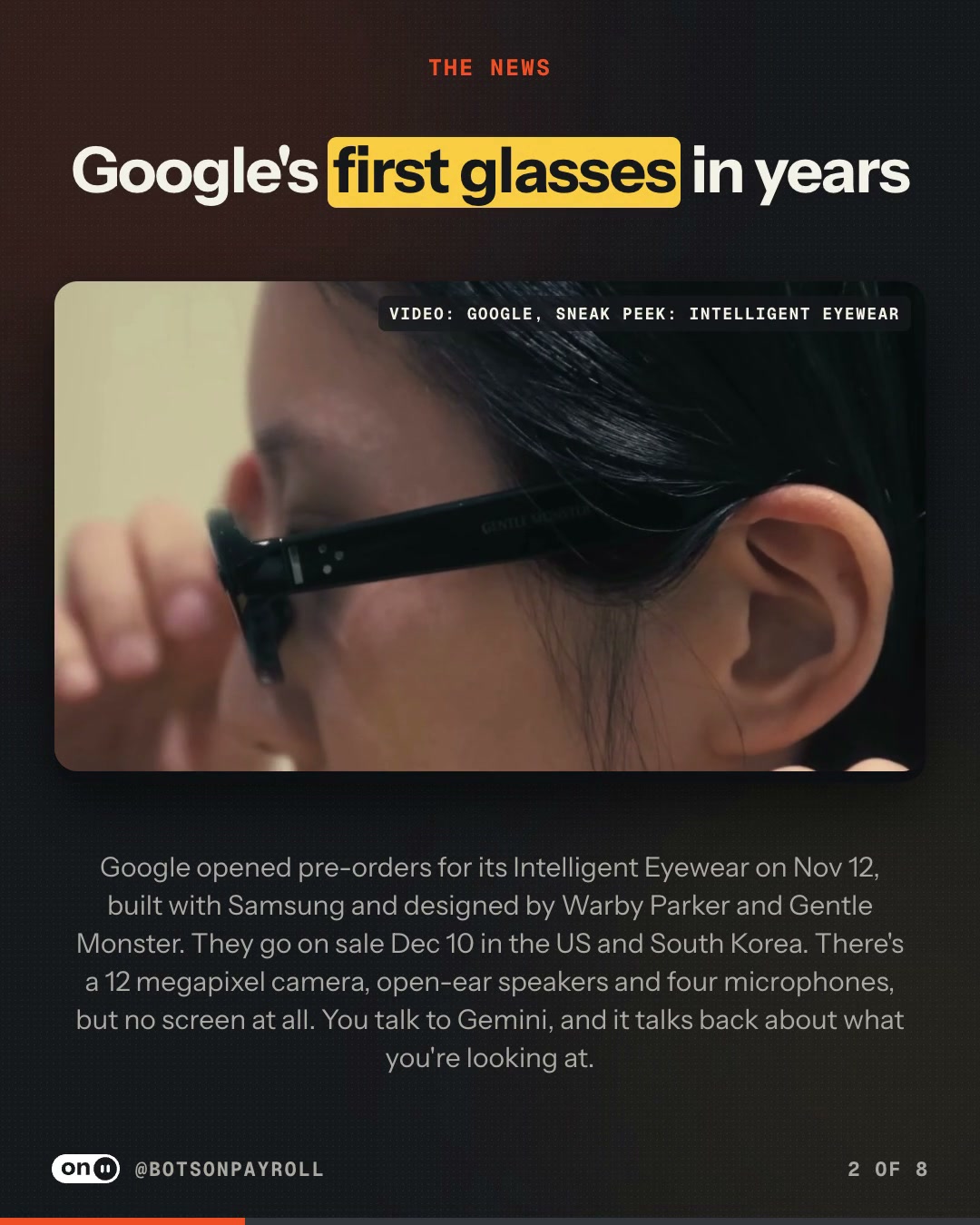
0:41, sound onGoogle's first glasses in years
Google opened pre-orders for its Intelligent Eyewear on Nov 12, built with Samsung and designed by Warby Parker and Gentle Monster. They go on sale Dec 10 in the US and South Korea. There's a 12 megapixel camera, open-ear speakers and four microphones, but no screen at all. You talk to Gemini, and it talks back about what you're looking at.
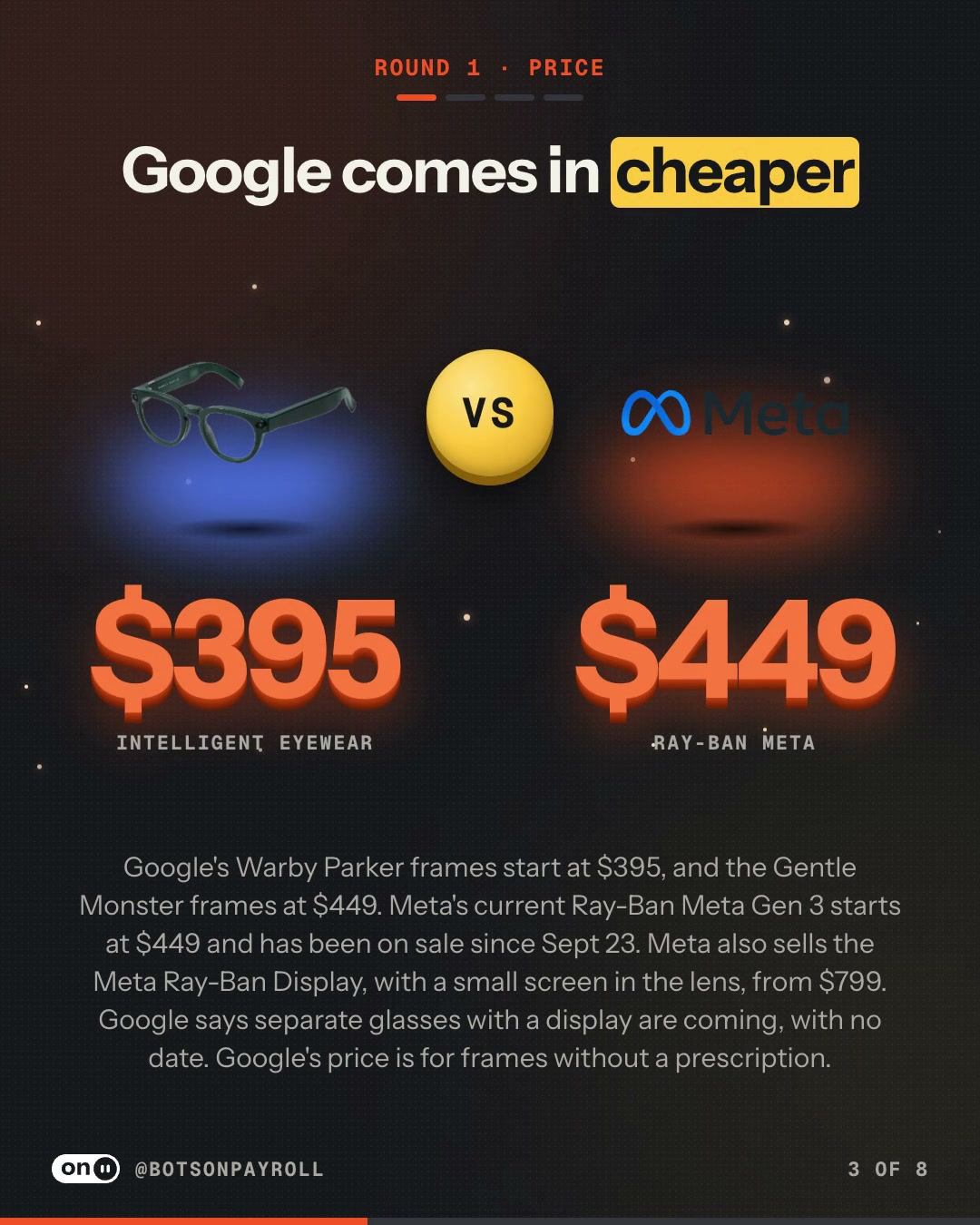
Google comes in cheaper
Google's Warby Parker frames start at $395, and the Gentle Monster frames at $449. Meta's current Ray-Ban Meta Gen 3 starts at $449 and has been on sale since Sept 23. Meta also sells the Meta Ray-Ban Display, with a small screen in the lens, from $799. Google says separate glasses with a display are coming, with no date. Google's price is for frames without a prescription.
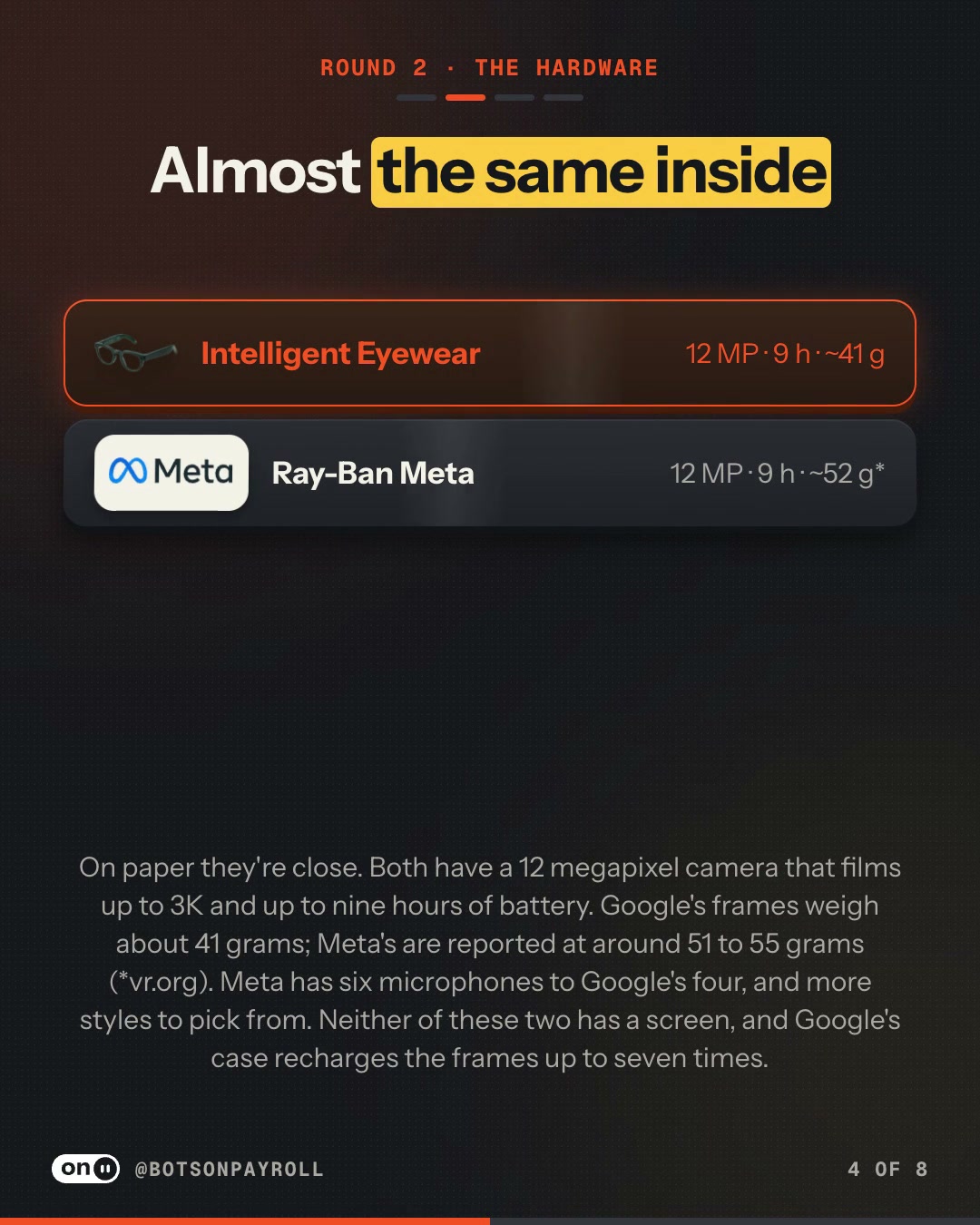
Almost the same inside
On paper they're close. Both have a 12 megapixel camera that films up to 3K and up to nine hours of battery. Google's frames weigh about 41 grams; Meta's are reported at around 51 to 55 grams (*vr.org). Meta has six microphones to Google's four, and more styles to pick from. Neither of these two has a screen, and Google's case recharges the frames up to seven times.
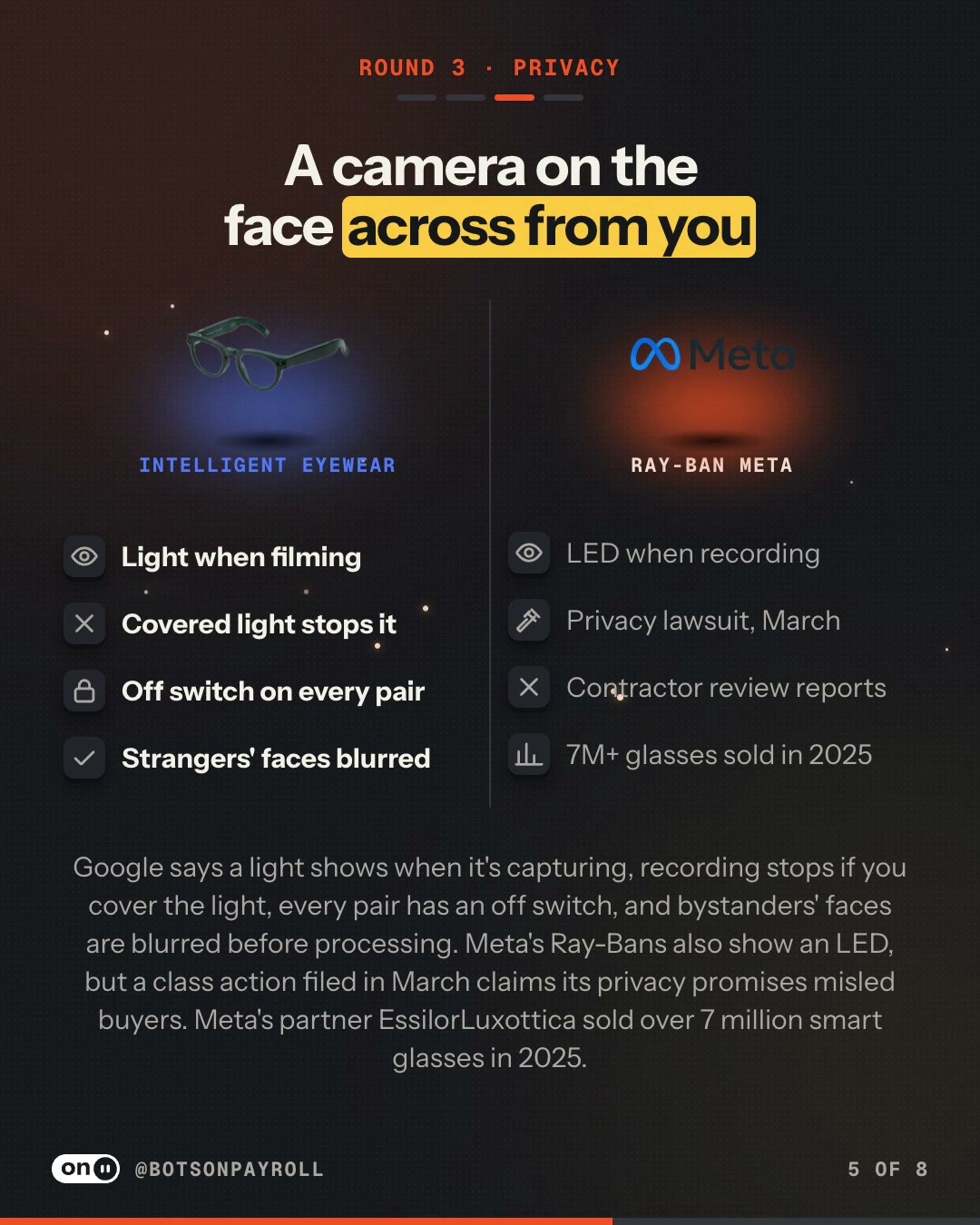
A camera on the face across from you
Google says a light shows when it's capturing, recording stops if you cover the light, every pair has an off switch, and bystanders' faces are blurred before processing. Meta's Ray-Bans also show an LED, but a class action filed in March claims its privacy promises misled buyers. Meta's partner EssilorLuxottica sold over 7 million smart glasses in 2025.
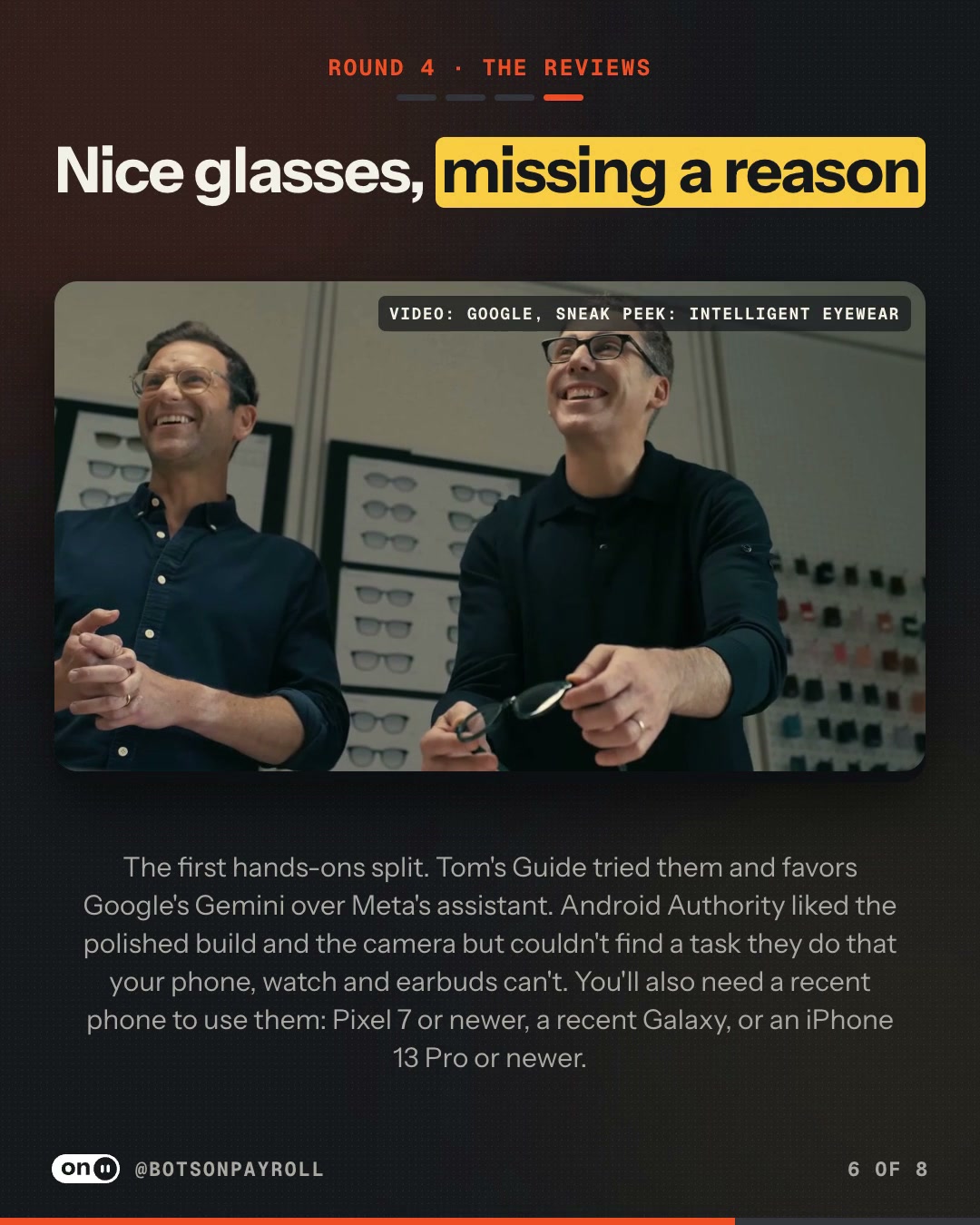
Nice glasses, missing a reason
The first hands-ons split. Tom's Guide tried them and favors Google's Gemini over Meta's assistant. Android Authority liked the polished build and the camera but couldn't find a task they do that your phone, watch and earbuds can't. You'll also need a recent phone to use them: Pixel 7 or newer, a recent Galaxy, or an iPhone 13 Pro or newer.
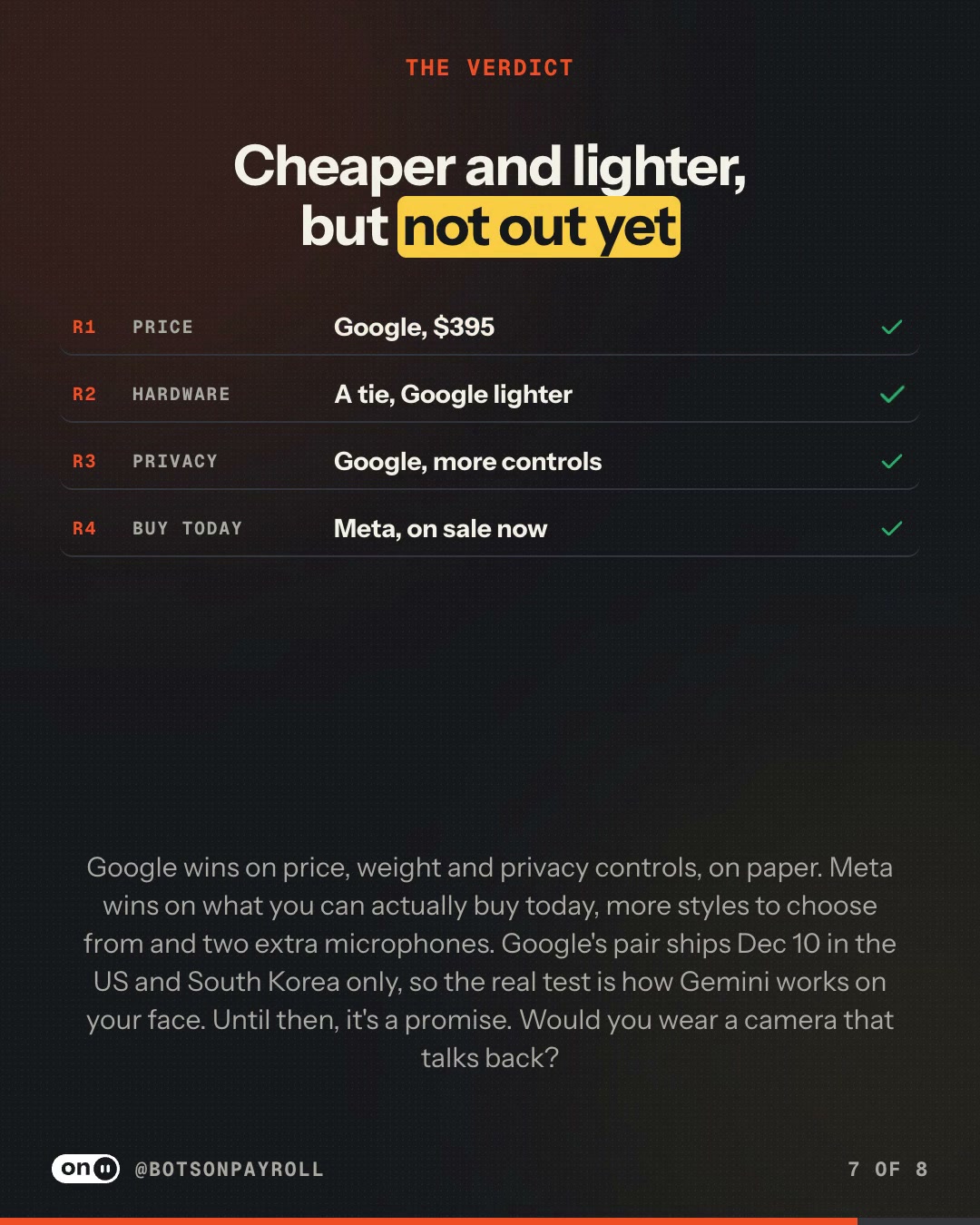
Cheaper and lighter, but not out yet
Google wins on price, weight and privacy controls, on paper. Meta wins on what you can actually buy today, more styles to choose from and two extra microphones. Google's pair ships Dec 10 in the US and South Korea only, so the real test is how Gemini works on your face. Until then, it's a promise. Would you wear a camera that talks back?
Swipe the post
Sources
More AI news

Spent your weekend on sale posts? One photo could have made all of them.
Your pay stub link still opens. Here's how to lock it.