Google is building crypto security for banks
Google Cloud's Multi-Party Compute splits crypto keys so no single machine holds one. Out early 2027.
By Bots on Payroll, with 0 sources below
The short version
- Google Multi-Party Compute is a Google Cloud key-signing service combining threshold signing, transaction policies and governance
- Status: Preview (Pre-GA), as is, limited support
- Independent hardware-backed parties each hold a key share and sign without assembling the full private key (DKLS23-based)
Watch the video
0:56, sound onThe key never exists whole
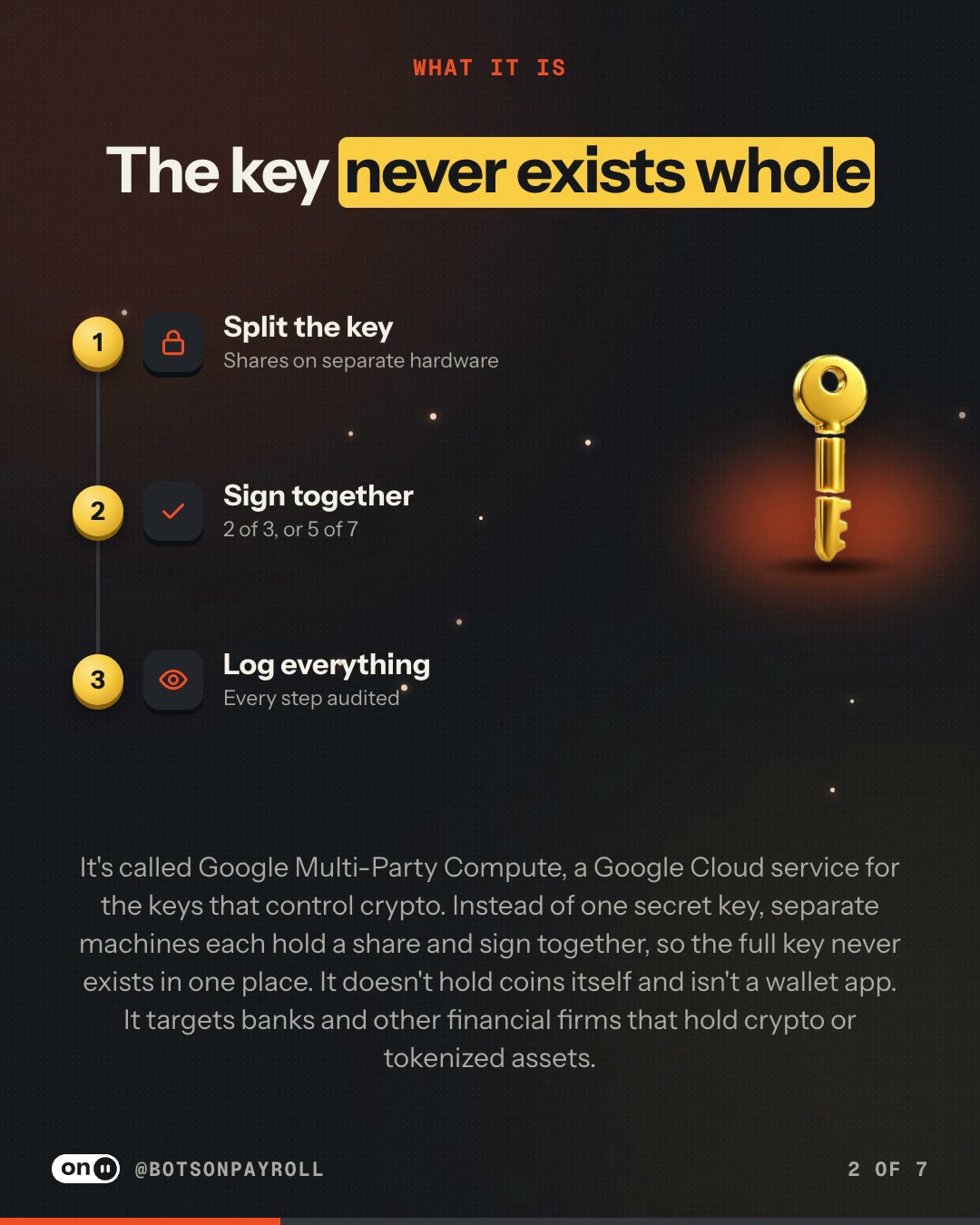
It's called Google Multi-Party Compute, a Google Cloud service for the keys that control crypto. Instead of one secret key, separate machines each hold a share and sign together, so the full key never exists in one place. It doesn't hold coins itself and isn't a wallet app. It targets banks and other financial firms that hold crypto or tokenized assets.
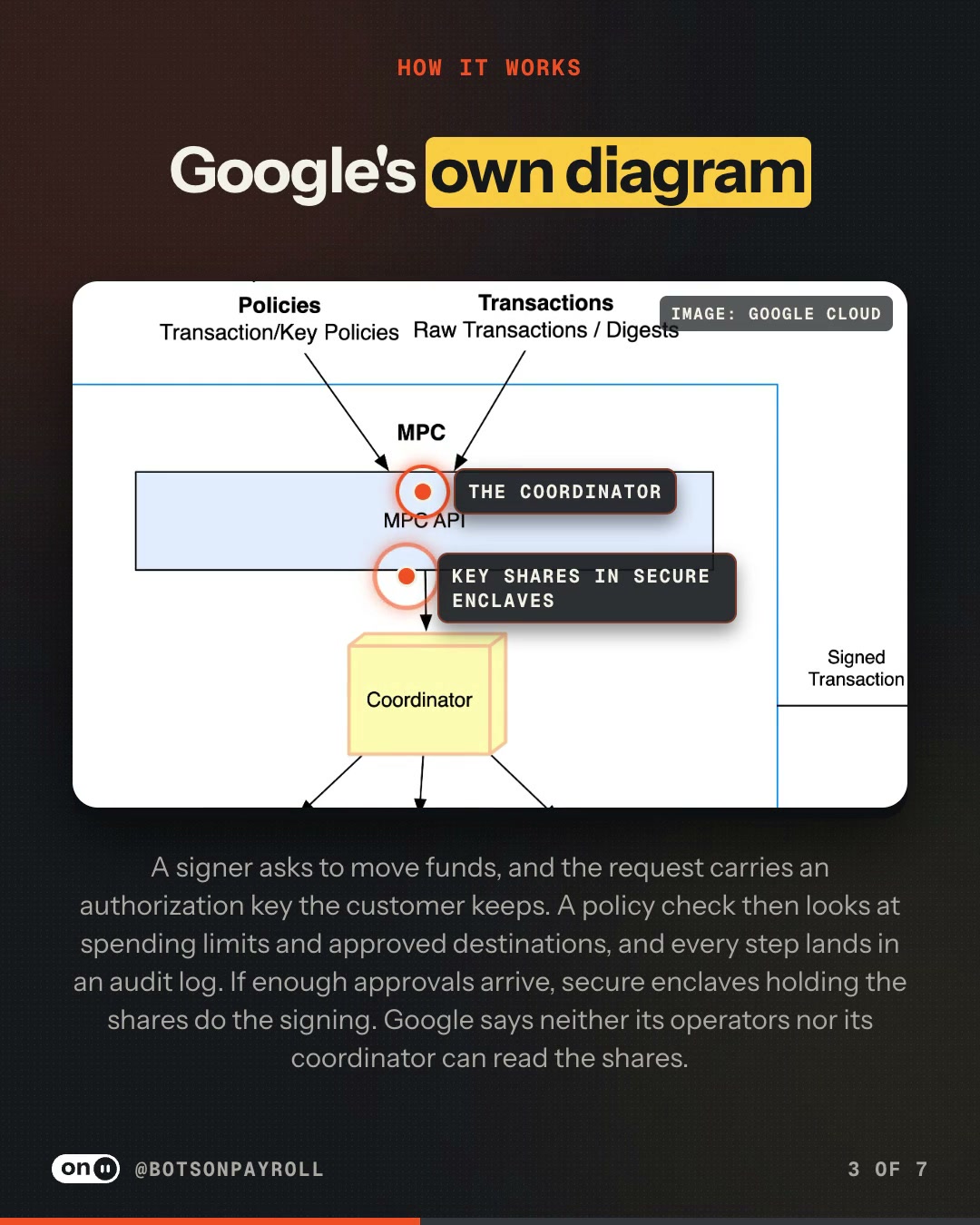
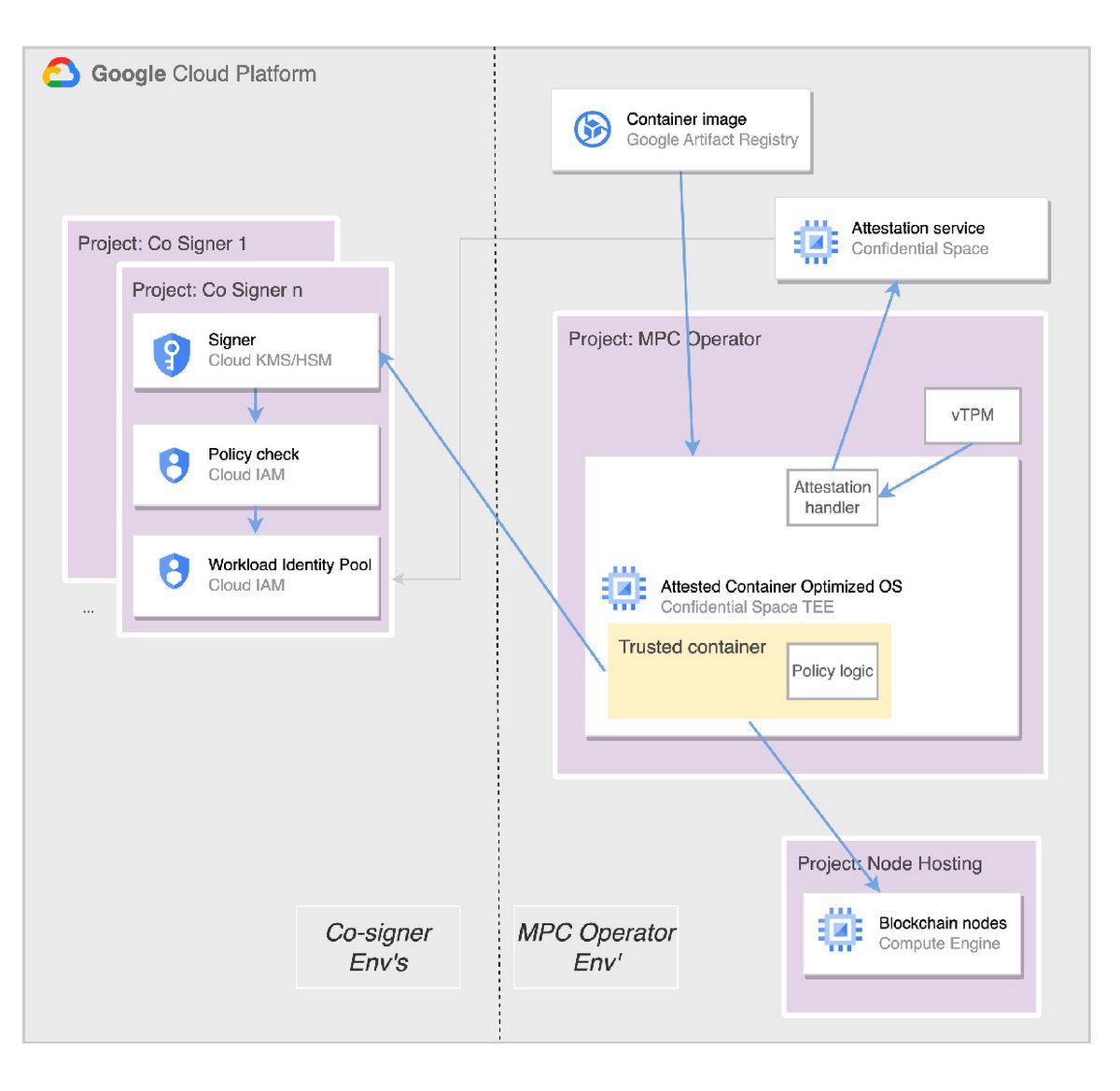
Google's own diagram
A signer asks to move funds, and the request carries an authorization key the customer keeps. A policy check then looks at spending limits and approved destinations, and every step lands in an audit log. If enough approvals arrive, secure enclaves holding the shares do the signing. Google says neither its operators nor its coordinator can read the shares.
Why banks want this
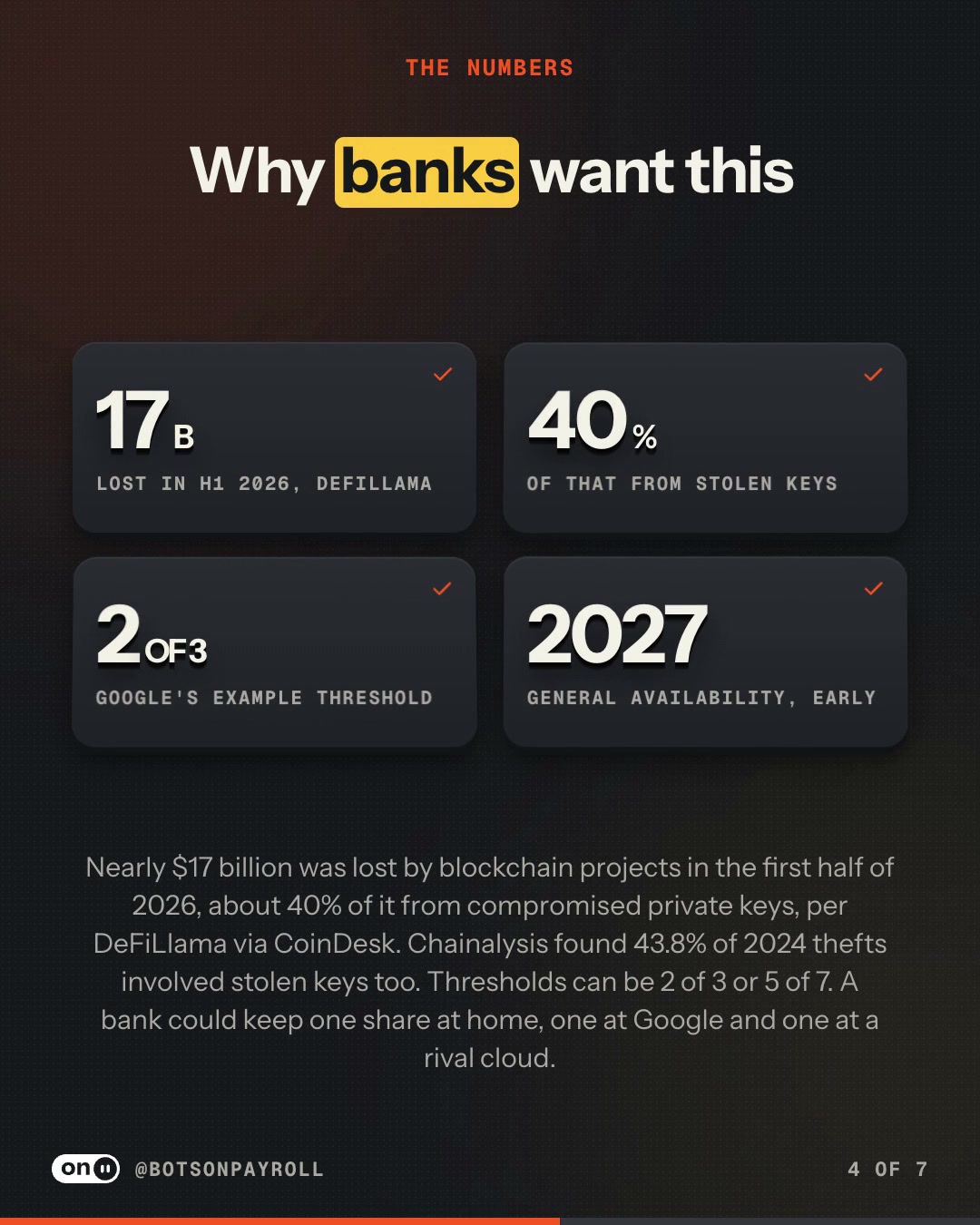
Nearly $17 billion was lost by blockchain projects in the first half of 2026, about 40% of it from compromised private keys, per DeFiLlama via CoinDesk. Chainalysis found 43.8% of 2024 thefts involved stolen keys too. Thresholds can be 2 of 3 or 5 of 7. A bank could keep one share at home, one at Google and one at a rival cloud.
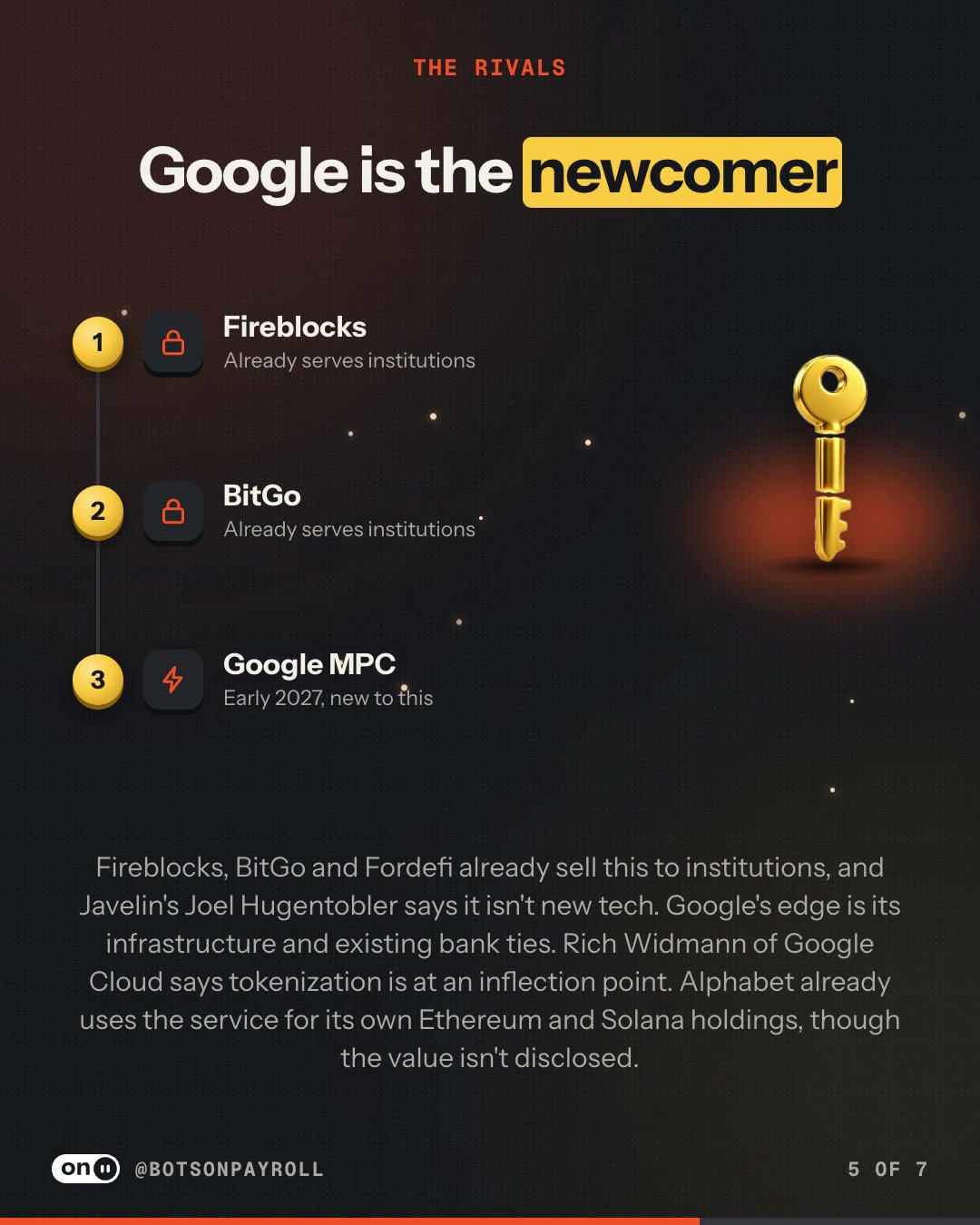
Google is the newcomer
Fireblocks, BitGo and Fordefi already sell this to institutions, and Javelin's Joel Hugentobler says it isn't new tech. Google's edge is its infrastructure and existing bank ties. Rich Widmann of Google Cloud says tokenization is at an inflection point. Alphabet already uses the service for its own Ethereum and Solana holdings, though the value isn't disclosed.
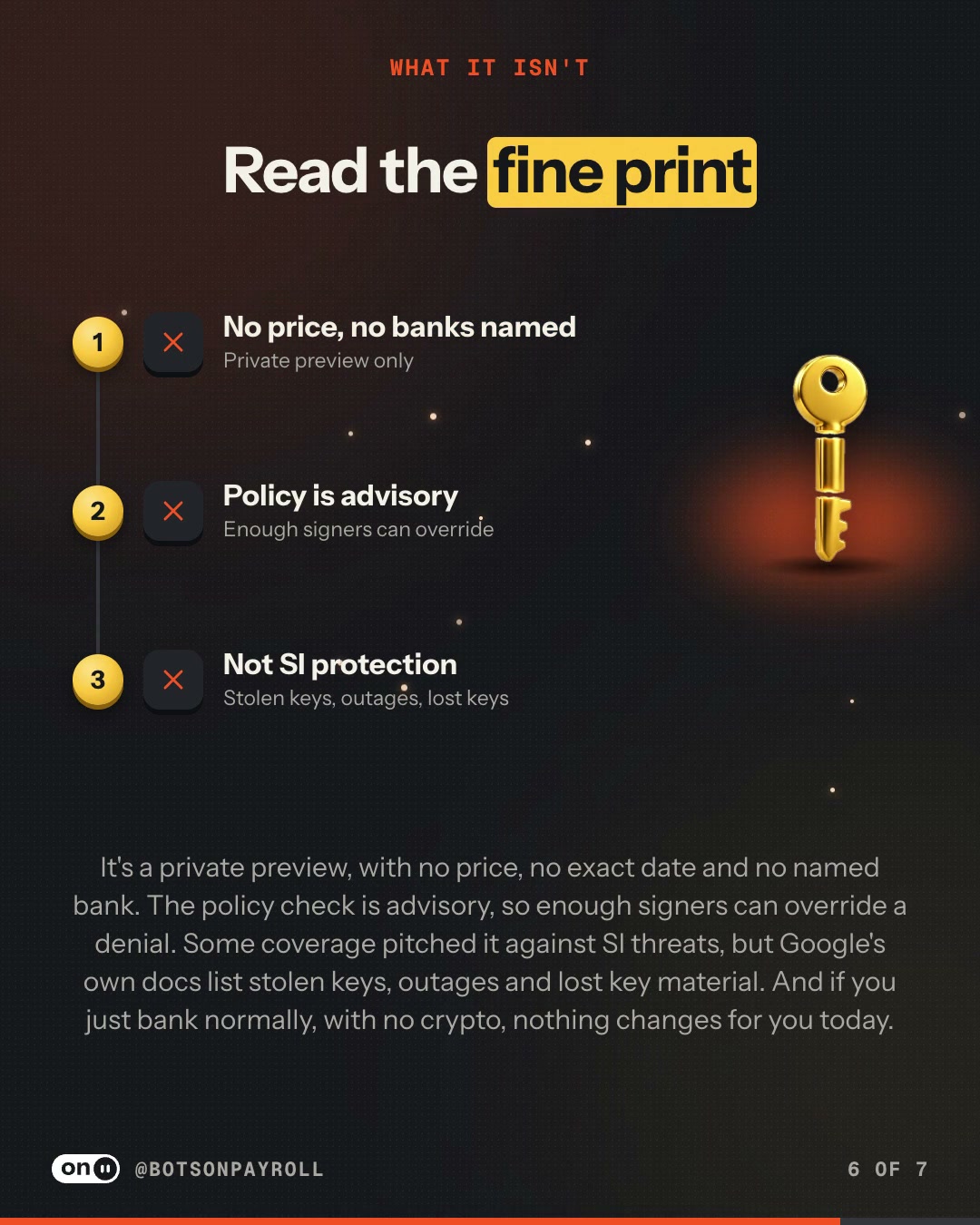
Read the fine print
It's a private preview, with no price, no exact date and no named bank. The policy check is advisory, so enough signers can override a denial. Some coverage pitched it against AI threats, but Google's own docs list stolen keys, outages and lost key material. And if you just bank normally, with no crypto, nothing changes for you today.
Swipe the post