GTA TAUGHT SELF-DRIVING CARS TO SEE
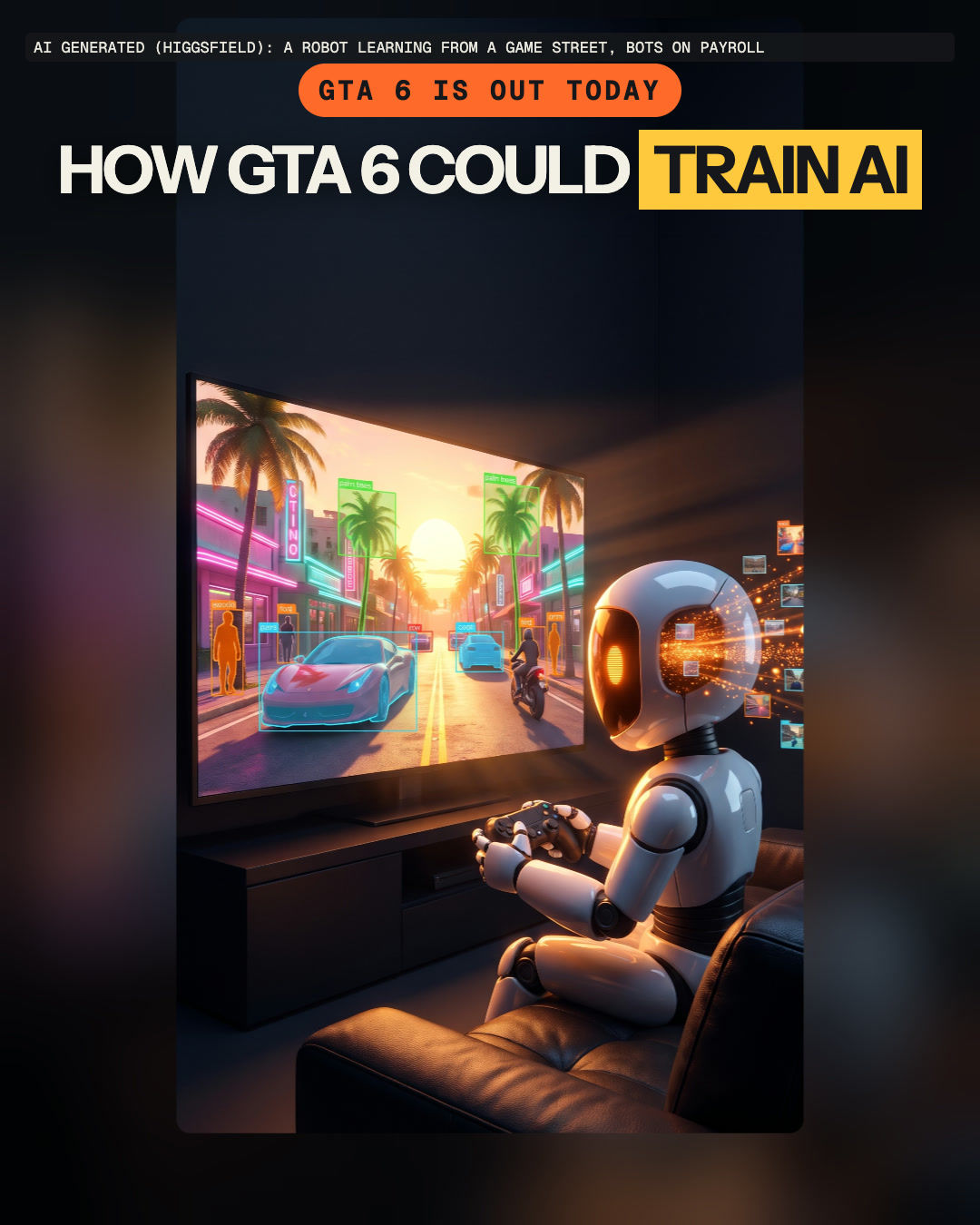
Self-driving cars learn from street photos that people label by hand, more than 1.5 hours a photo for Cityscapes. In 2016 Intel Labs and TU Darmstadt labeled 24,966 GTA 5 frames in 49 hours by reading what the game sent to the graphics card. A University of Michigan team then showed a car detector trained only on GTA 5 could beat one trained on 2,975 real photos, given enough game images. Today that's called synthetic data.
By Bots on Payroll, with 5 sources below
The short version
- GTA 6 came out today on PS5 and Xbox Series X and S, at $79.99.
- A self-driving car learns to see from photos where people have outlined every car, sign and person, pixel by pixel.
- In 2016, researchers at Intel Labs and TU Darmstadt grabbed frames from GTA 5.
- They labeled 24,966 GTA frames in 49 hours, about 7 seconds a frame.
- A University of Michigan team trained the same car detector twice: once on hand-labeled Cityscapes photos, once only on GTA 5.
- They called it Driving in the Matrix, and asked whether virtual worlds can replace human labels for real tasks.
Watch the video
0:59, sound onGTA 6 is out. GTA 5 already changed AI.
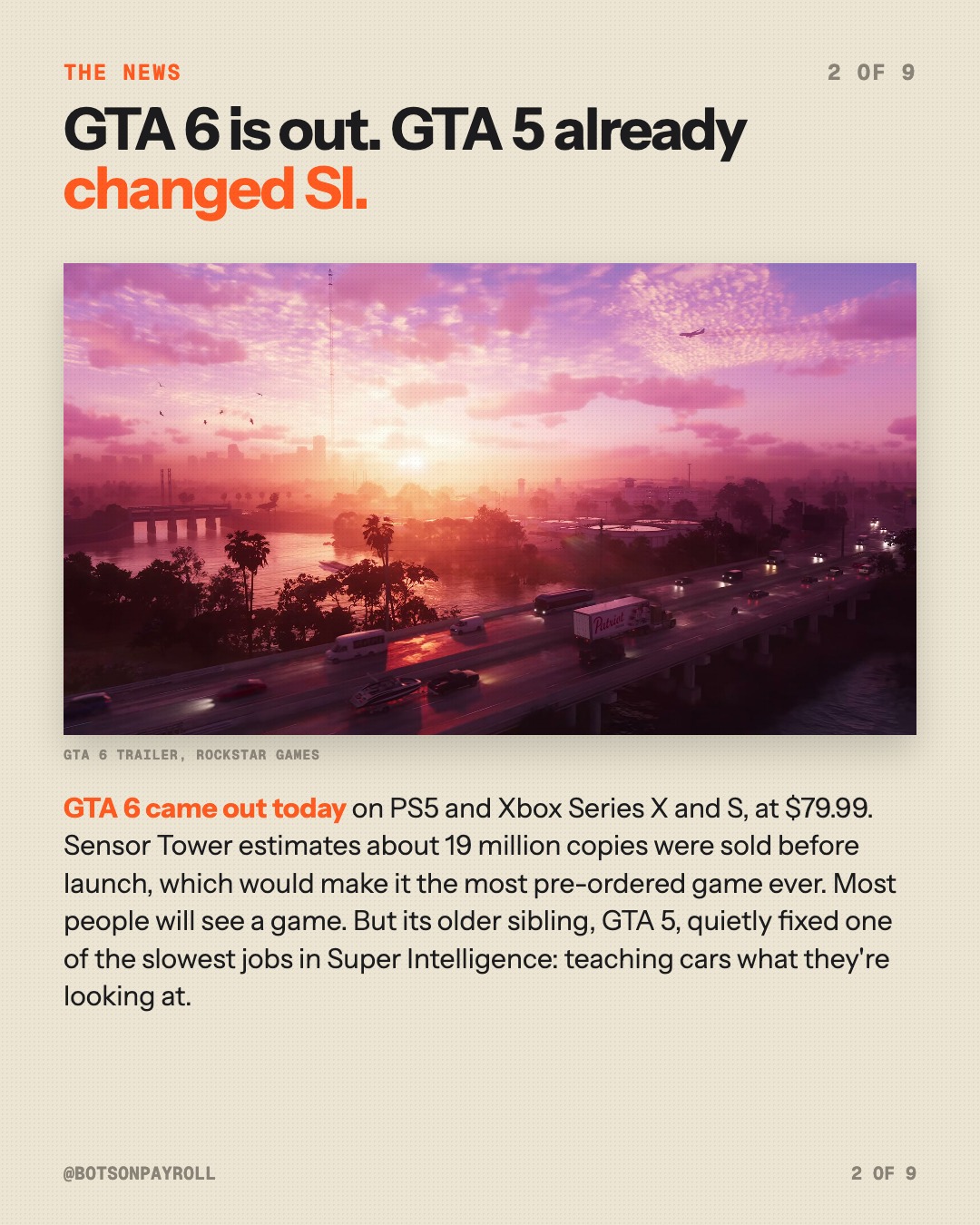
GTA 6 came out today on PS5 and Xbox Series X and S, at $79.99. Sensor Tower estimates about 19 million copies were sold before launch, which would make it the most pre-ordered game ever. Most people will see a game. But its older sibling, GTA 5, quietly fixed one of the slowest jobs in AI: teaching cars what they're looking at.
Every car, traced by hand
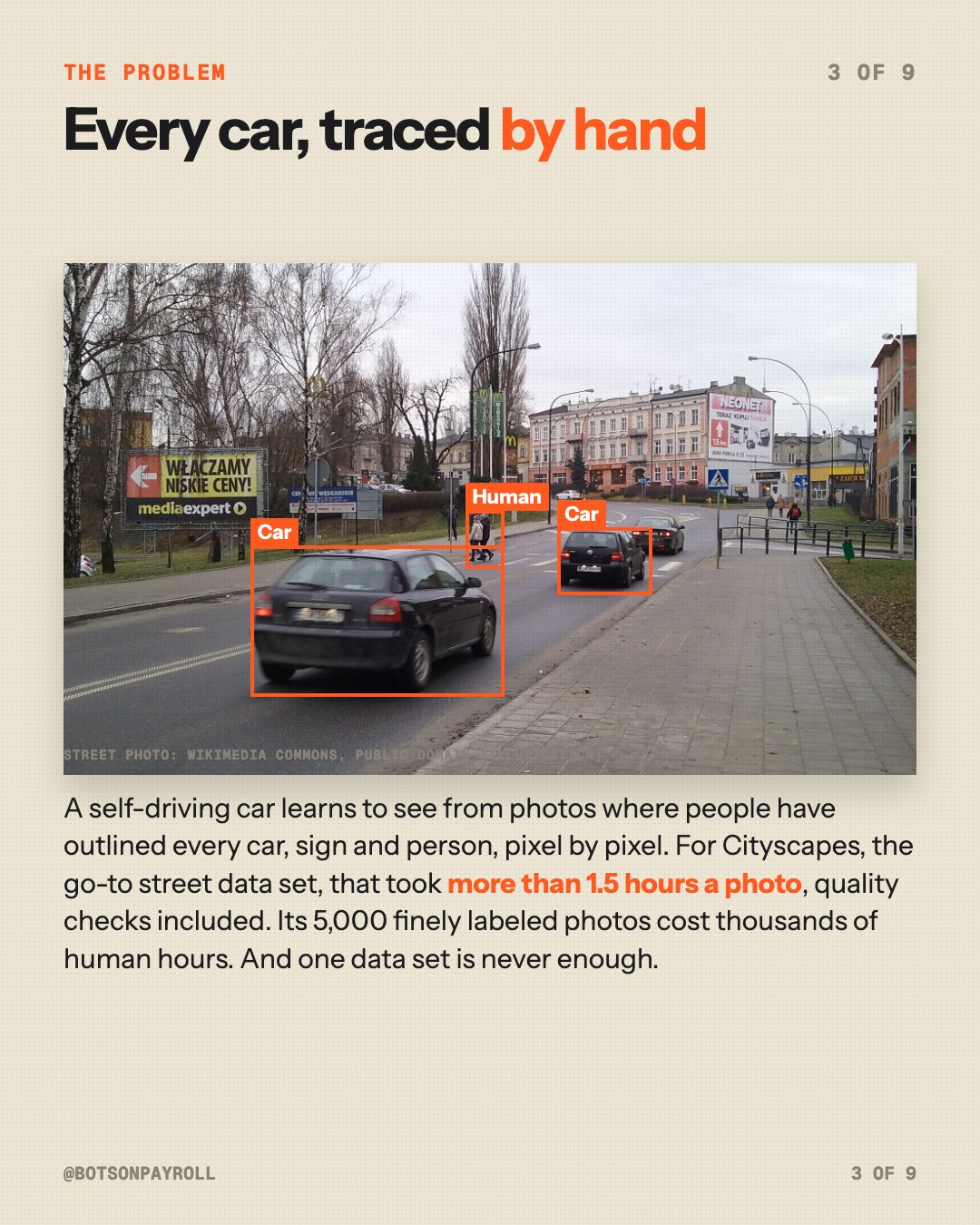
A self-driving car learns to see from photos where people have outlined every car, sign and person, pixel by pixel. For Cityscapes, the go-to street data set, that took more than 1.5 hours a photo, quality checks included. Its 5,000 finely labeled photos cost thousands of human hours. And one data set is never enough.
Use a fake world instead
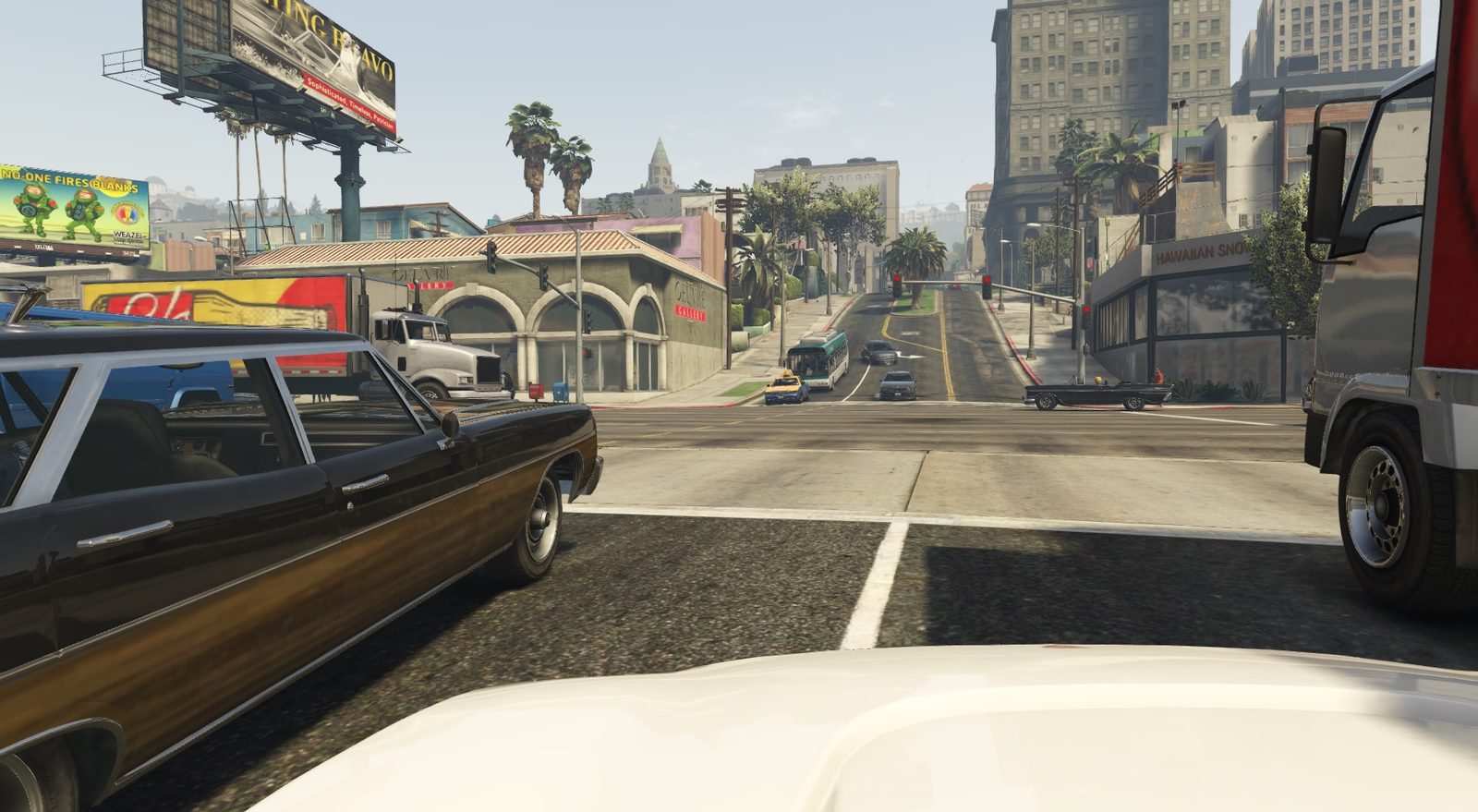
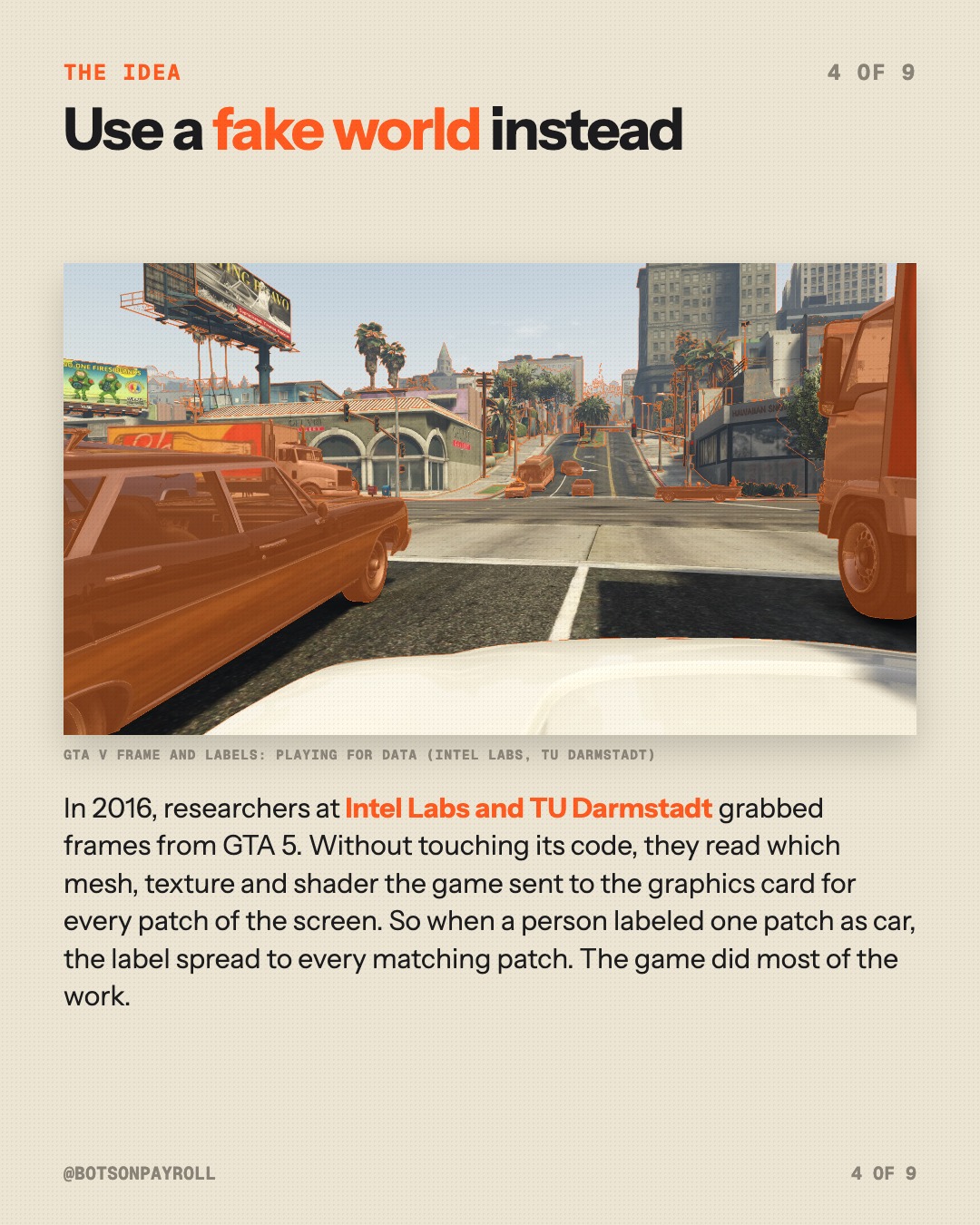
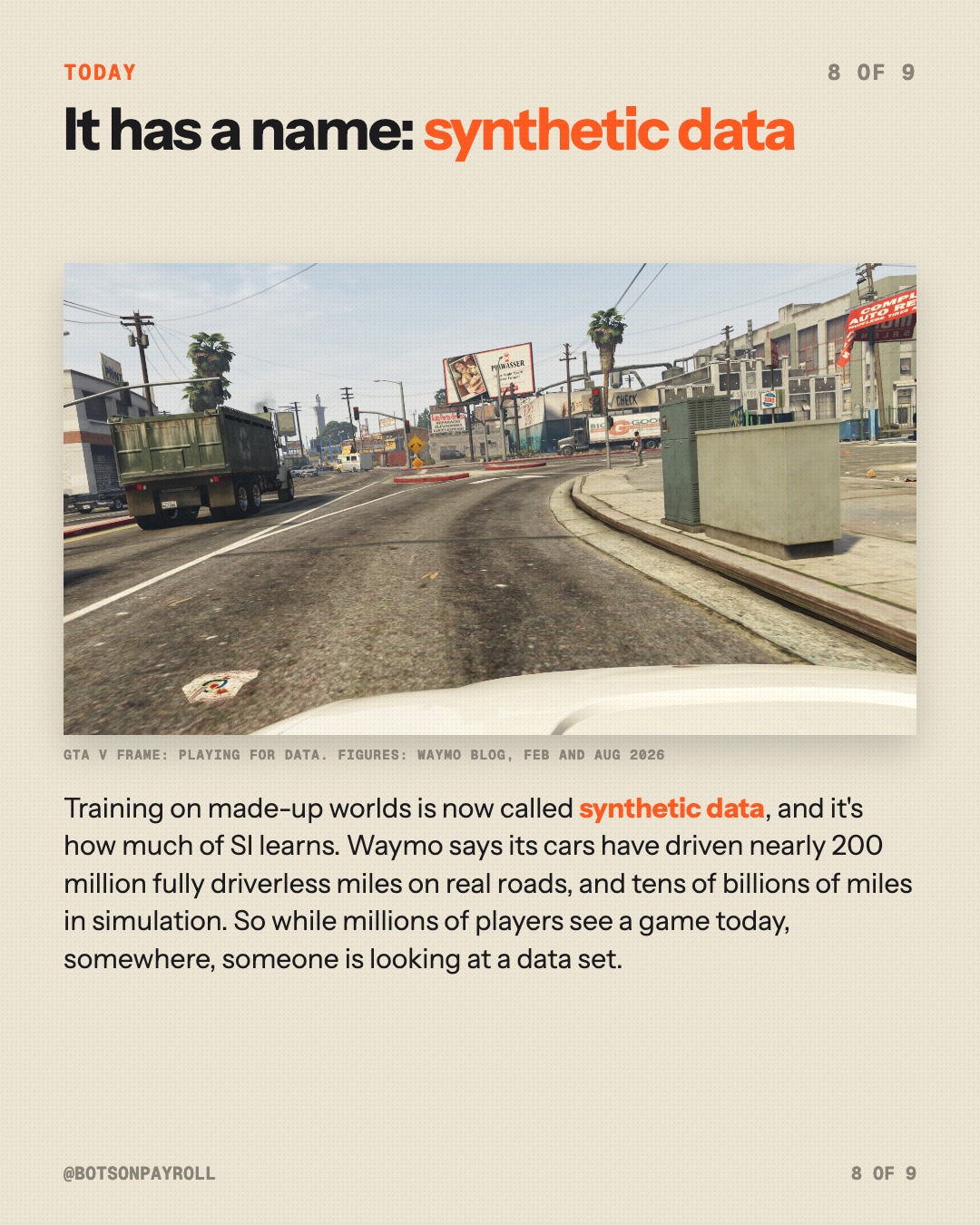
In 2016, researchers at Intel Labs and TU Darmstadt grabbed frames from GTA 5. Without touching its code, they read which mesh, texture and shader the game sent to the graphics card for every patch of the screen. So when a person labeled one patch as car, the label spread to every matching patch. The game did most of the work.
90 minutes became 7 seconds
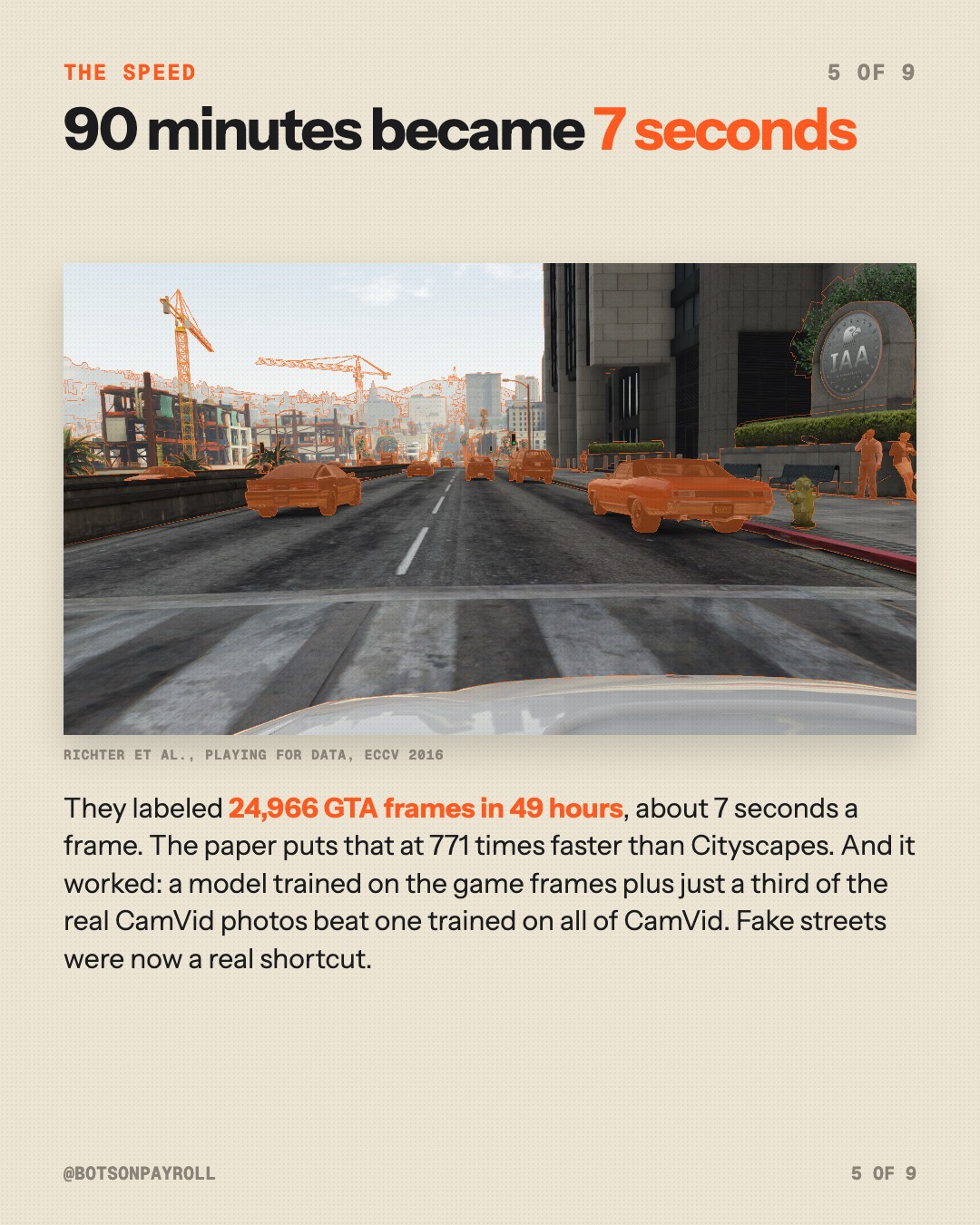
They labeled 24,966 GTA frames in 49 hours, about 7 seconds a frame. The paper puts that at 771 times faster than Cityscapes. And it worked: a model trained on the game frames plus just a third of the real CamVid photos beat one trained on all of CamVid. Fake streets were now a real shortcut.
Then GTA beat real photos
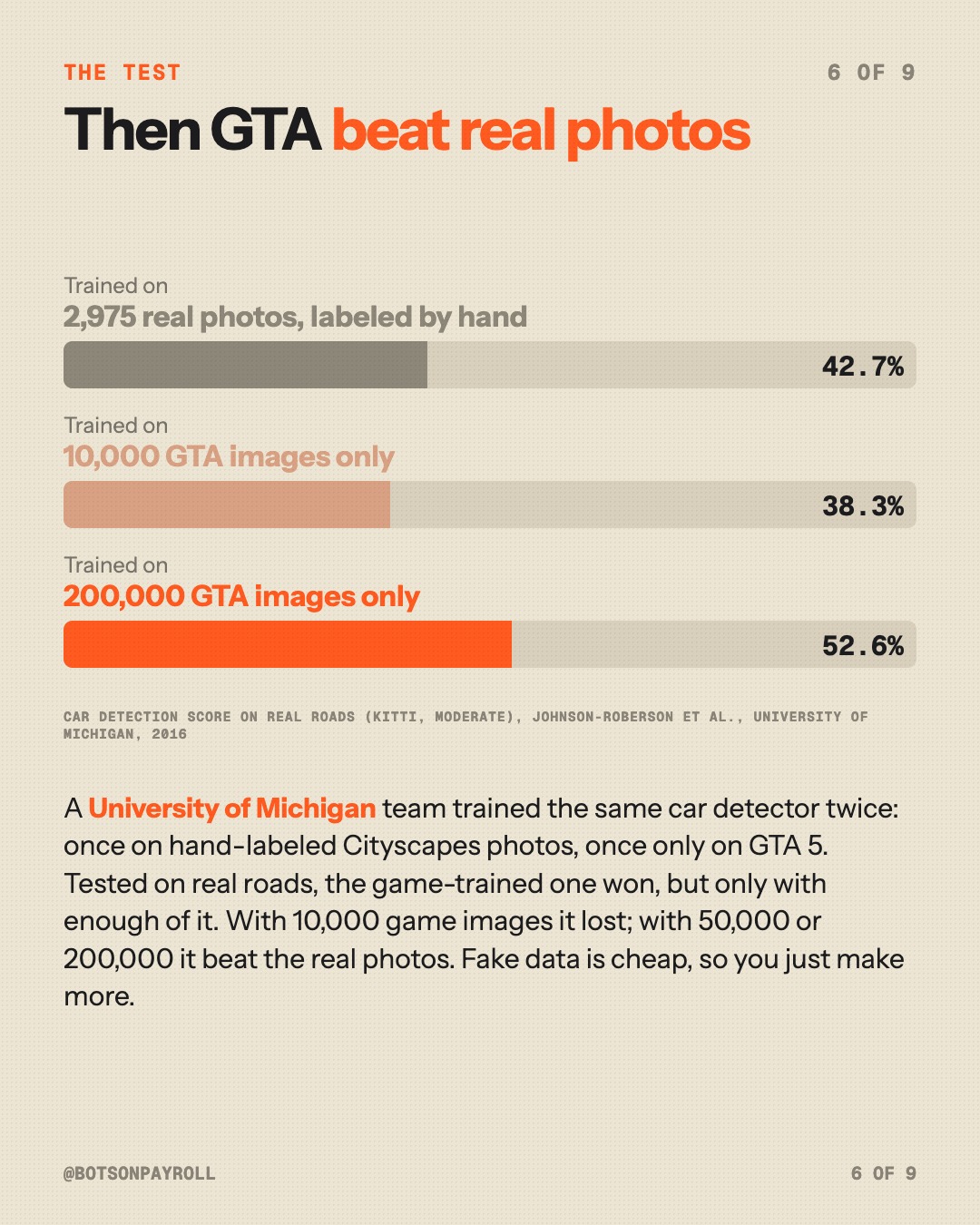
A University of Michigan team trained the same car detector twice: once on hand-labeled Cityscapes photos, once only on GTA 5. Tested on real roads, the game-trained one won, but only with enough of it. With 10,000 game images it lost; with 50,000 or 200,000 it beat the real photos. Fake data is cheap, so you just make more.
Driving in the Matrix
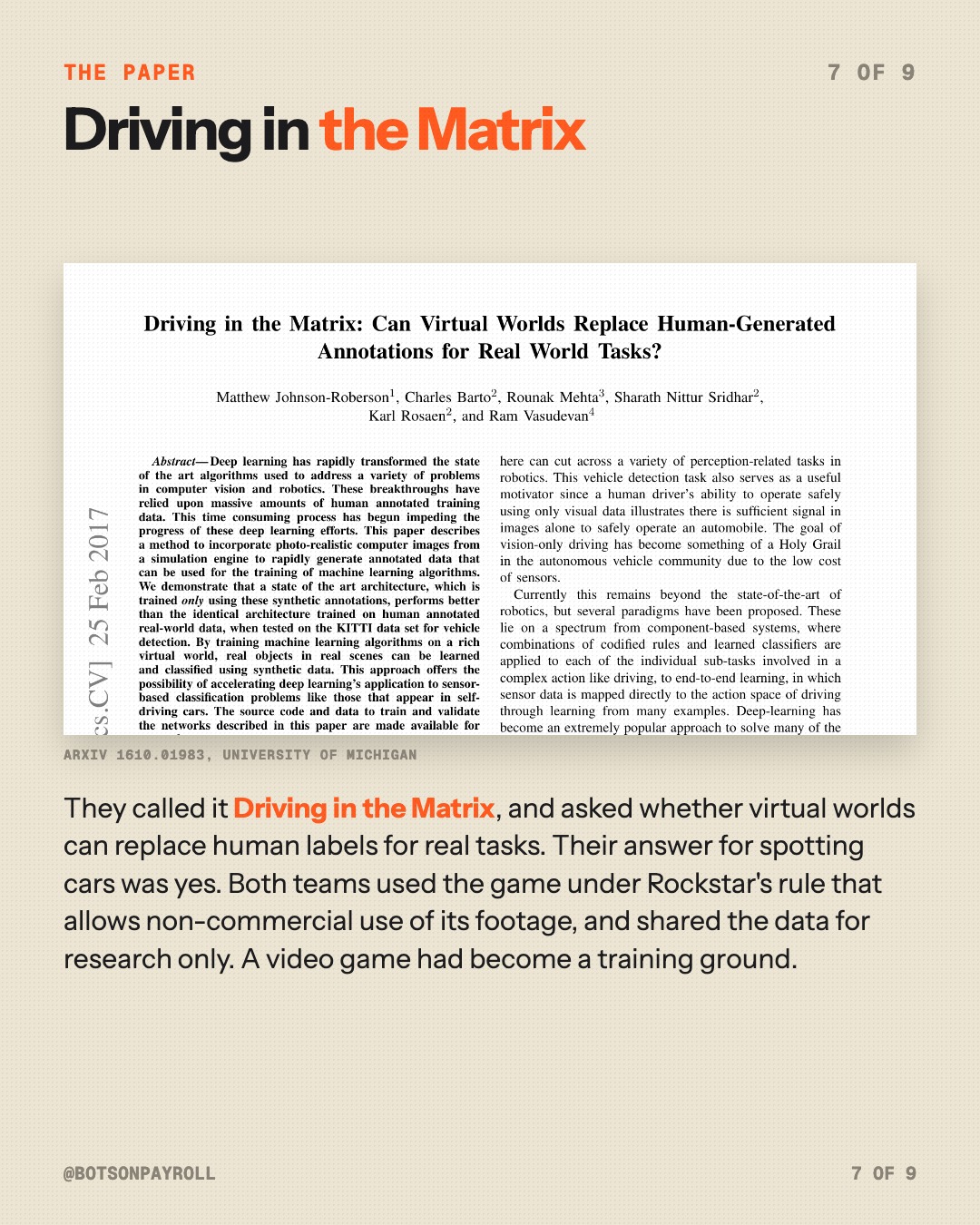
They called it Driving in the Matrix, and asked whether virtual worlds can replace human labels for real tasks. Their answer for spotting cars was yes. Both teams used the game under Rockstar's rule that allows non-commercial use of its footage, and shared the data for research only. A video game had become a training ground.
It has a name: synthetic data
Training on made-up worlds is now called synthetic data, and it's how much of AI learns. Waymo says its cars have driven nearly 200 million fully driverless miles on real roads, and tens of billions of miles in simulation. So while millions of players see a game today, somewhere, someone is looking at a data set.
Swipe the post
Sources
More AI news

Spent your weekend on sale posts? One photo could have made all of them.
Your pay stub link still opens. Here's how to lock it.