Make Claude ask you first
Claude fills gaps with confident guesses. We asked it for a budget, a cover letter and a Rome trip, with and without five short lines of our own. Without them it invented numbers and wrote templates. With them it asked us questions first, said what it was assuming, and led the Rome plan with the flaw: August is the hottest, busiest month. Anthropic's own study found Claude going along with people in 9% of advice chats, and its docs say permission to say "I don't know" cuts made-up answers, but doesn't end them.
By Bots on Payroll, with 6 sources below

The short version
- Anthropic: 'Claude responds well to clear, explicit instructions.'
- Anthropic's docs tell you to think of Claude as 'a brilliant but new employee who lacks context on your norms and workflows. The more precisely you explain what you want, the better the result.'
- Anthropic's key test: show your prompt to a colleague with minimal context; 'If they'd be confused, Claude will be too.'
Watch the video
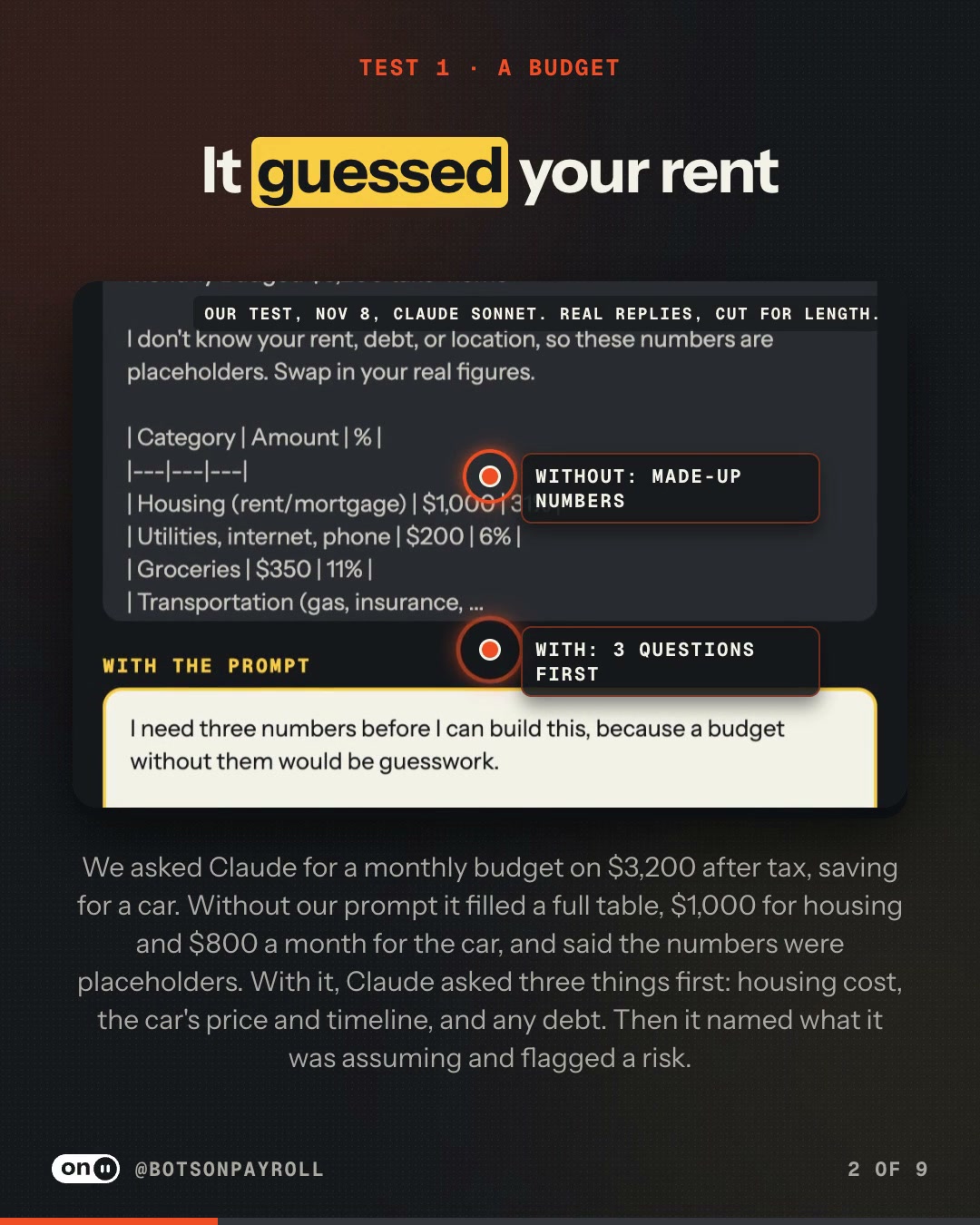
0:53, sound onIt guessed your rent
We asked Claude for a monthly budget on $3,200 after tax, saving for a car. Without our prompt it filled a full table, $1,000 for housing and $800 a month for the car, and said the numbers were placeholders. With it, Claude asked three things first: housing cost, the car's price and timeline, and any debt. Then it named what it was assuming and flagged a risk.
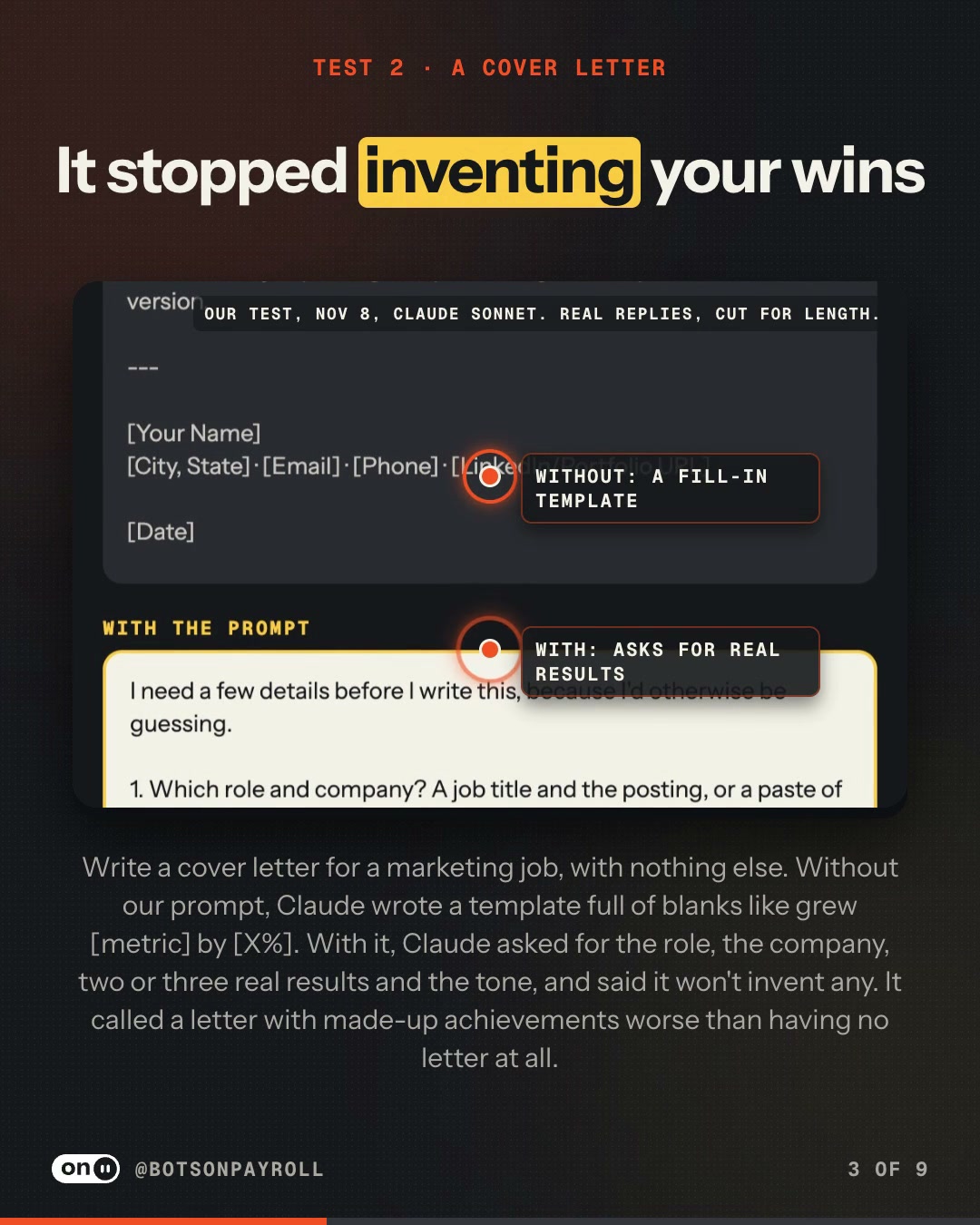
It stopped inventing your wins
Write a cover letter for a marketing job, with nothing else. Without our prompt, Claude wrote a template full of blanks like grew [metric] by [X%]. With it, Claude asked for the role, the company, two or three real results and the tone, and said it won't invent any. It called a letter with made-up achievements worse than having no letter at all.
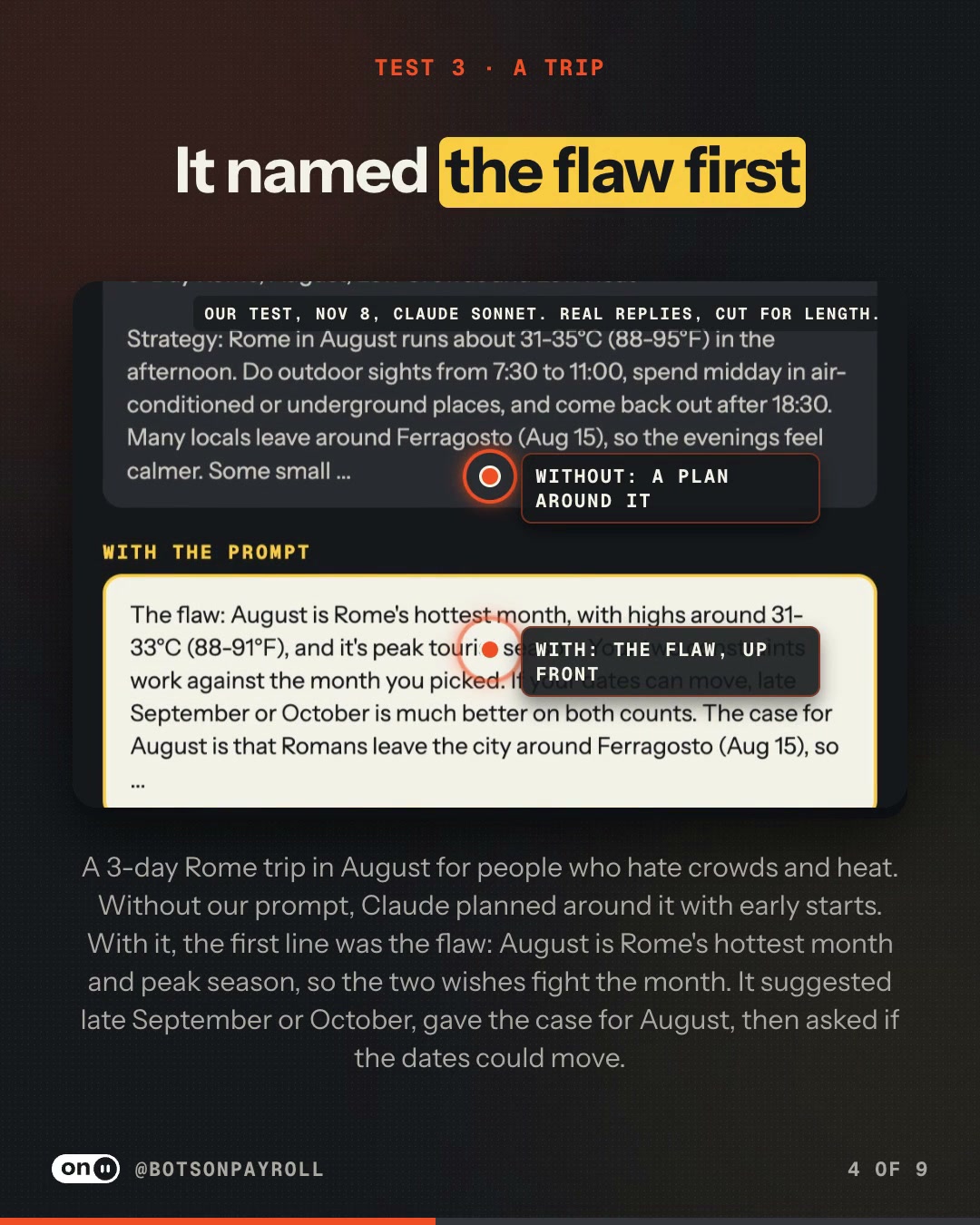
It named the flaw first
A 3-day Rome trip in August for people who hate crowds and heat. Without our prompt, Claude planned around it with early starts. With it, the first line was the flaw: August is Rome's hottest month and peak season, so the two wishes fight the month. It suggested late September or October, gave the case for August, then asked if the dates could move.
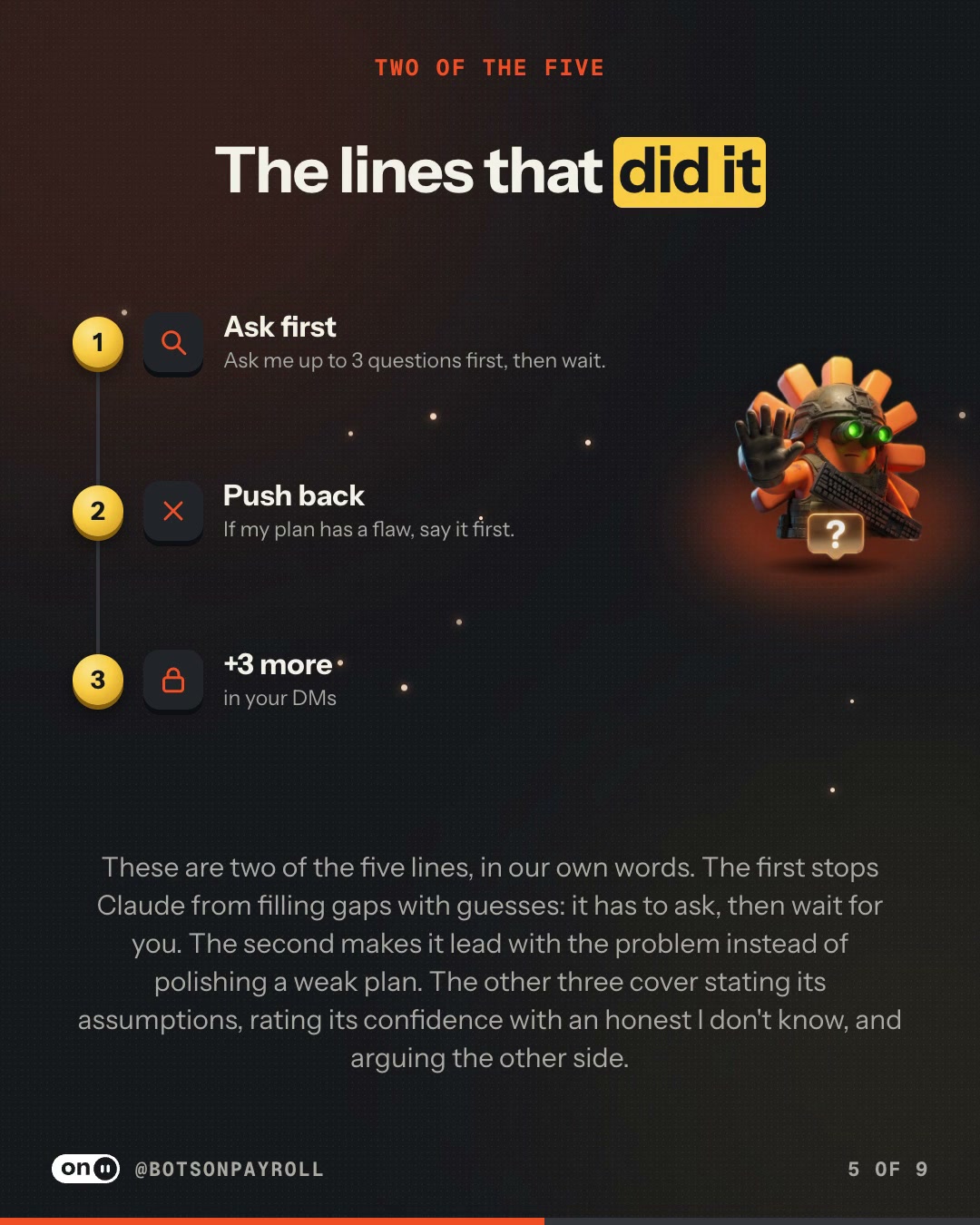
The lines that did it
These are two of the five lines, in our own words. The first stops Claude from filling gaps with guesses: it has to ask, then wait for you. The second makes it lead with the problem instead of polishing a weak plan. The other three cover stating its assumptions, rating its confidence with an honest I don't know, and arguing the other side.
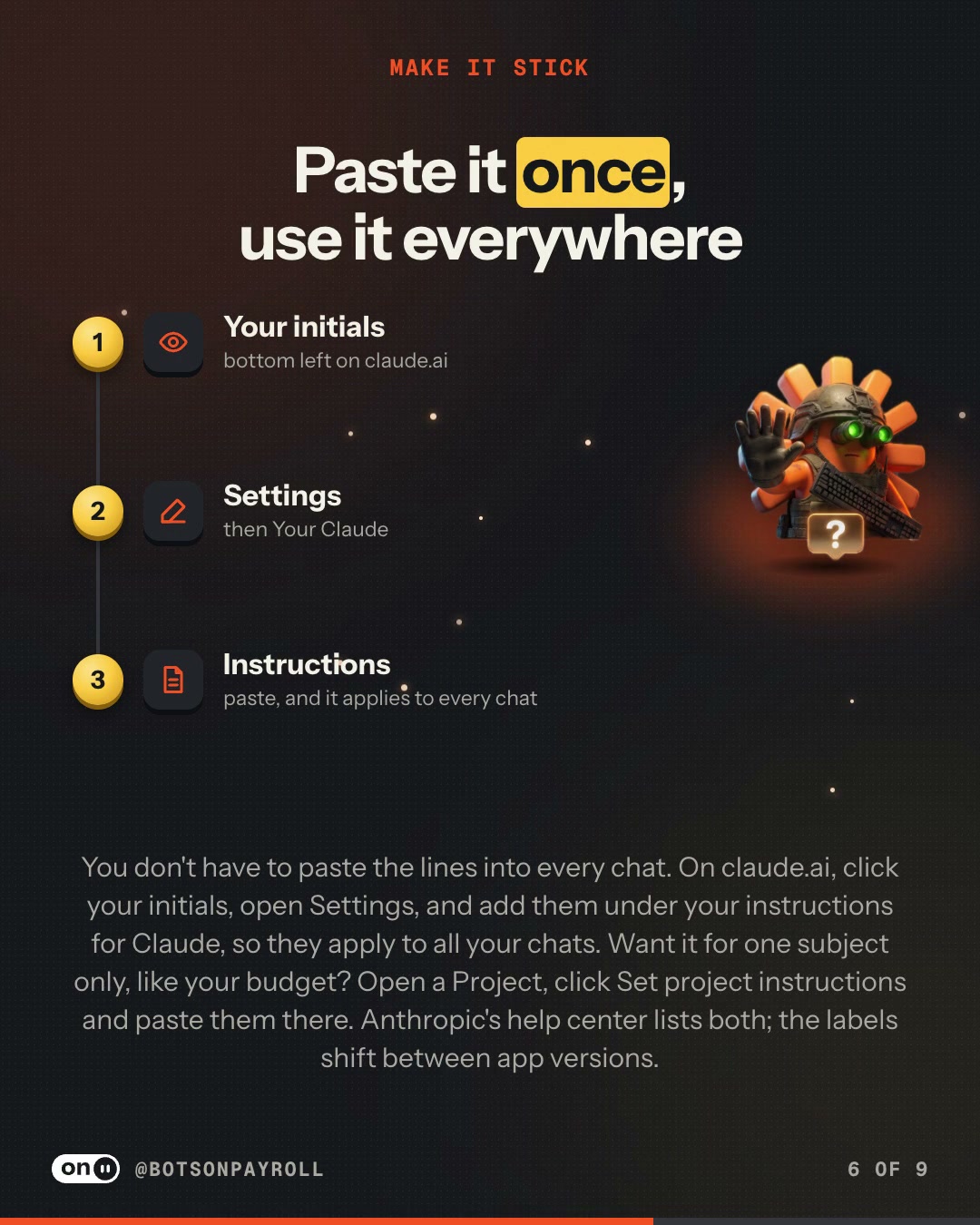
Paste it once, use it everywhere
You don't have to paste the lines into every chat. On claude.ai, click your initials, open Settings, and add them under your instructions for Claude, so they apply to all your chats. Want it for one subject only, like your budget? Open a Project, click Set project instructions and paste them there. Anthropic's help center lists both; the labels shift between app versions.
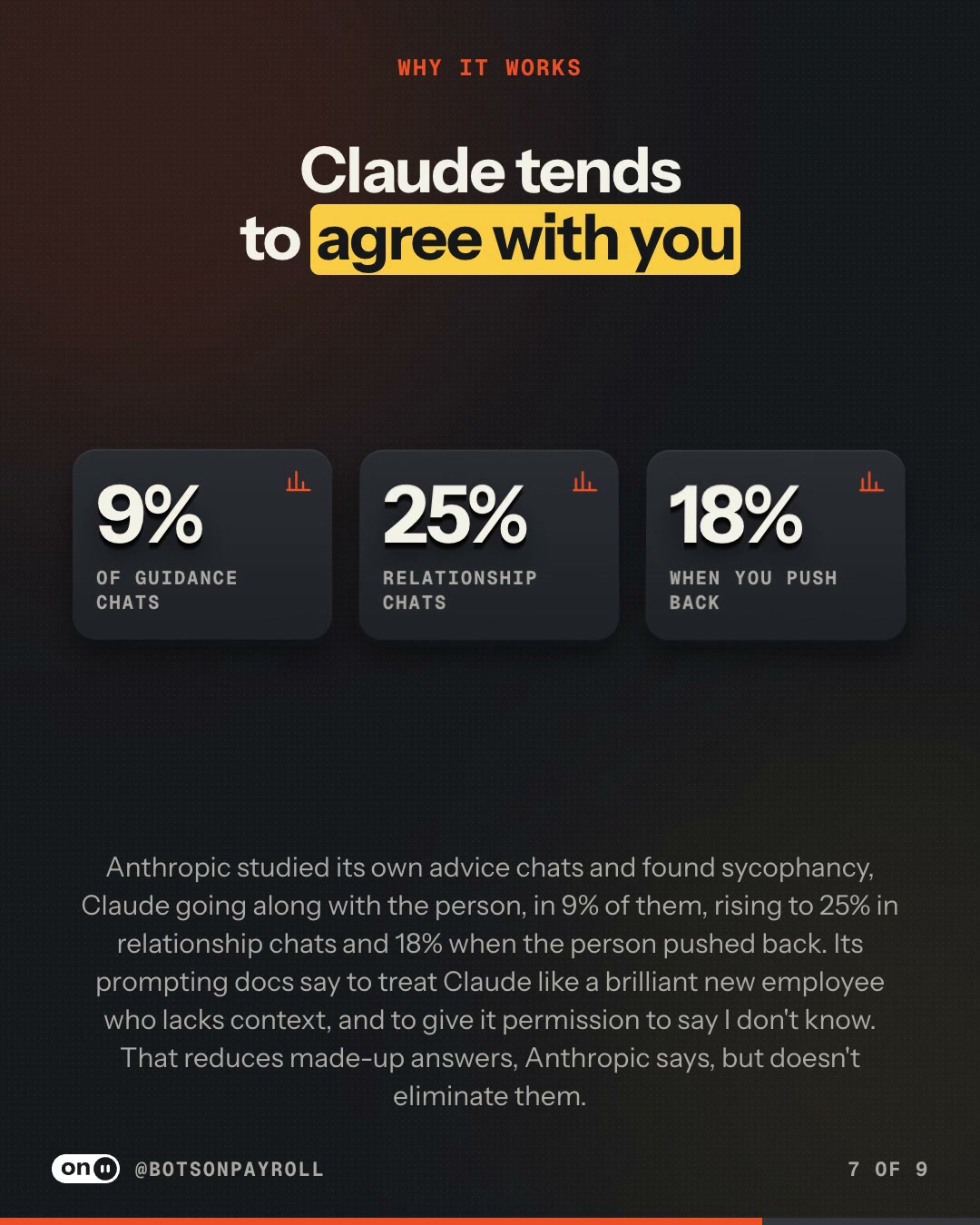
Claude tends to agree with you
Anthropic studied its own advice chats and found sycophancy, Claude going along with the person, in 9% of them, rising to 25% in relationship chats and 18% when the person pushed back. Its prompting docs say to treat Claude like a brilliant new employee who lacks context, and to give it permission to say I don't know. That reduces made-up answers, Anthropic says, but doesn't eliminate them.
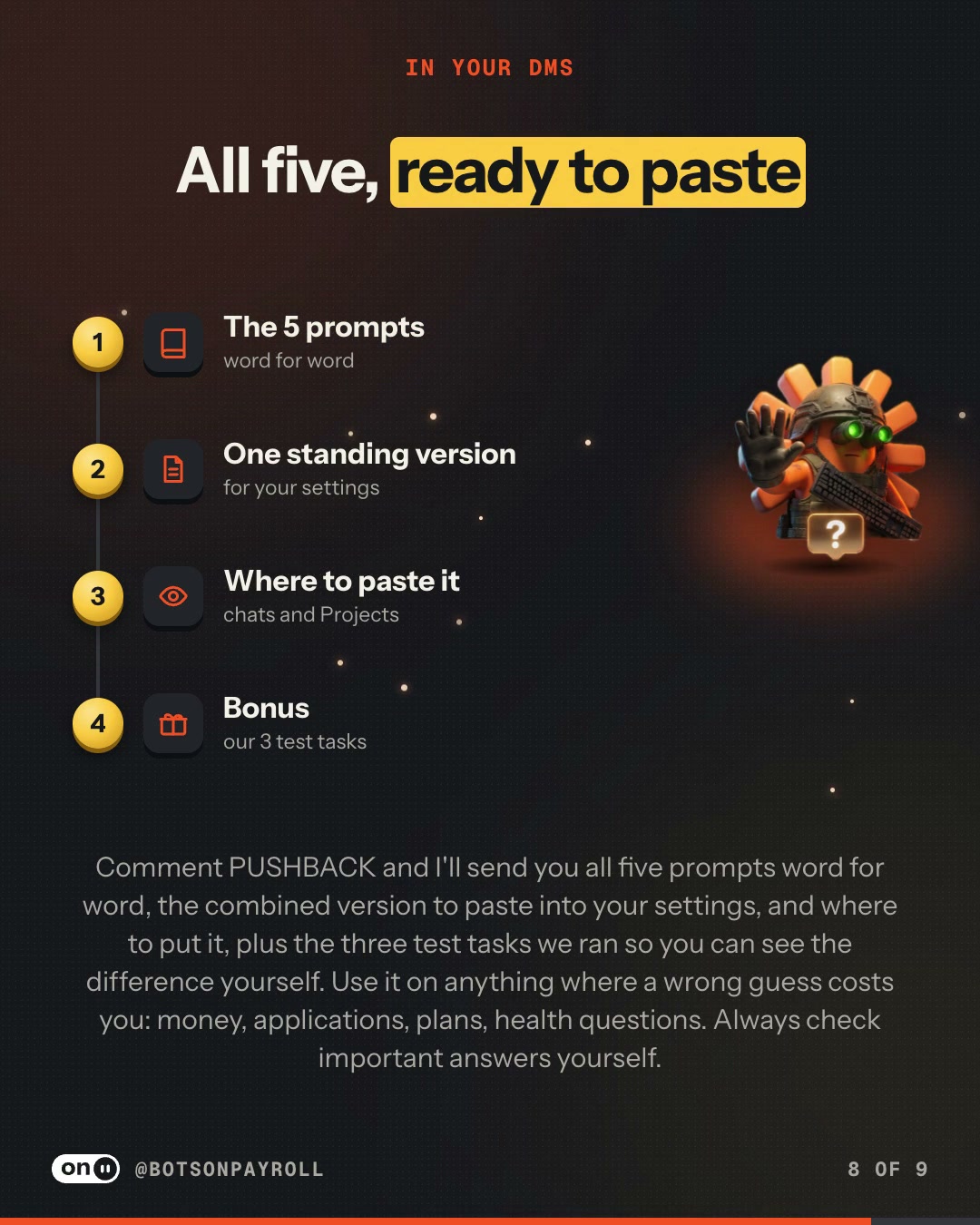
All five, ready to paste
Comment PUSHBACK and I'll send you all five prompts word for word, the combined version to paste into your settings, and where to put it, plus the three test tasks we ran so you can see the difference yourself. Use it on anything where a wrong guess costs you: money, applications, plans, health questions. Always check important answers yourself.
Swipe the post

Sources
More AI news

Spent your weekend on sale posts? One photo could have made all of them.
Your pay stub link still opens. Here's how to lock it.