Mark Cuban says Facebook knows its deepfake ads rip people off
An AI copy of Cuban sells a fake diabetes cure on Facebook. Meta's own files projected about $16 billion from scam and banned-goods ads.
By Bots on Payroll, with 4 sources below

The short version
- Cuban said on Pivot that AI copies of his face and voice sell a fake diabetes cure on Facebook.
- Internal Meta documents reported by Reuters projected about 10% of 2024 revenue, roughly $16 billion, from scam and banned-goods ads; Meta disputes the figure.
- Rhode Island sued Meta on Oct 22, and Poland asked the EU to fine it 250 million euros.
Watch the video
0:59, sound onA Shark Tank star selling a diabetes cure
On the Pivot podcast, Mark Cuban said scammers run Facebook ads with an AI copy of his face and voice selling a cure for diabetes. Every week, he said, older people email him asking if it works, or saying they paid $294. The fine print admits it is not really Cuban. "Facebook knows the little old ladies are getting ripped off," he said.
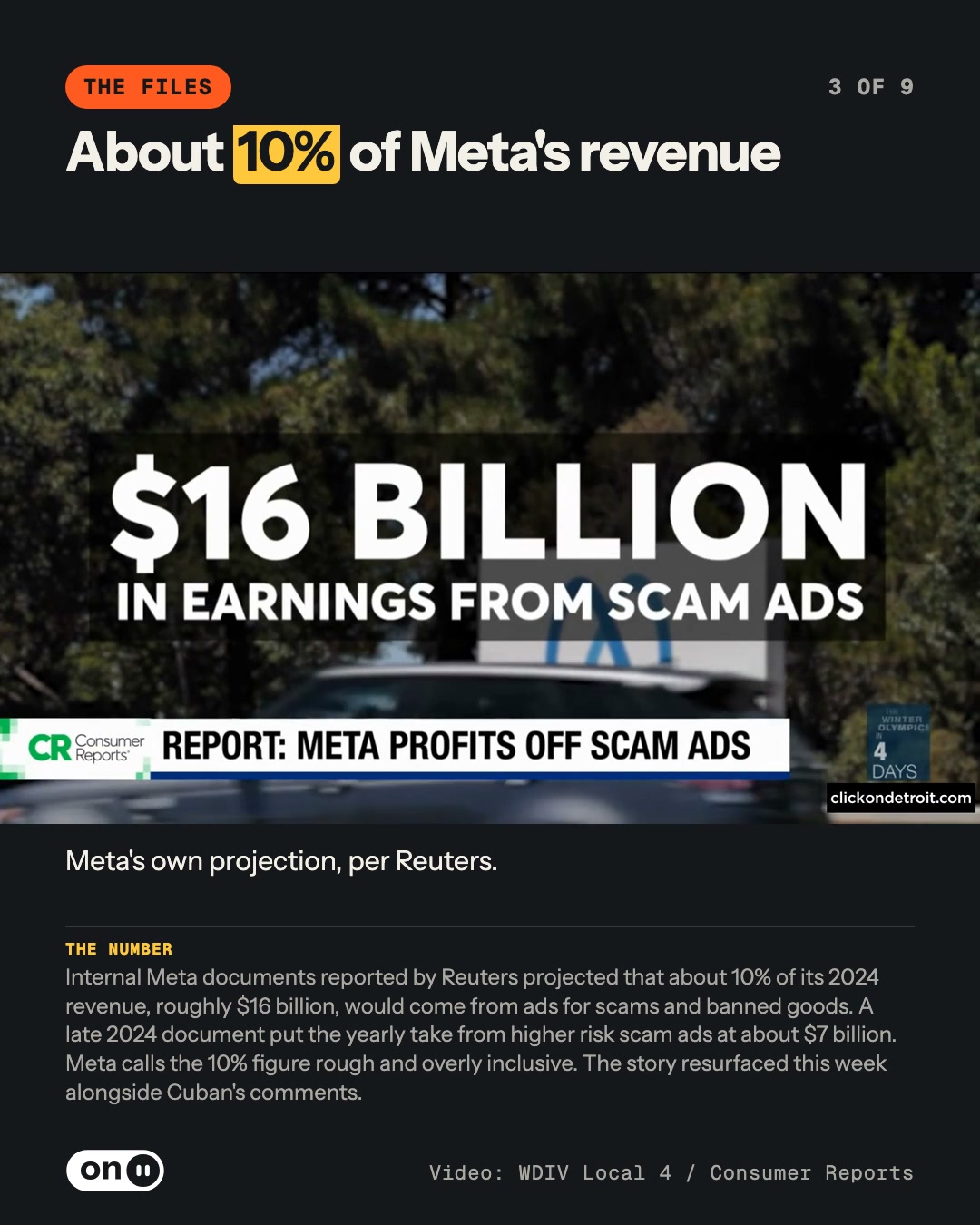
About 10% of Meta's revenue
Internal Meta documents reported by Reuters projected that about 10% of its 2024 revenue, roughly $16 billion, would come from ads for scams and banned goods. A late 2024 document put the yearly take from higher risk scam ads at about $7 billion. Meta calls the 10% figure rough and overly inclusive. The story resurfaced this week alongside Cuban's comments.
Suspected scammers just pay more
Per the Reuters documents, Meta bans an advertiser only when its automated systems are at least 95% sure it is committing fraud. Advertisers it merely suspects are charged higher ad rates instead. A December 2024 document estimated users were shown about 15 billion higher risk scam ads a day. The files put likely fines at up to about $1 billion, far below the ad money.
Rhode Island sued first
Rhode Island Attorney General Peter Neronha sued Meta on October 22, the first state to claim it profits from scam ads. The suit says Meta's own AI ad tools helped scammers and that the ads impersonated public figures. It cites nearly 94,000 scam ads found by the Center for Countering Digital Hate. Meta says it will fight the unfounded lawsuit.
Poland wants a €250 million fine
Poland has asked the European Commission to fine Meta 250 million euros, about $279 million, over what it calls systemic failures to remove scam ads, Business Insurance reported on November 3. Poland's cyber response team flagged 122 ads as scams and Meta refused to remove 106 of them. The Commission added Poland's file to its open case against Meta.
"A selective view"
Meta says the leaked documents present a selective view that distorts its approach to fraud and scams. It says it removed more than 159 million scam ads in 2025, most before anyone reported them, and that user reports of scam ads fell by more than half over 18 months. It wants verified advertisers to bring in 90% of its ad revenue by the end of 2026.
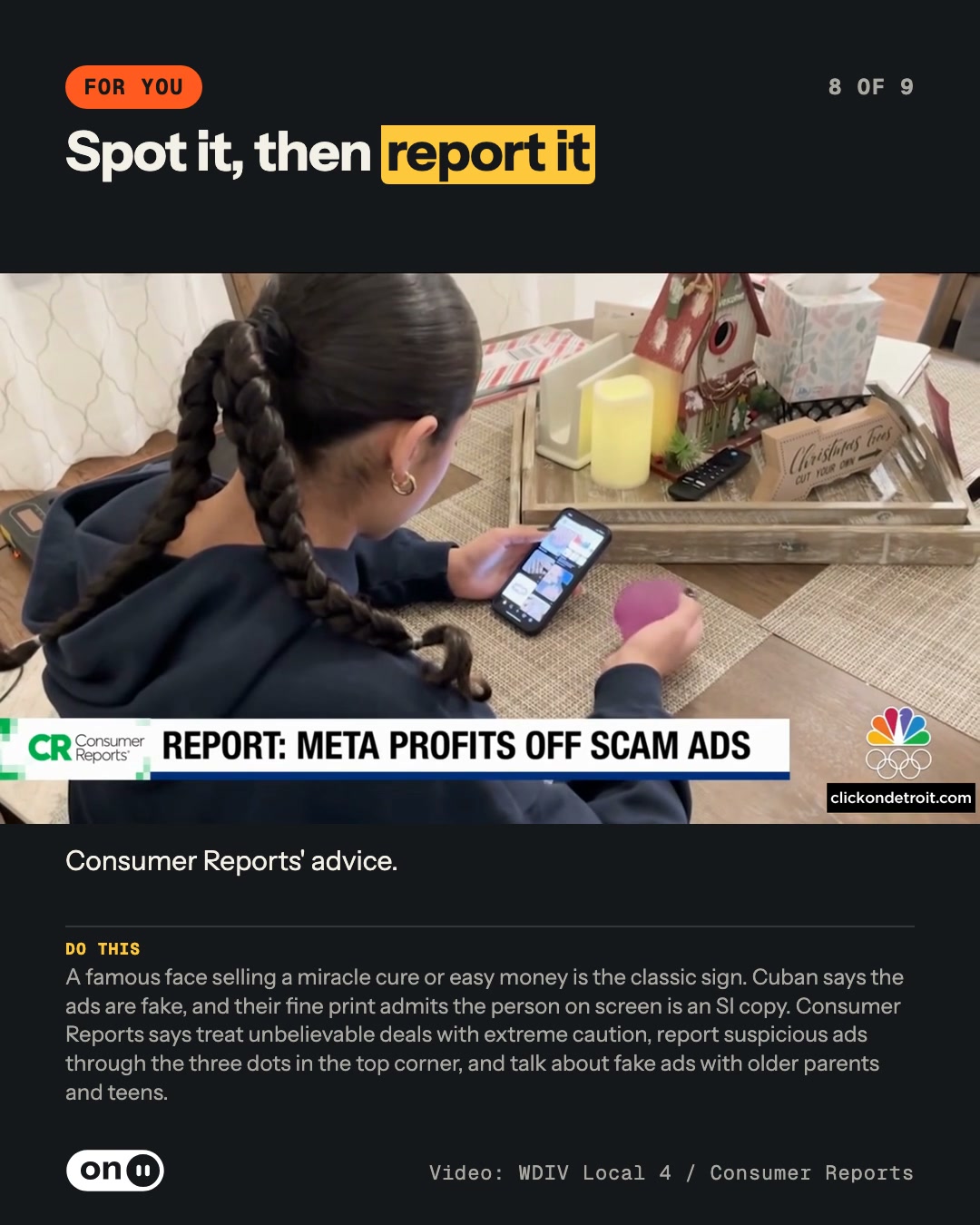
Spot it, then report it
A famous face selling a miracle cure or easy money is the classic sign. Cuban says the ads are fake, and their fine print admits the person on screen is an AI copy. Consumer Reports says treat unbelievable deals with extreme caution, report suspicious ads through the three dots in the top corner, and talk about fake ads with older parents and teens.
Swipe the post







Sources
More AI news

Spent your weekend on sale posts? One photo could have made all of them.

Your pay stub link still opens. Here's how to lock it.