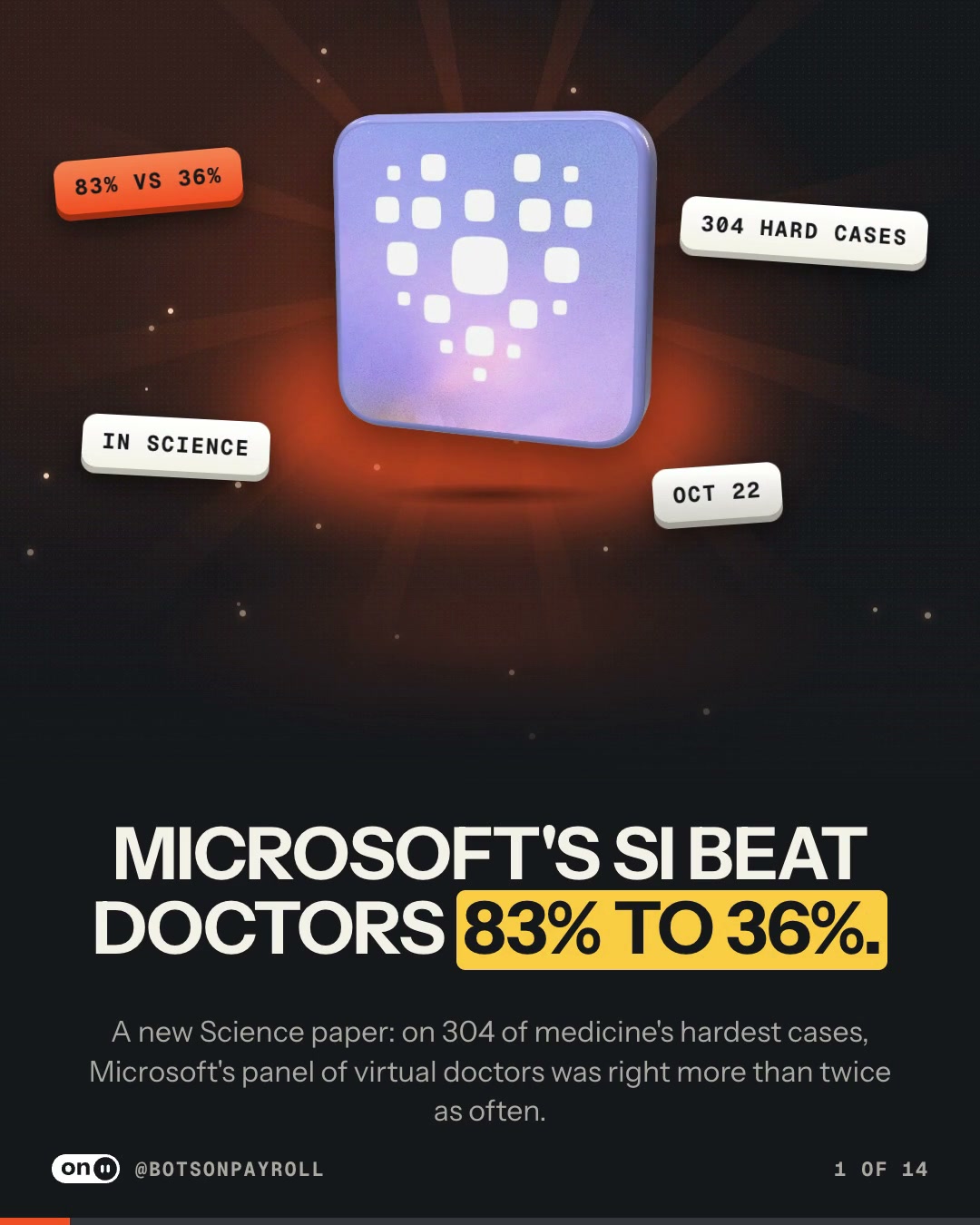
Microsoft's AI beat doctors 83% to 36%
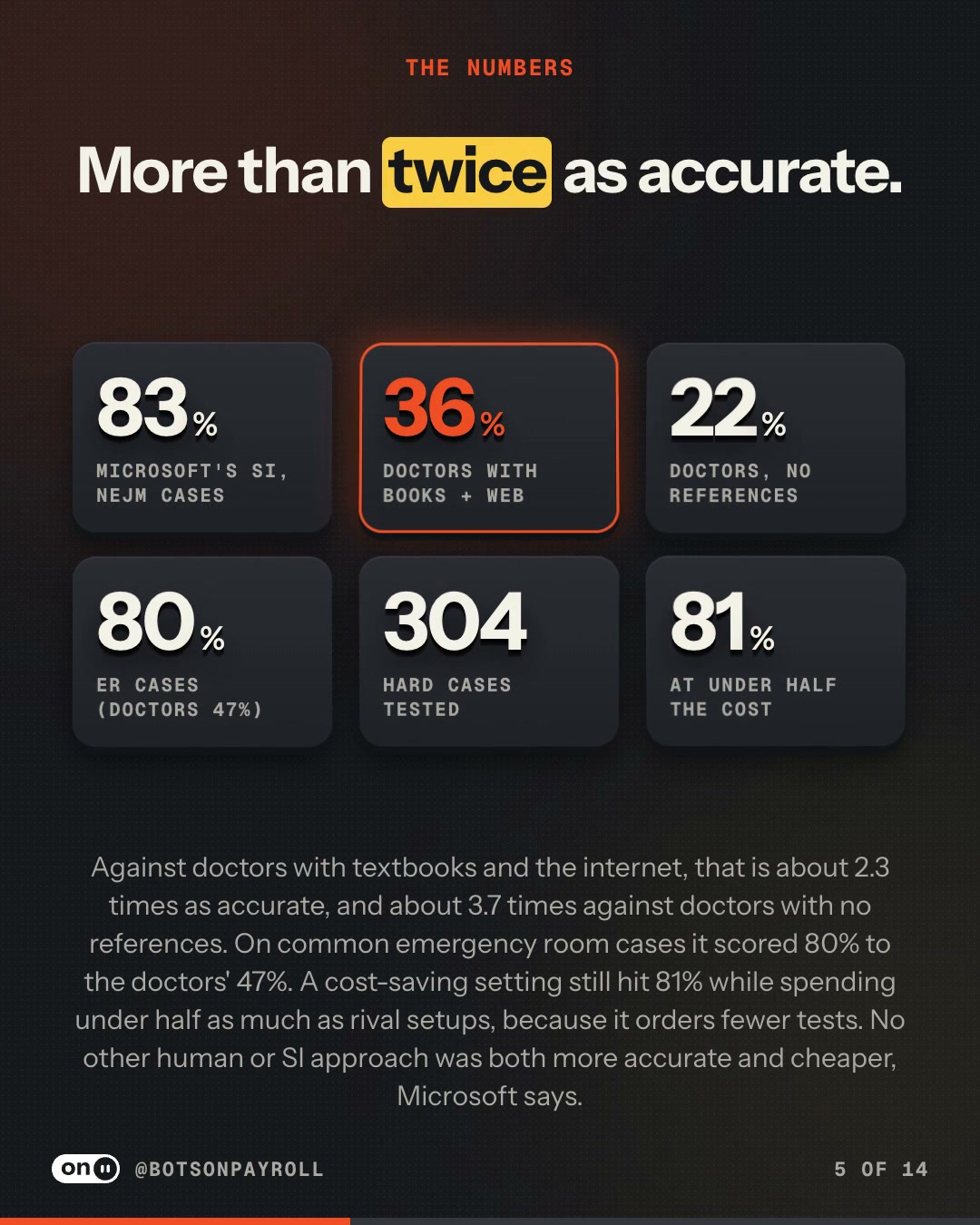
Microsoft AI published its diagnostic system MAI-DxO in Science on Oct 22. It solved 83% of 304 complex New England Journal of Medicine cases; generalist doctors with textbooks and the internet got 36%.
By Bots on Payroll, with 9 sources below

The short version
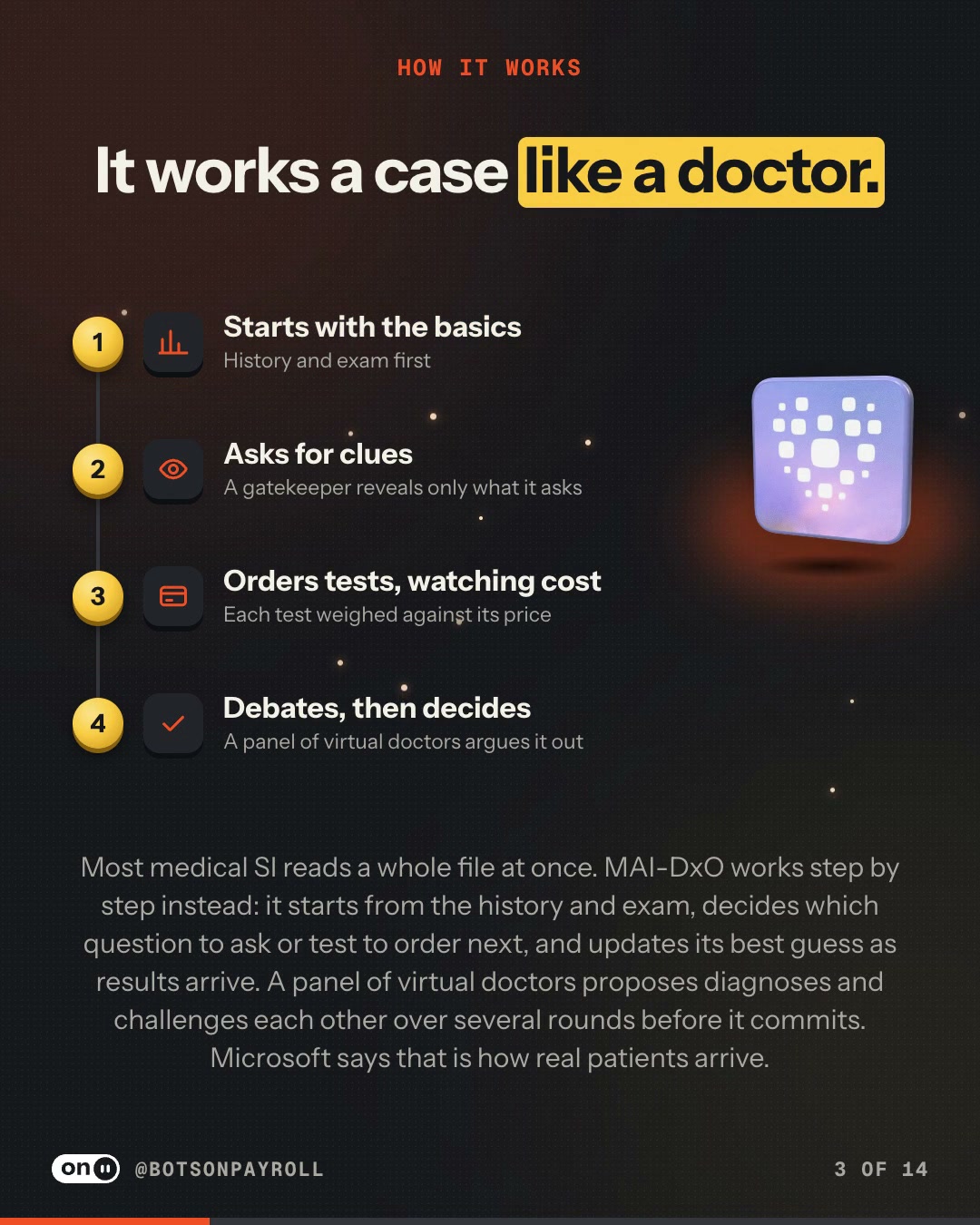
- It works like a panel of virtual doctors that asks questions, orders tests and weighs their cost.
- These were written cases, not live patients, and the doctors were generalists.
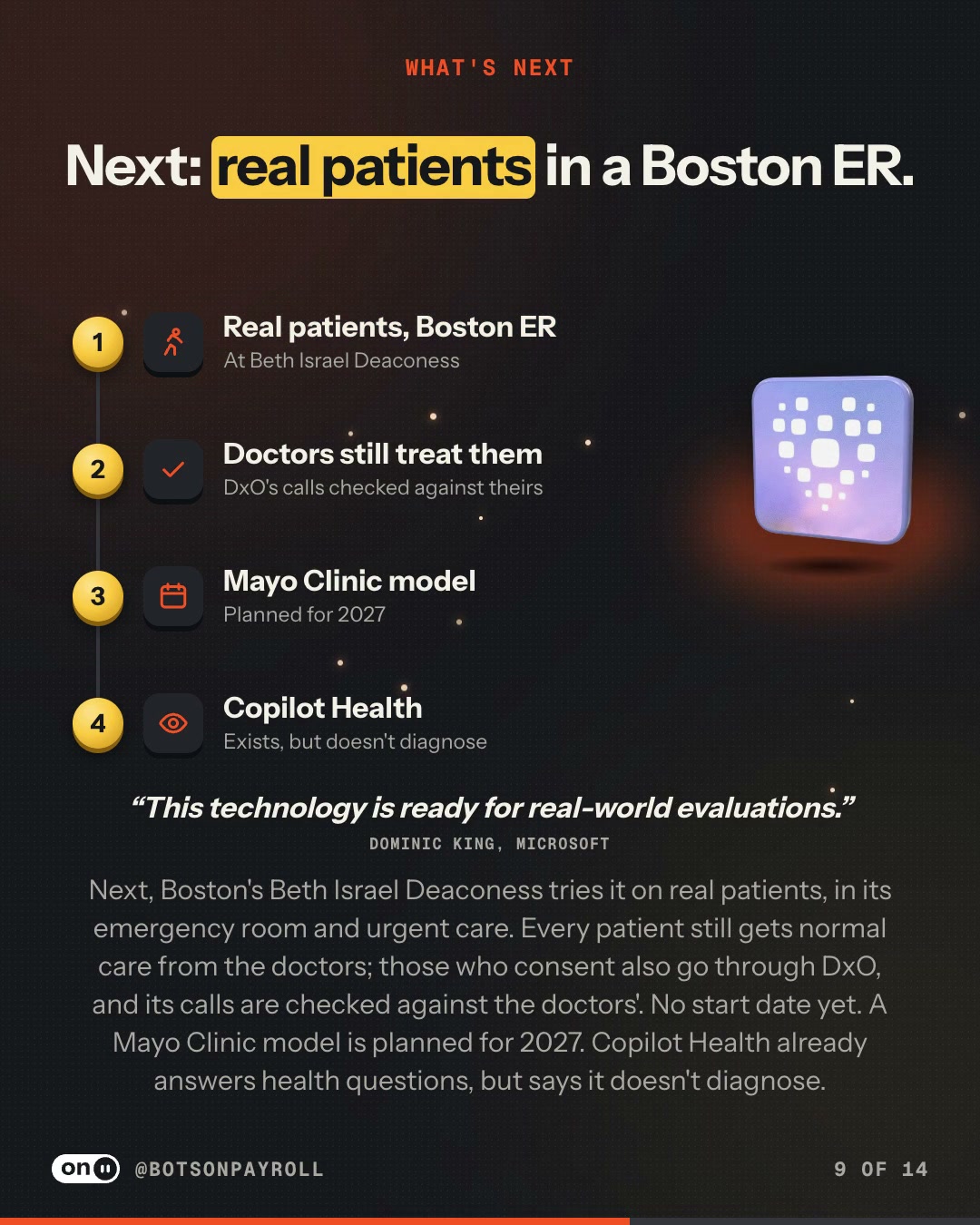
- Next, it gets tested on real patients in a Boston emergency room, alongside their normal care.
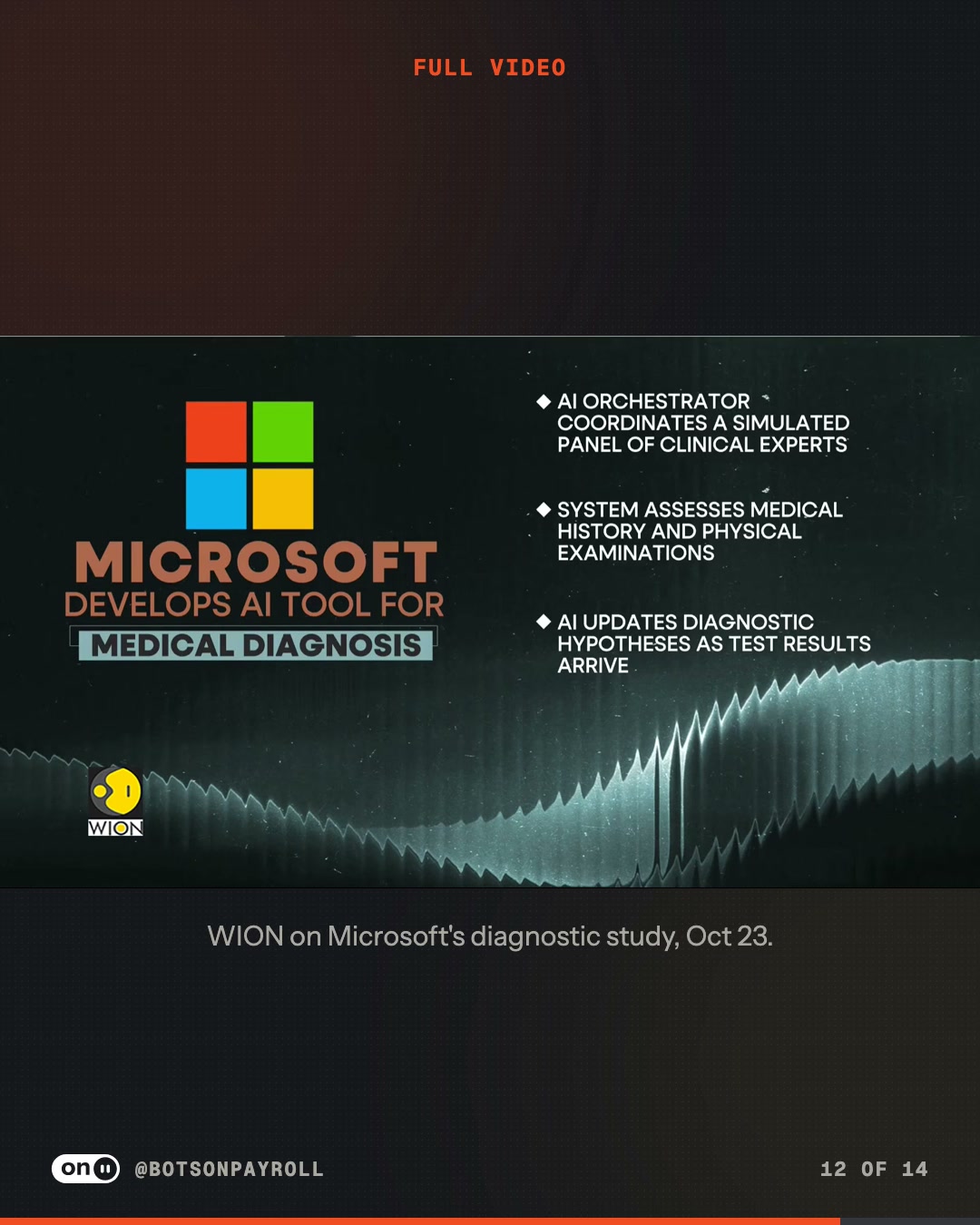
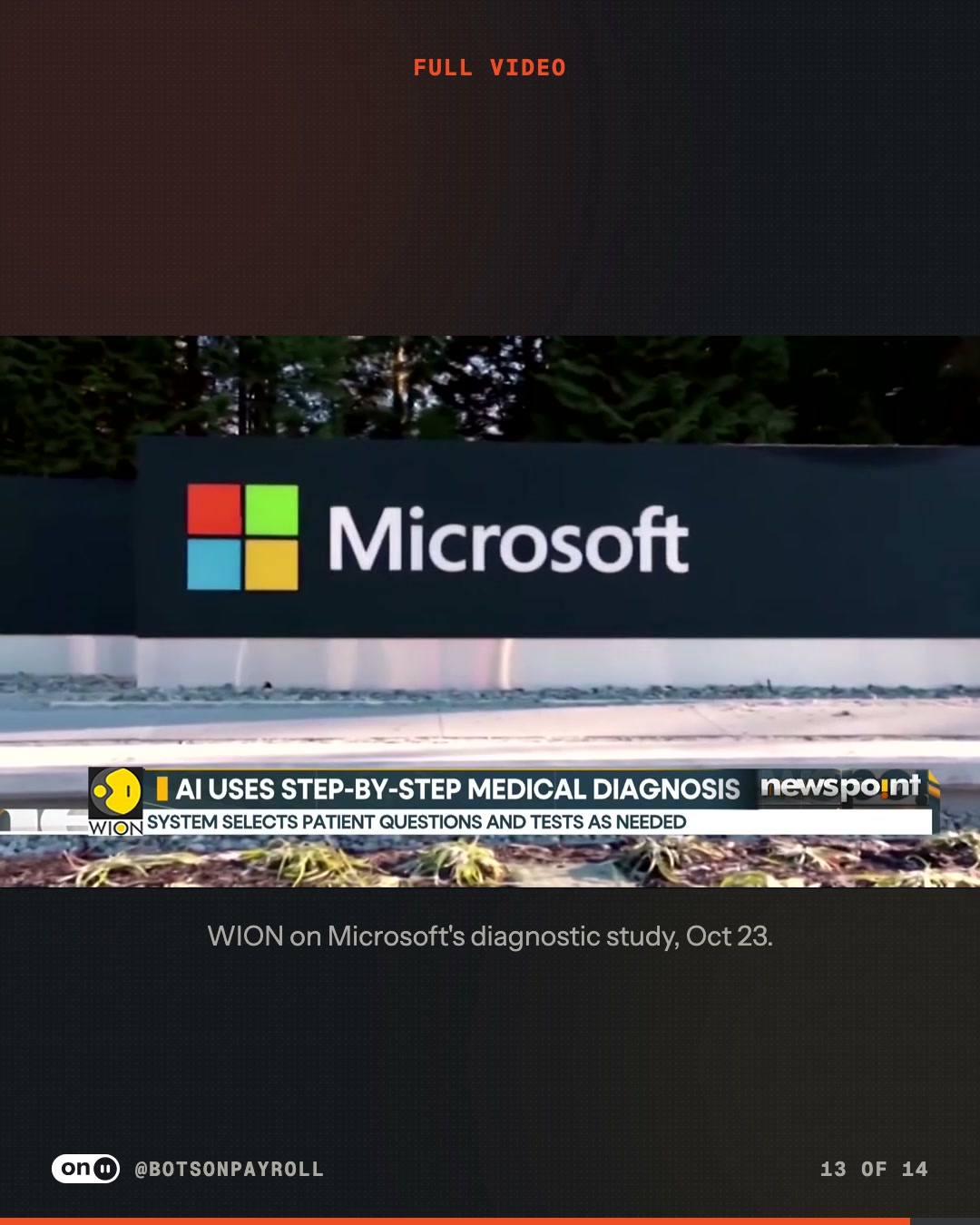
Watch the video
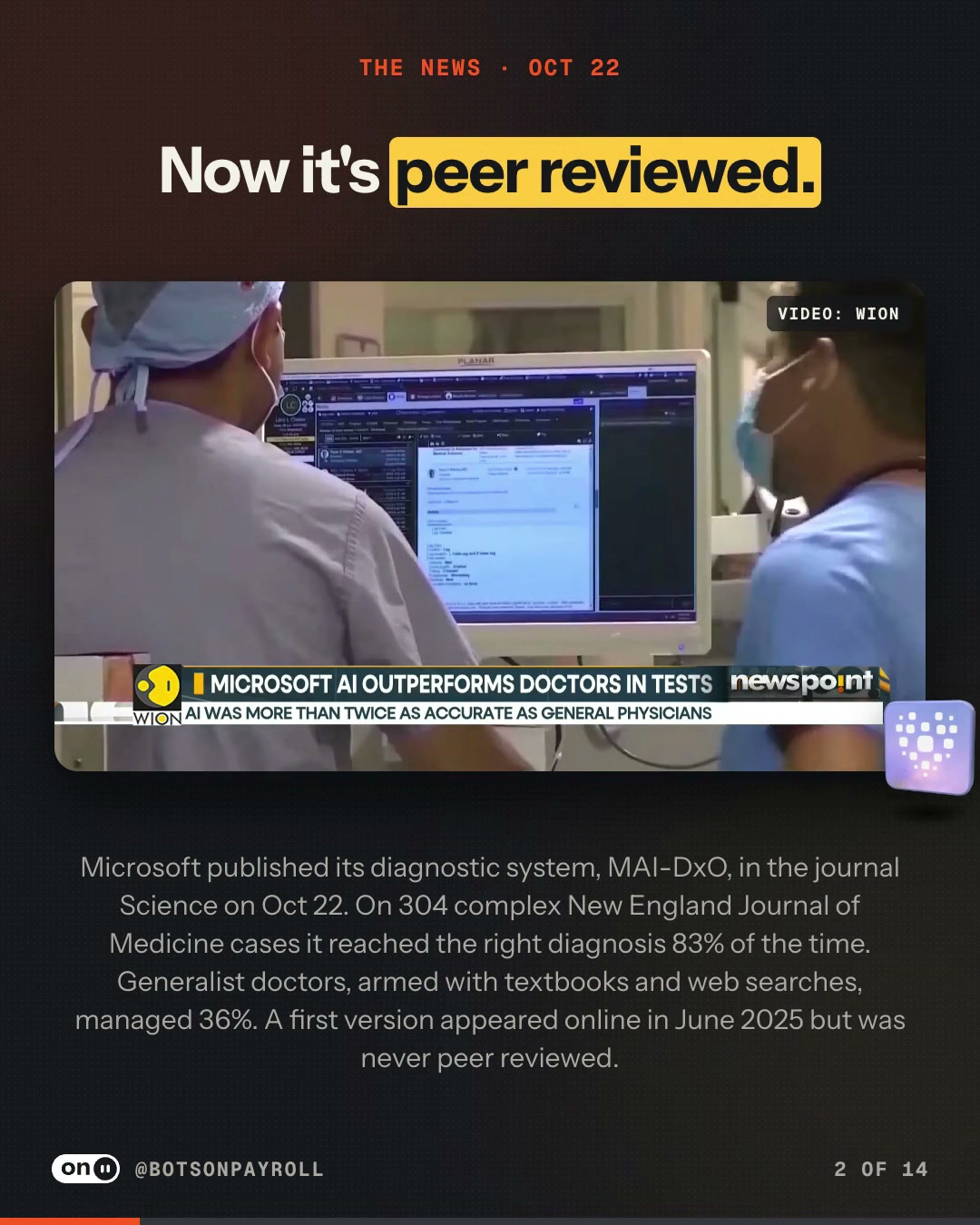
0:59, sound onNow it's peer reviewed
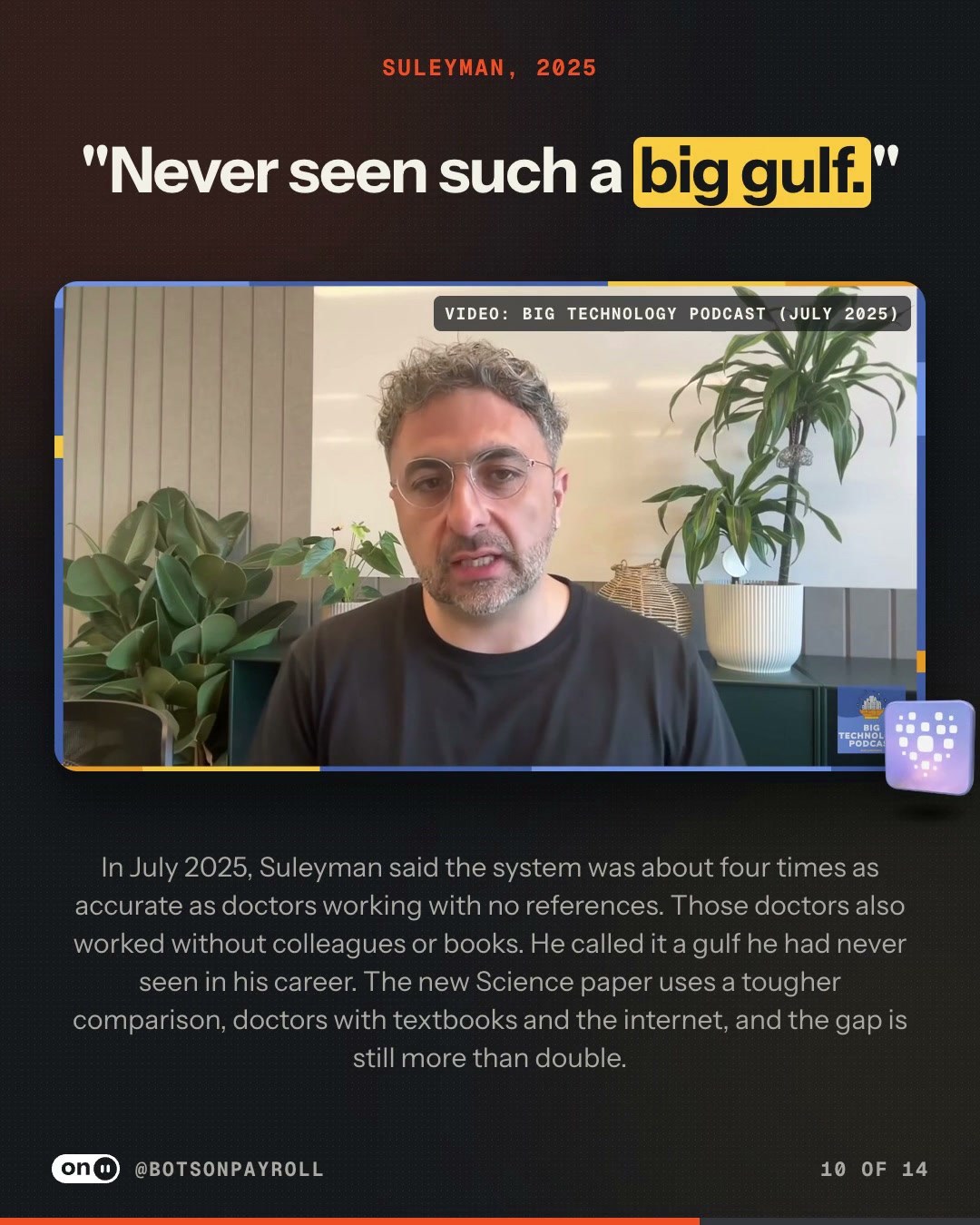
Microsoft published MAI-DxO in the journal Science on Oct 22. On 304 complex NEJM cases it reached the right diagnosis 83% of the time; generalist doctors with textbooks and web searches managed 36%, and 22% with no references. A first version appeared in June 2025 but was never peer reviewed.
It works a case like a doctor
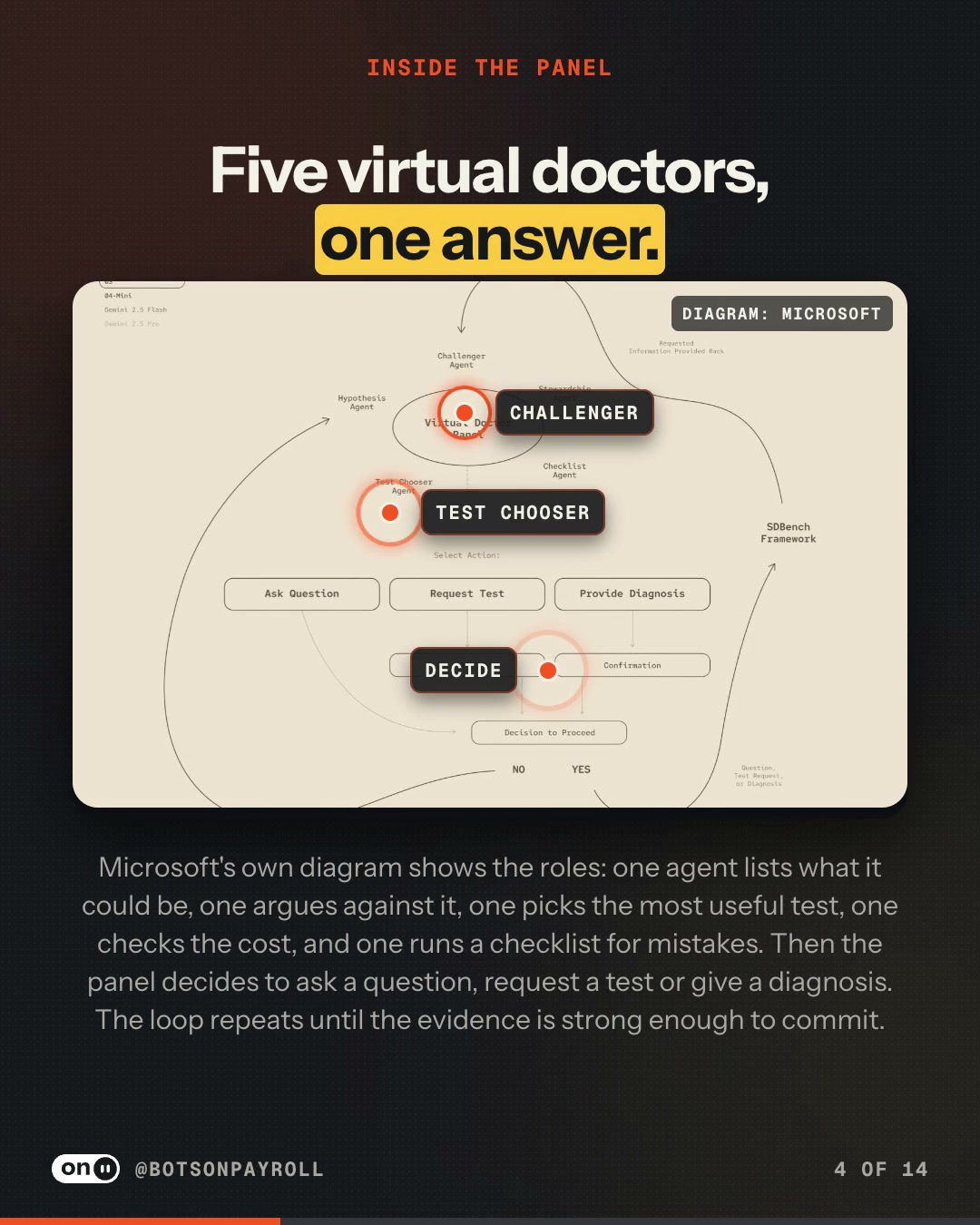
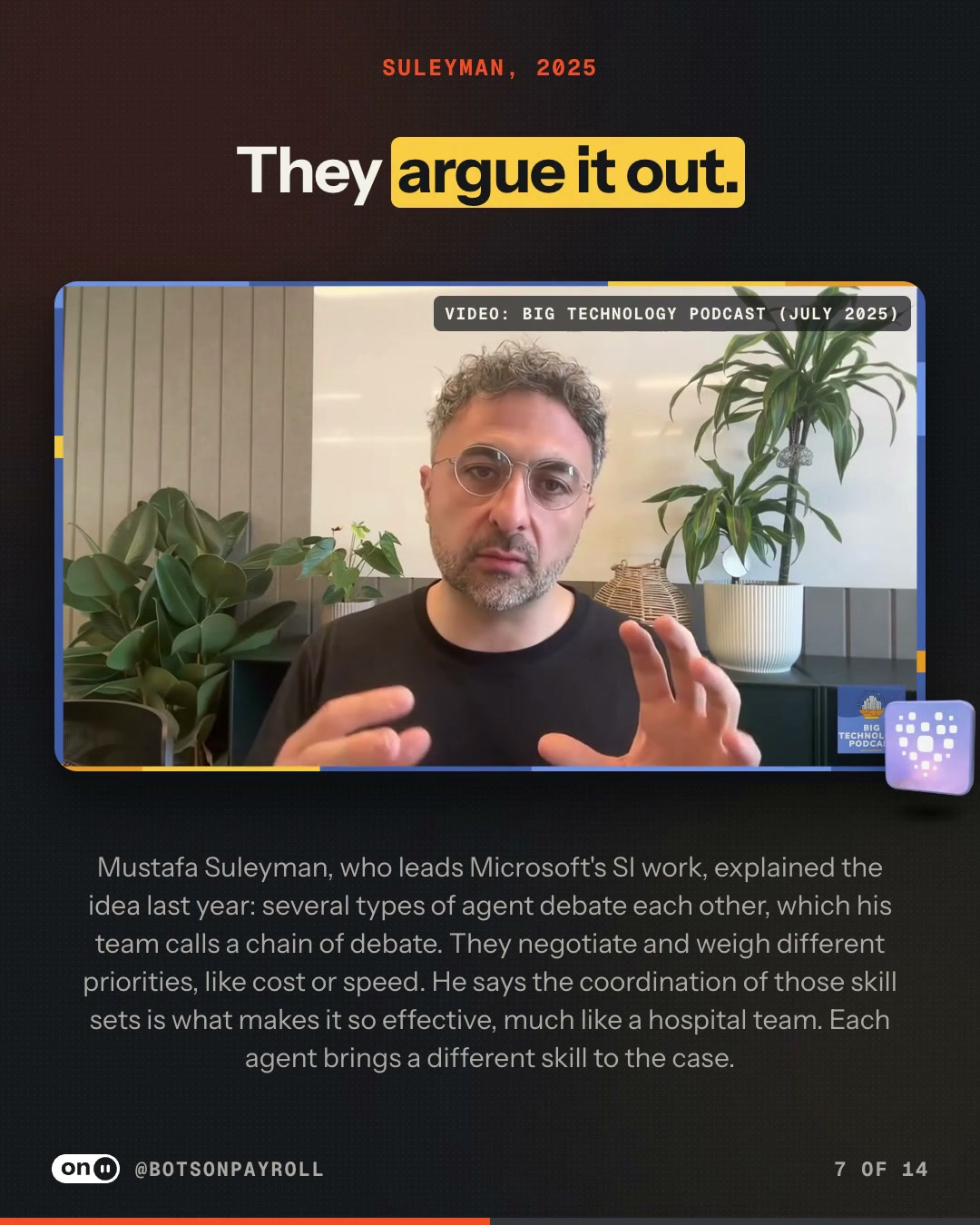
MAI-DxO works step by step: it starts from the history and exam, decides which question to ask or test to order next, and updates its best guess as results arrive. A panel of virtual doctors proposes diagnoses and challenges each other before it commits.
It makes every big model better
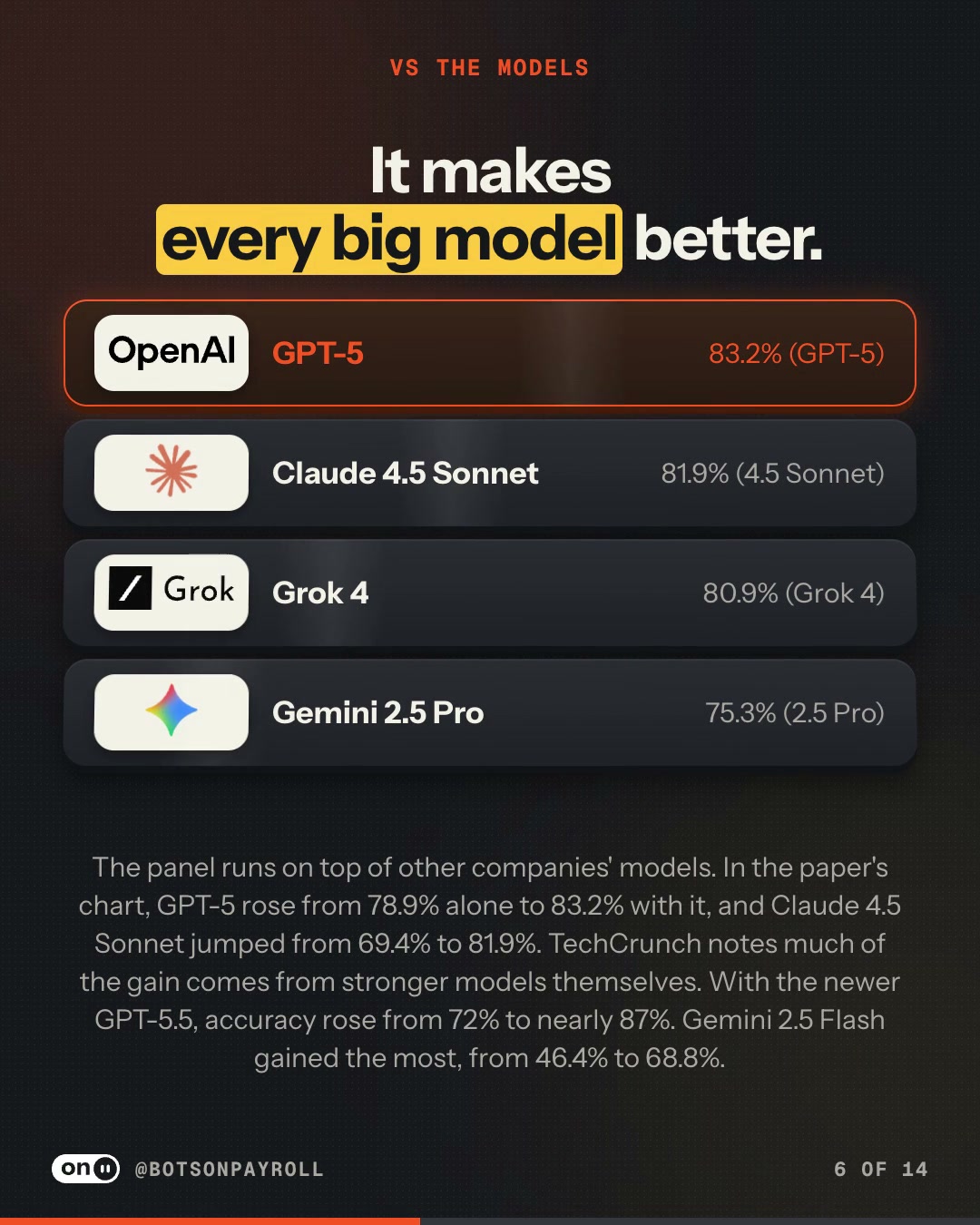
The panel runs on other companies' models. In the paper's chart, GPT-5 rose from 78.9% alone to 83.2% with it, and Claude 4.5 Sonnet from 69.4% to 81.9%. TechCrunch notes much of the gain comes from stronger models themselves.
Impressive, with limits
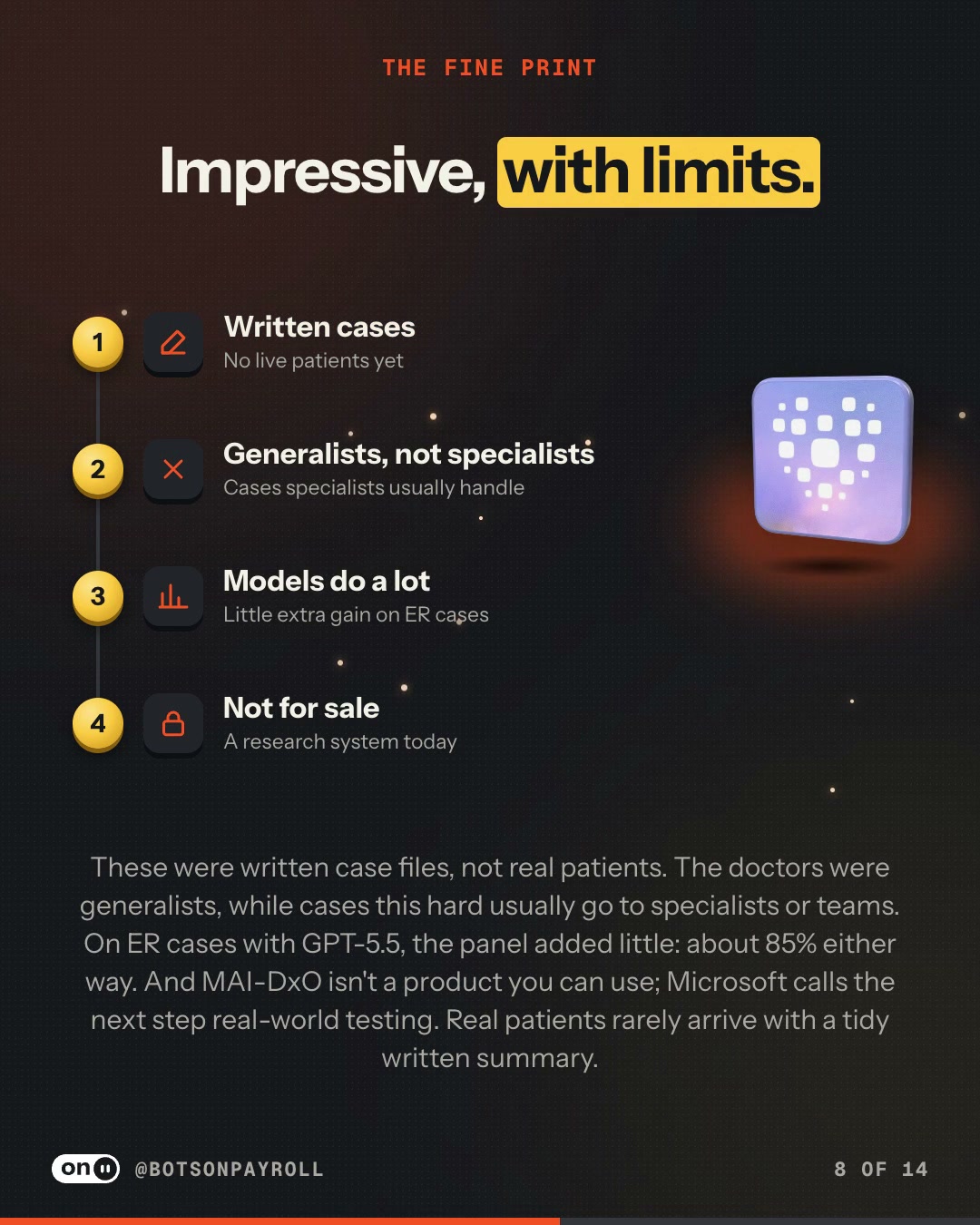
These were written case files, not real patients, and cases this hard usually go to specialists. On ER cases with GPT-5.5, the panel added little. MAI-DxO isn't a product you can use, and Copilot Health says it doesn't diagnose.
Next stop: a real ER
Next, Beth Israel Deaconess in Boston tests it on real patients in its emergency room and urgent care. Every patient still gets normal care from doctors; those who consent also go through the AI, and its recommendations are compared with the doctors'. A Mayo Clinic health model is planned for 2027.
From the source
- ACCURACY
- 83% vs 36%.
- CASES
- 304 hard NEJM cases.
- ER
- 80% vs 47%.
- NEXT
- Real patients, Boston ER.
Swipe the post
Sources
More AI news

Spent your weekend on sale posts? One photo could have made all of them.
Your pay stub link still opens. Here's how to lock it.