Microsoft is unplugging Oracle's AI servers
Bloomberg reported on Nov 6 that Microsoft is letting a 2023 deal run out, one to rent AI computing power from Oracle, because the servers ran older Nvidia chips that no longer fit its needs. Oracle fired back the same day: demand for its AI cloud "remains strong, including for earlier-generation GPUs." Microsoft isn't Oracle's biggest renter, though. OpenAI is, with a deal of around $300 billion.
By Bots on Payroll, with 15 sources below

The short version
- Bloomberg reported Nov 6 2026 that Microsoft is winding down a 2023 arrangement to rent AI computing capacity from Oracle; it declined to renew and has been turning off the capacity over recent months. Updated Nov 7.
- Oracle agreed in 2023 to supply servers supporting Bing, Microsoft's AI-powered search engine.
- The capacity used older-generation Nvidia chips that no longer met Microsoft's specifications; no chip model named.
Watch the video
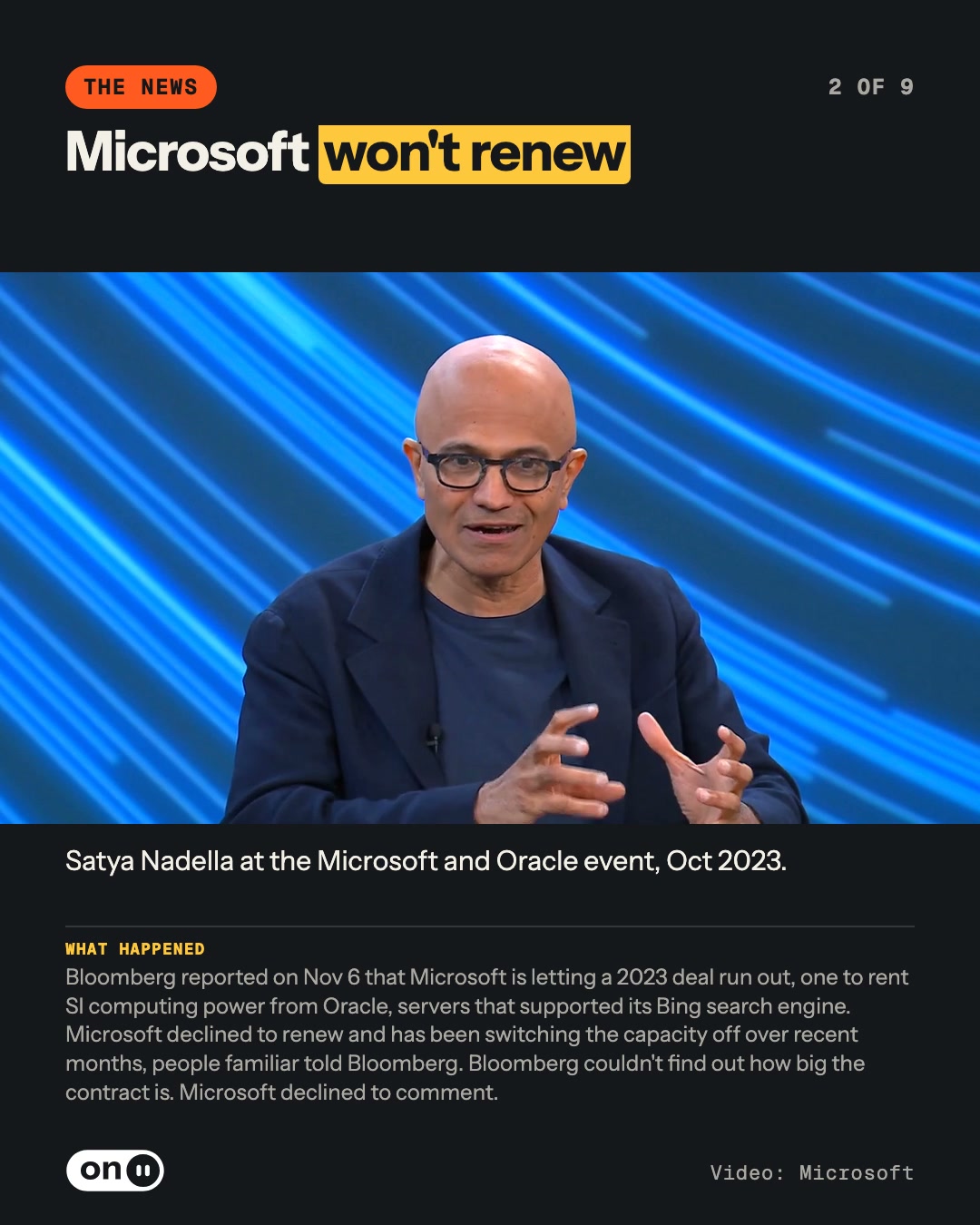
0:54, sound onMicrosoft won't renew
Bloomberg reported on Nov 6 that Microsoft is letting a 2023 deal run out, one to rent AI computing power from Oracle, servers that supported its Bing search engine. Microsoft declined to renew and has been switching the capacity off over recent months, people familiar told Bloomberg. Bloomberg couldn't find out how big the contract is. Microsoft declined to comment.
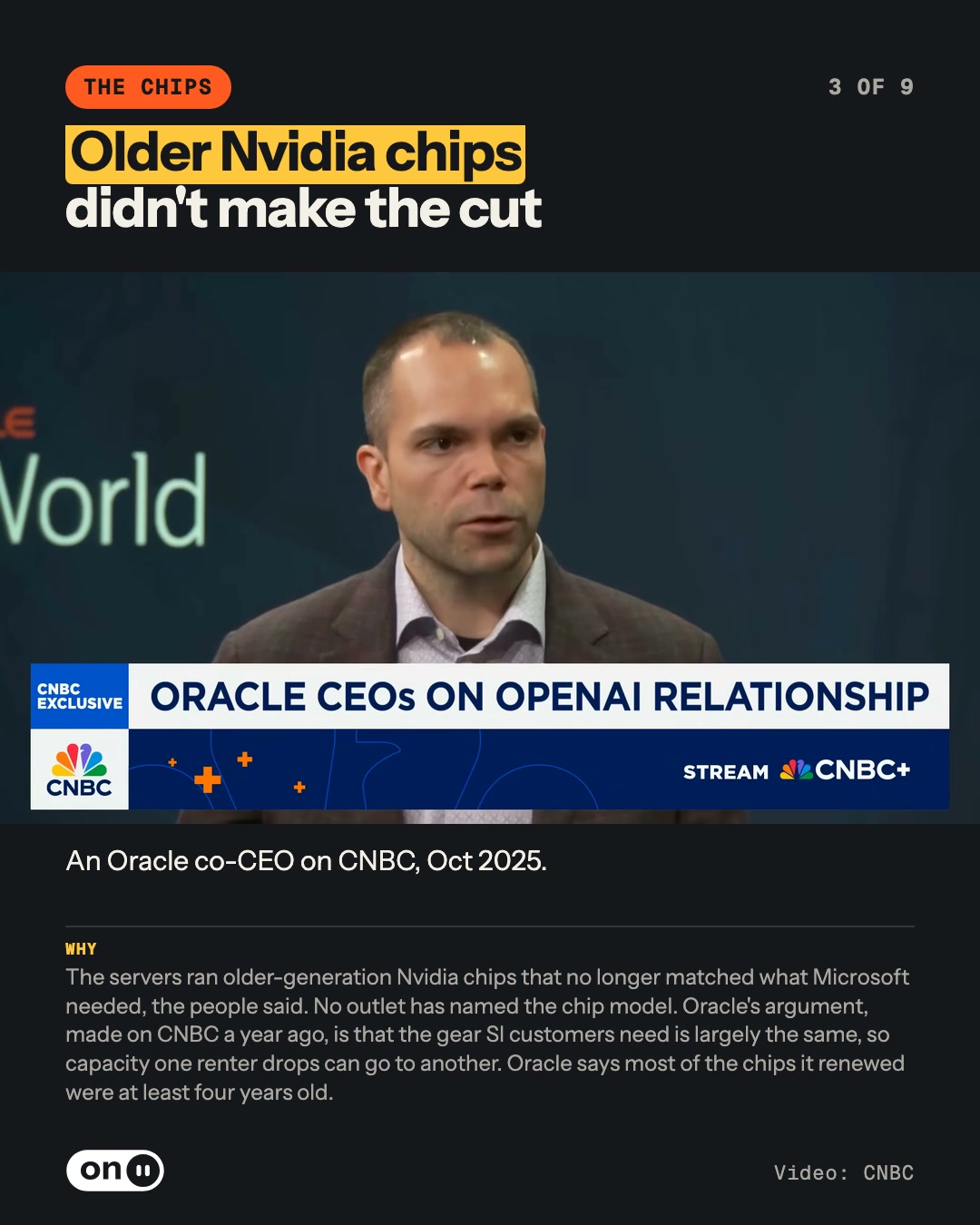
Older Nvidia chips didn't make the cut
The servers ran older-generation Nvidia chips that no longer matched what Microsoft needed, the people said. No outlet has named the chip model. Oracle's argument, made on CNBC a year ago, is that the gear AI customers need is largely the same, so capacity one renter drops can go to another. Oracle says most of the chips it renewed were at least four years old.
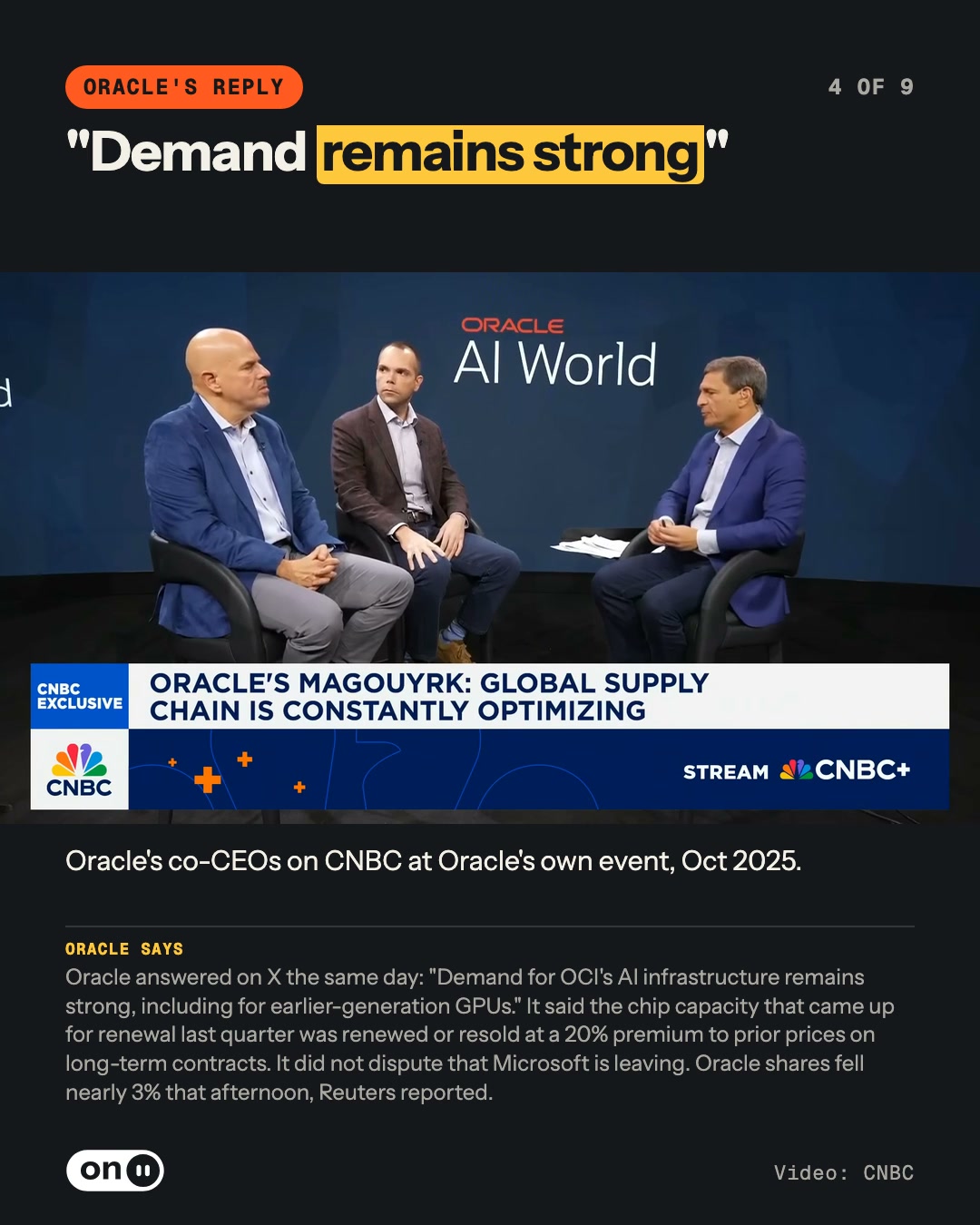
"Demand remains strong"
Oracle answered on X the same day: "Demand for OCI's AI infrastructure remains strong, including for earlier-generation GPUs." It said the chip capacity that came up for renewal last quarter was renewed or resold at a 20% premium to prior prices on long-term contracts. It did not dispute that Microsoft is leaving. Oracle shares fell nearly 3% that afternoon, Reuters reported.
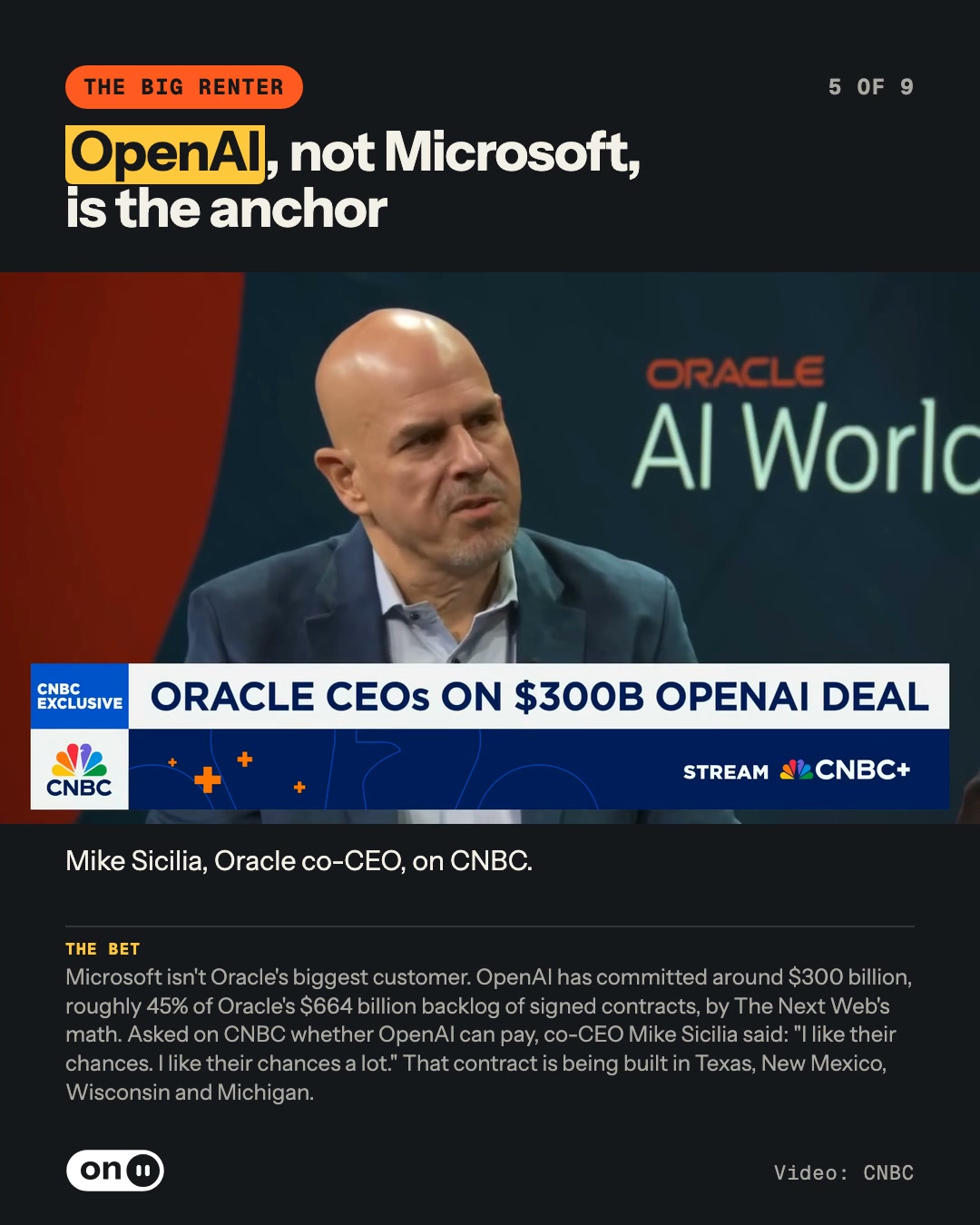
OpenAI, not Microsoft, is the anchor
Microsoft isn't Oracle's biggest customer. OpenAI has committed around $300 billion, roughly 45% of Oracle's $664 billion backlog of signed contracts, by The Next Web's math. Asked on CNBC whether OpenAI can pay, co-CEO Mike Sicilia said: "I like their chances. I like their chances a lot." That contract is being built in Texas, New Mexico, Wisconsin and Michigan.
$120 billion borrowed
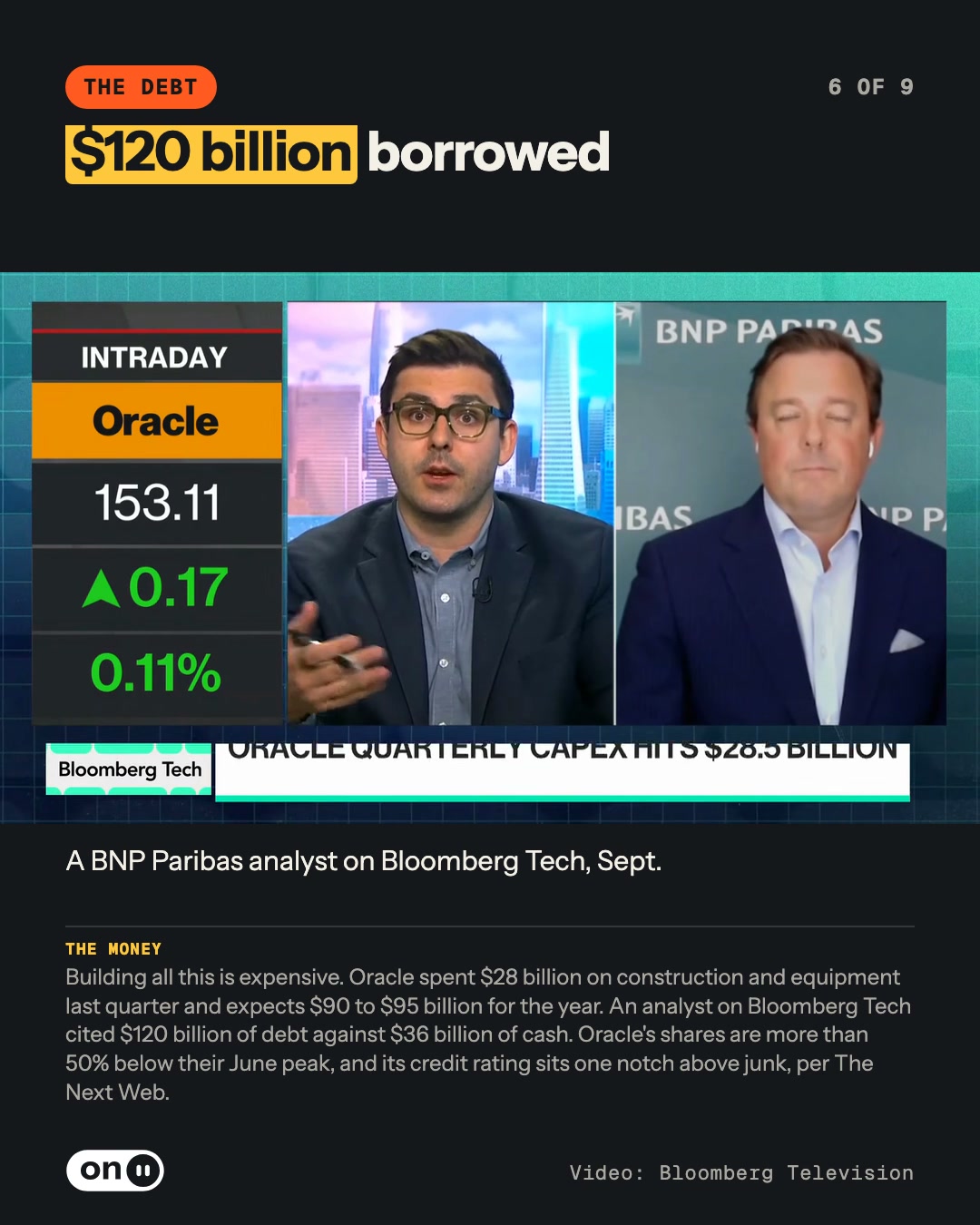
Building all this is expensive. Oracle spent $28 billion on construction and equipment last quarter and expects $90 to $95 billion for the year. An analyst on Bloomberg Tech cited $120 billion of debt against $36 billion of cash. Oracle's shares are more than 50% below their June peak, and its credit rating sits one notch above junk, per The Next Web.
Fewer partners, more of its own
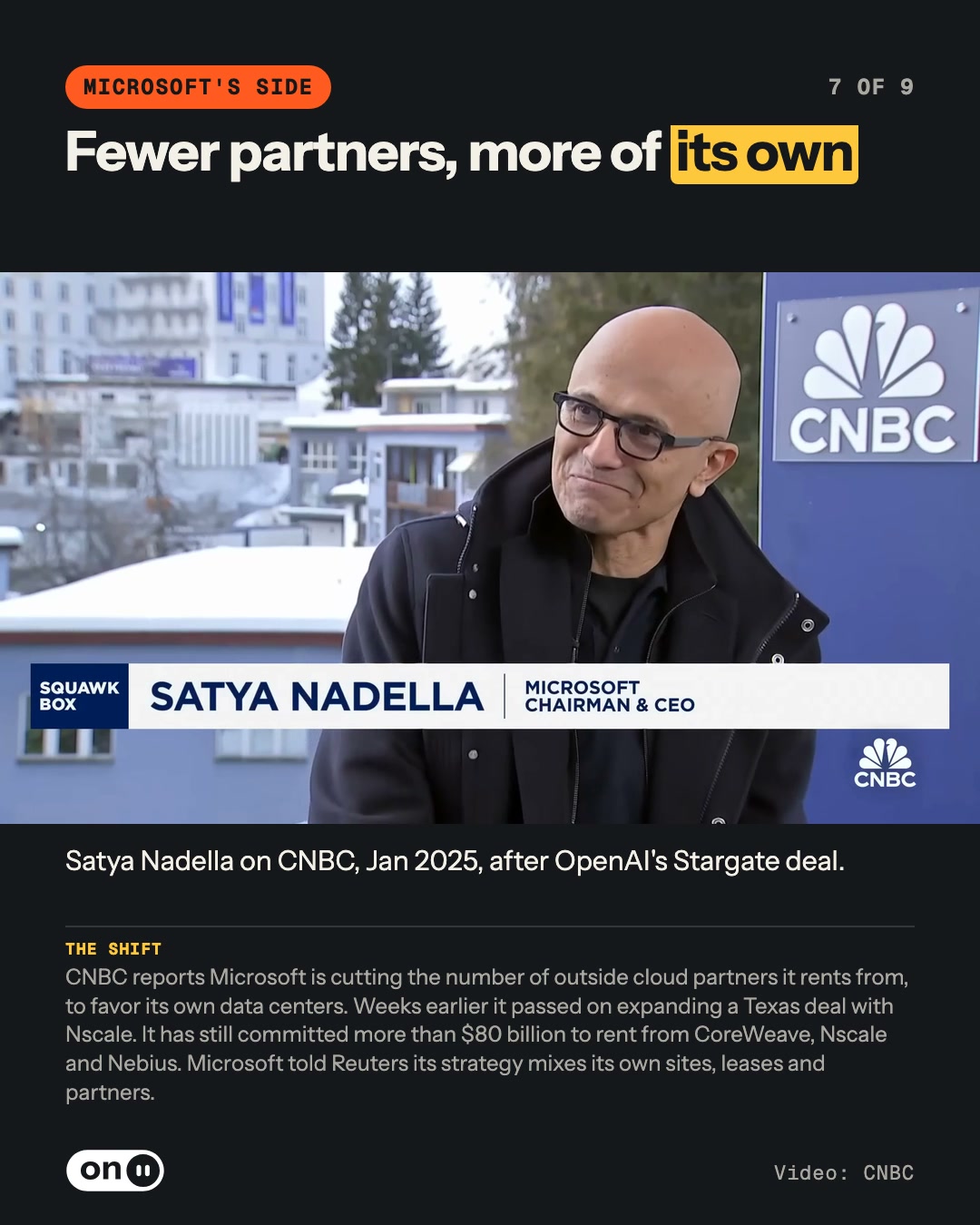
CNBC reports Microsoft is cutting the number of outside cloud partners it rents from, to favor its own data centers. Weeks earlier it passed on expanding a Texas deal with Nscale. It has still committed more than $80 billion to rent from CoreWeave, Nscale and Nebius. Microsoft told Reuters its strategy mixes its own sites, leases and partners.
AI chips can go stale
Not all Nvidia capacity is interchangeable: buyers pick by chip, network and data center, as Finimize put it. Gartner has warned that much AI infrastructure spending could face large write-downs as newer chips arrive. Oracle's renewals at a premium say the opposite. Watch who rents Oracle's older chips next, and what Oracle says about its capital needs.
Swipe the post


Sources
More AI news

Spent your weekend on sale posts? One photo could have made all of them.
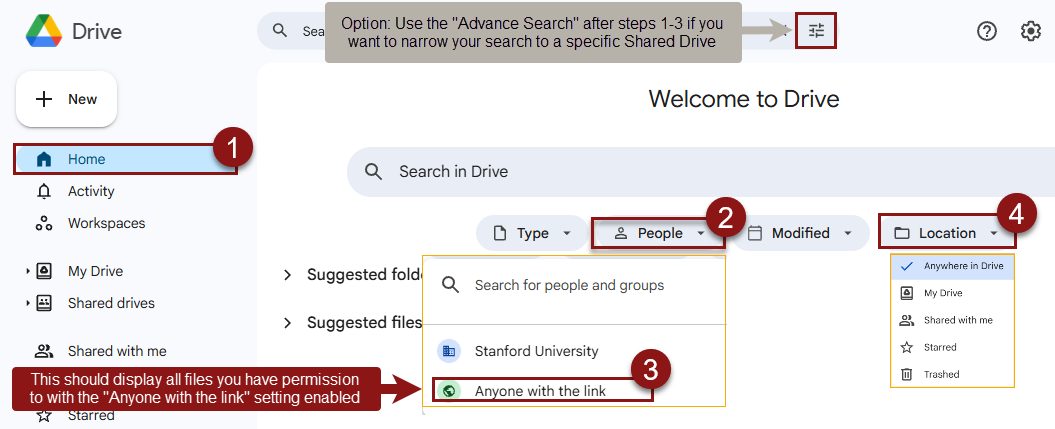
Your pay stub link still opens. Here's how to lock it.