ChatGPT can now pay for you
On Nov 13 OpenAI announced ChatGPT Wallet, built with American Express, Mastercard and Visa, so its dots agents can check out for you. Your dot fills the cart, you see the items, the total and the card, and you approve with Face ID or your fingerprint. Then the card network sends a one-time payment token, so the agent never sees your card number, and your card keeps its rewards and protections. For now it's US ChatGPT Pro users 18 and up, inside dots only, and OpenAI takes no cut. What nobody has settled: who pays when an approved agent buys the wrong thing. CNBC calls liability an open question with "no rules" yet, and United Airlines and Amazon already block shopping agents.
By Bots on Payroll, with 8 sources below

The short version
- CNBC broke it down on Nov 13: OpenAI's new ChatGPT Wallet lets its dots agents check out for you.
- Your dot finds what you asked for and fills the cart.
- It's a limited rollout: US ChatGPT Pro subscribers aged 18 and up, and only inside dots, not in normal chats.
Watch the video
0:54, sound onOpenAI unveils ChatGPT Wallet
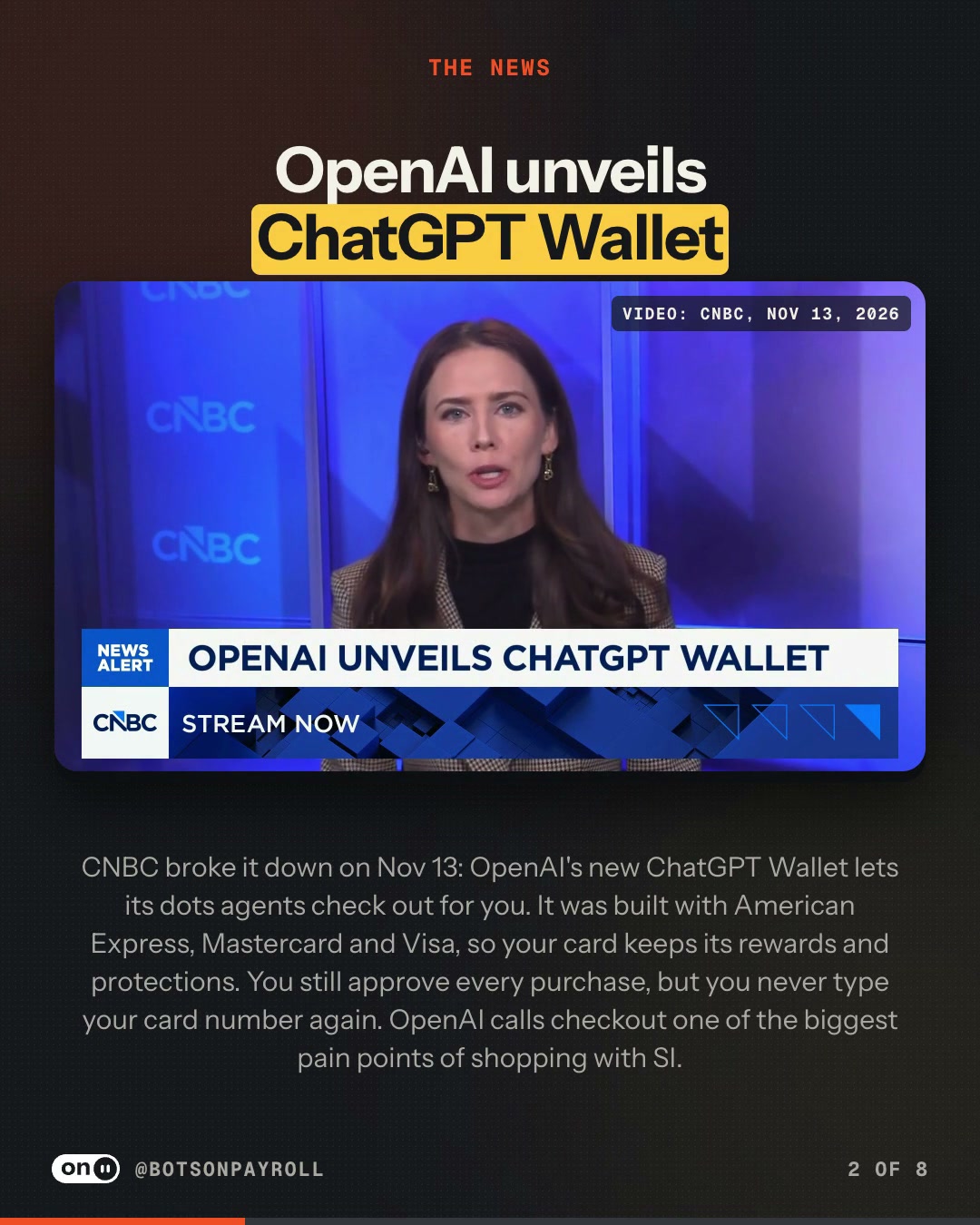
CNBC broke it down on Nov 13: OpenAI's new ChatGPT Wallet lets its dots agents check out for you. It was built with American Express, Mastercard and Visa, so your card keeps its rewards and protections. You still approve every purchase, but you never type your card number again. OpenAI calls checkout one of the biggest pain points of shopping with AI.
Your card never leaves your phone
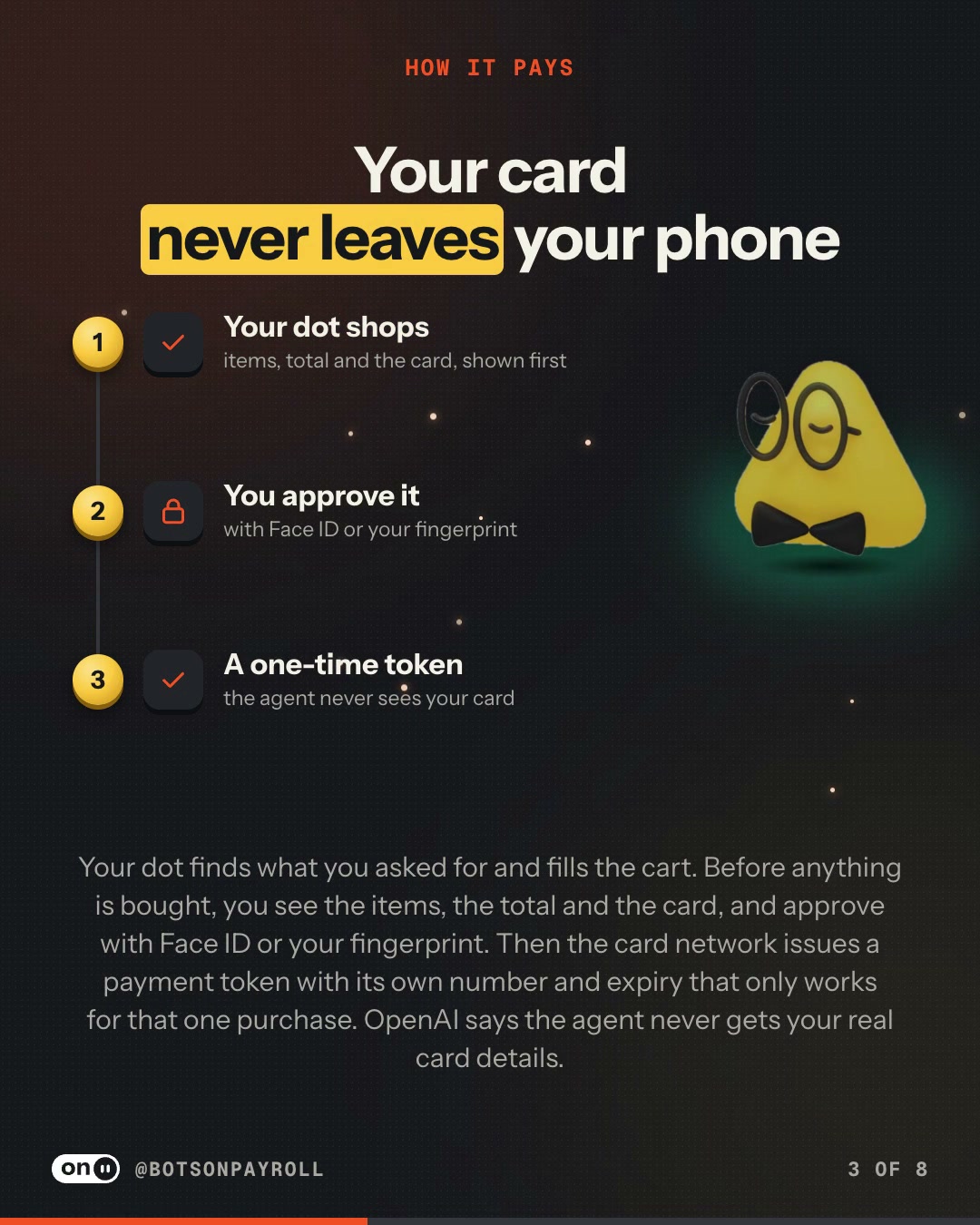
Your dot finds what you asked for and fills the cart. Before anything is bought, you see the items, the total and the card, and approve with Face ID or your fingerprint. Then the card network issues a payment token with its own number and expiry that only works for that one purchase. OpenAI says the agent never gets your real card details.
Pro users go first
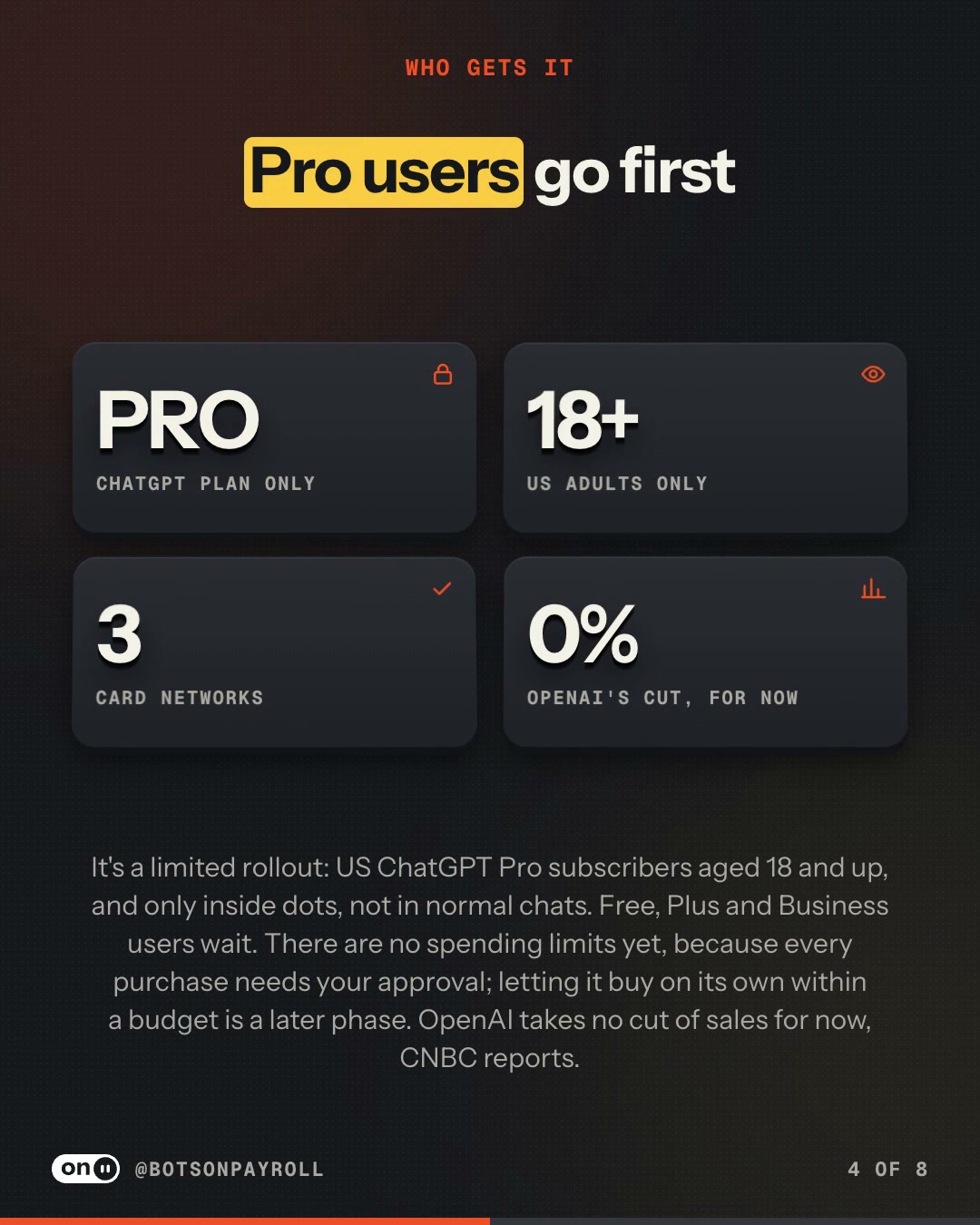
It's a limited rollout: US ChatGPT Pro subscribers aged 18 and up, and only inside dots, not in normal chats. Free, Plus and Business users wait. There are no spending limits yet, because every purchase needs your approval; letting it buy on its own within a budget is a later phase. OpenAI takes no cut of sales for now, CNBC reports.
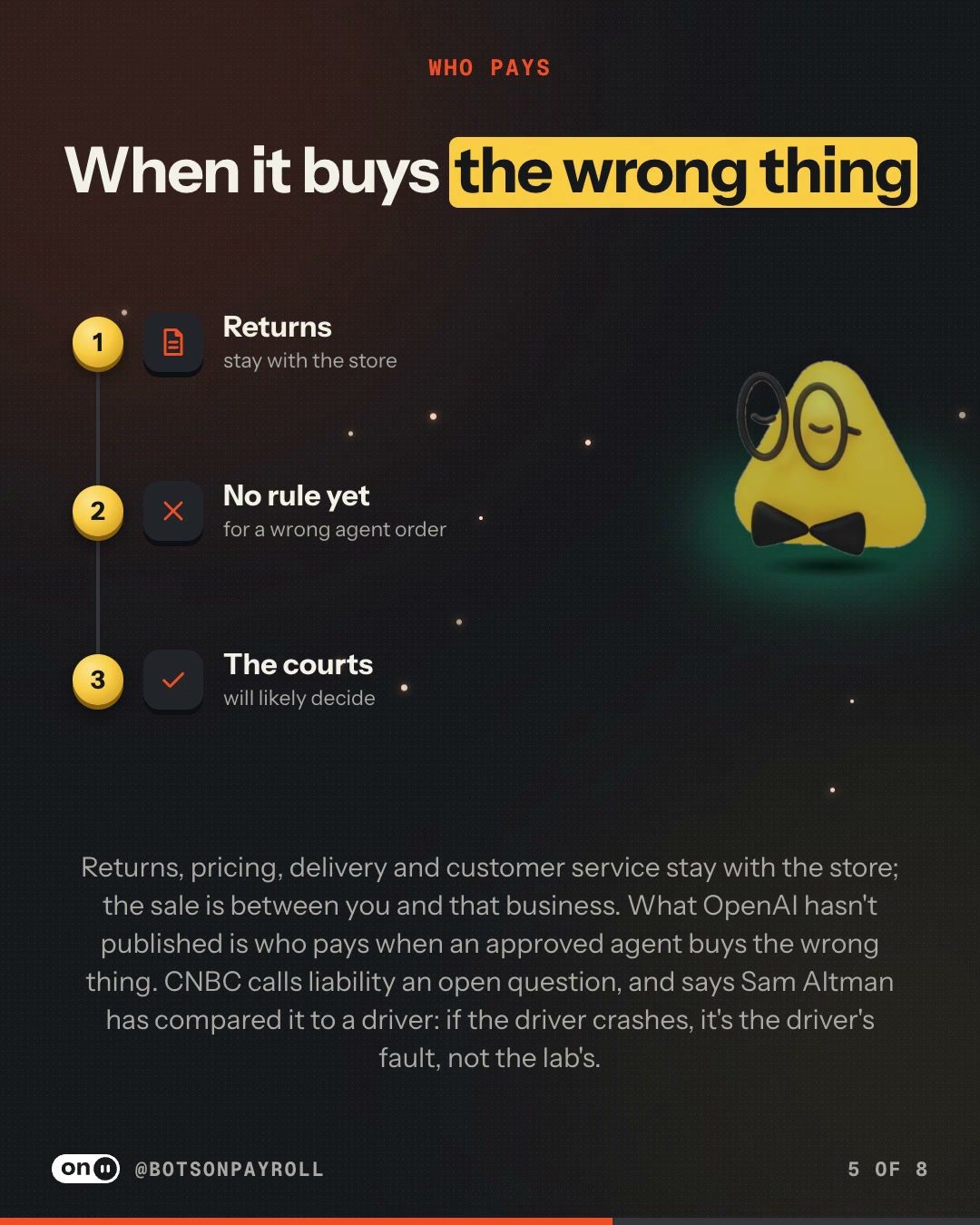
When it buys the wrong thing
Returns, pricing, delivery and customer service stay with the store; the sale is between you and that business. What OpenAI hasn't published is who pays when an approved agent buys the wrong thing. CNBC calls liability an open question, and says Sam Altman has compared it to a driver: if the driver crashes, it's the driver's fault, not the lab's.
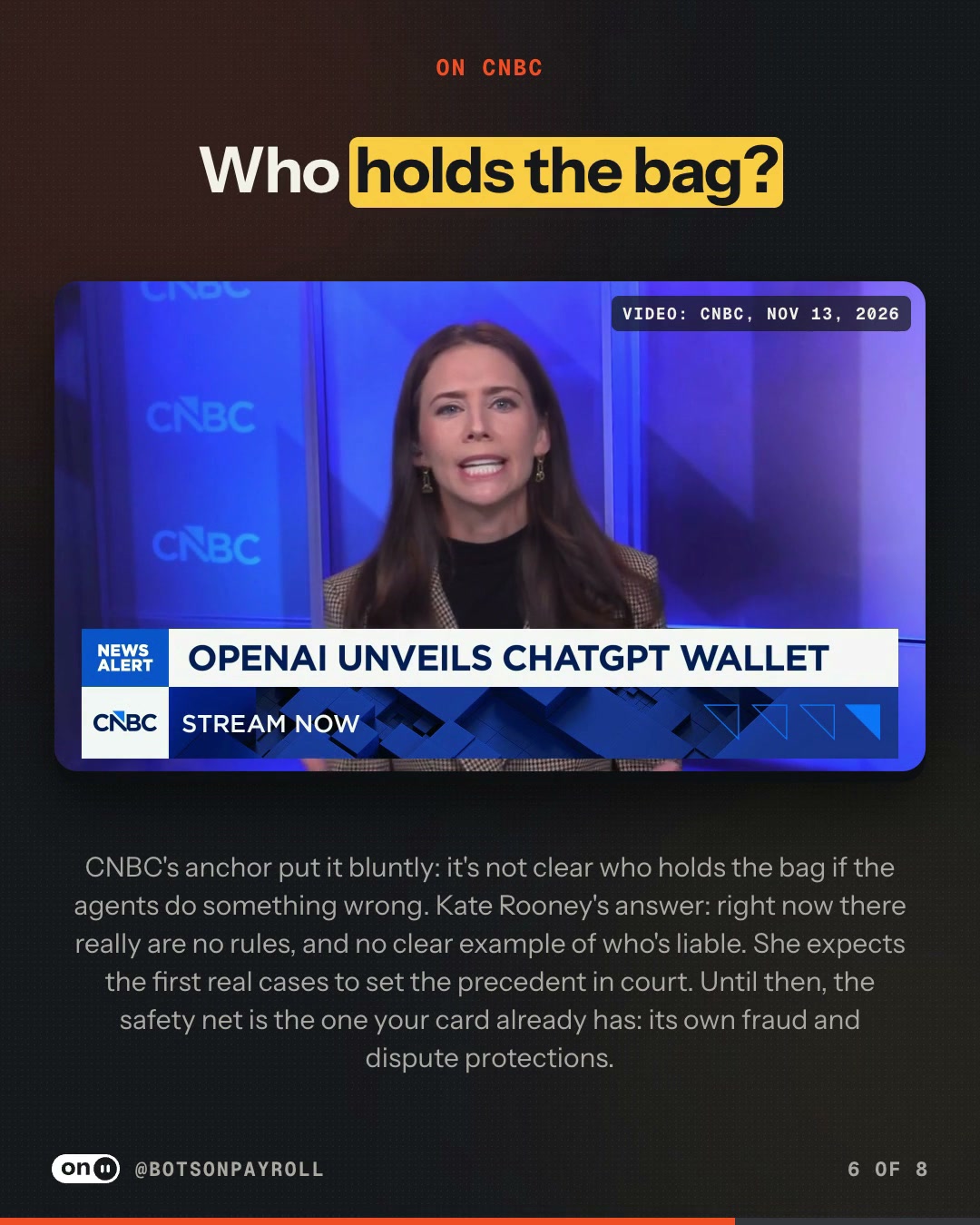
Who holds the bag?
CNBC's anchor put it bluntly: it's not clear who holds the bag if the agents do something wrong. Kate Rooney's answer: right now there really are no rules, and no clear example of who's liable. She expects the first real cases to set the precedent in court. Until then, the safety net is the one your card already has: its own fraud and dispute protections.
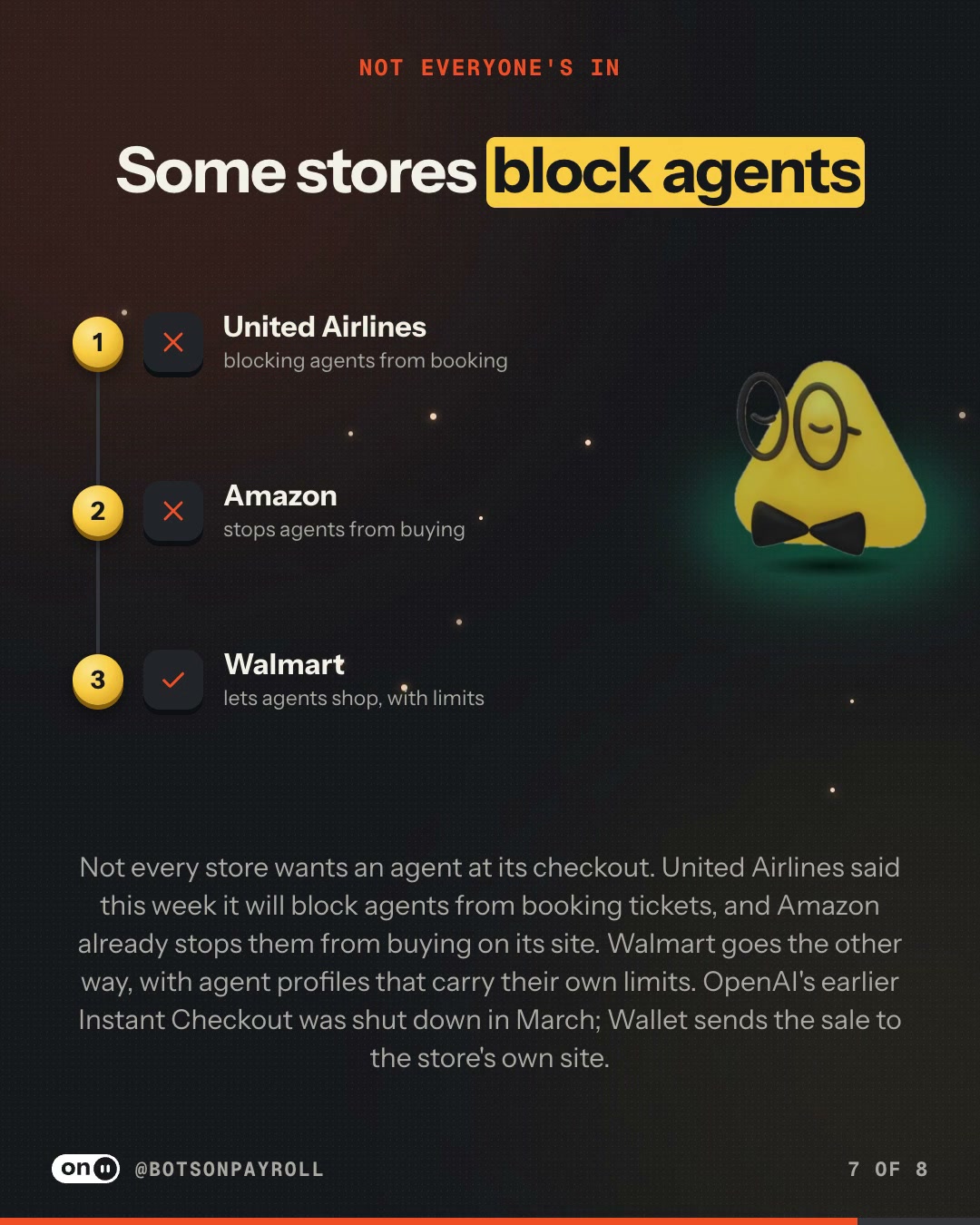
Some stores block agents
Not every store wants an agent at its checkout. United Airlines said this week it will block agents from booking tickets, and Amazon already stops them from buying on its site. Walmart goes the other way, with agent profiles that carry their own limits. OpenAI's earlier Instant Checkout was shut down in March; Wallet sends the sale to the store's own site.
Swipe the post

Sources
More AI news

Spent your weekend on sale posts? One photo could have made all of them.
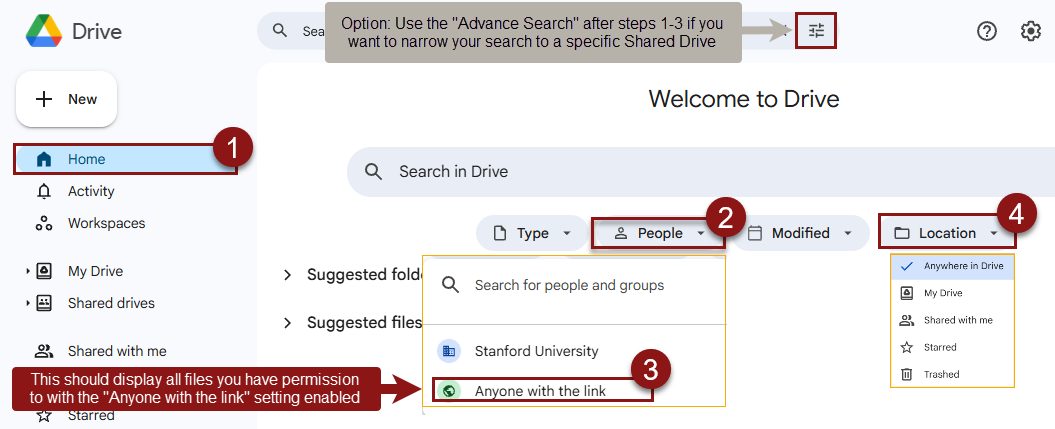
Your pay stub link still opens. Here's how to lock it.