SpaceX just caught a spaceship falling from orbit
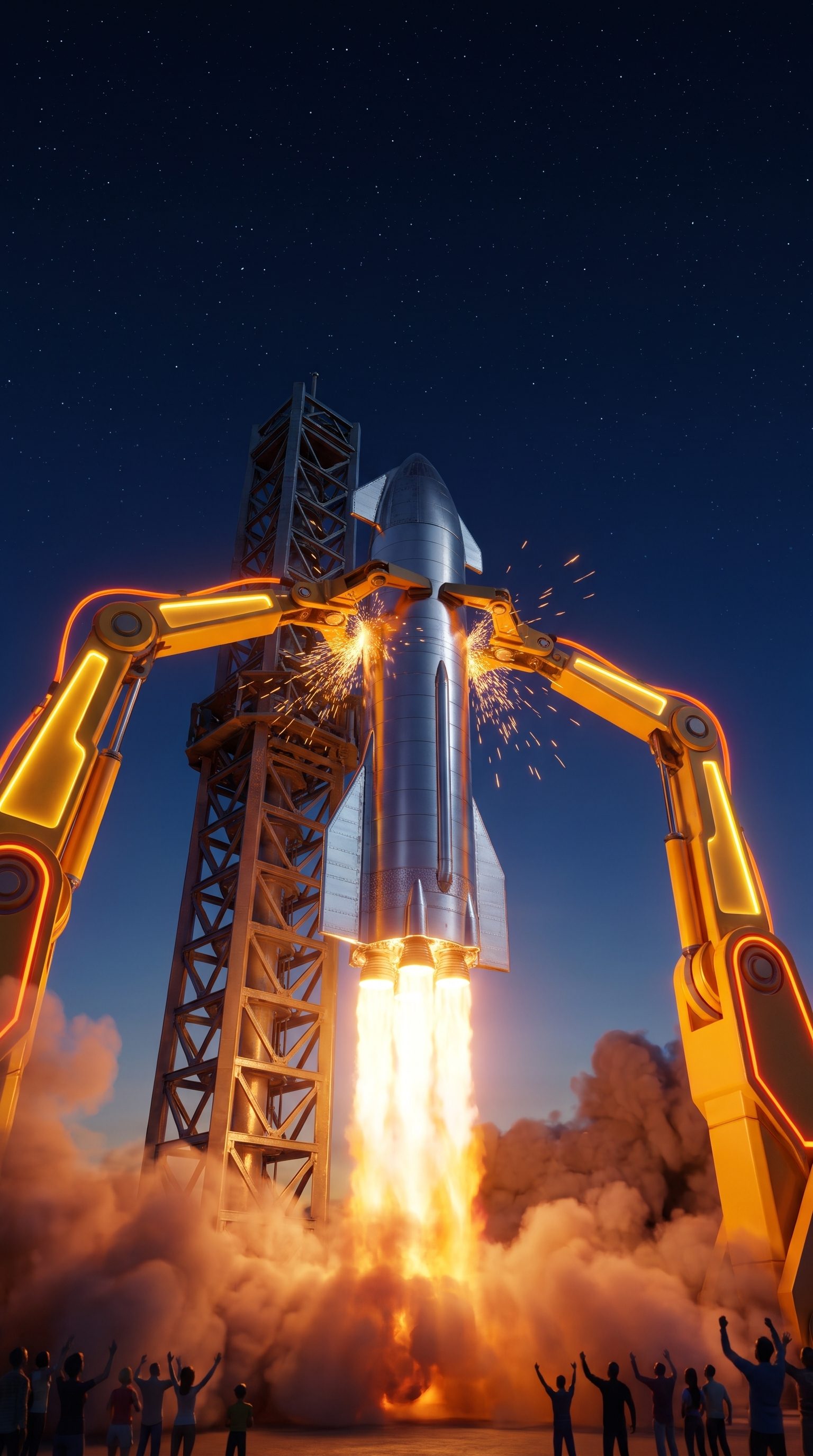
On Saturday, Nov 14, Starship's Ship 42 came back from about 14 trips around Earth and the launch tower's arms caught it out of the air at Starbase, Texas. It's the first time SpaceX has caught the upper stage after orbit; until now only the Super Heavy booster had been caught, three times since October 2024. Flight 15 launched Friday evening and dropped 26 Starlink satellites on the way. The other half didn't make it: the booster aborted its return after a low-fuel alarm and was destroyed over the Gulf of Mexico. Musk says that doesn't change the timeline, and NASA is counting on Starship to land astronauts on the Moon in 2028.
By Bots on Payroll, with 6 sources below
The short version
- On Saturday, Nov 14, SpaceX's Ship 42 fell back from orbit to Starbase, Texas.
- Flight 15 launched Friday, Nov 13, at 5:47 p.m.
- SpaceX first caught a Super Heavy booster with the tower in October 2024, and has done it three times.
- SpaceX planned to catch the booster too.
- NASA wants a Starship lander to put astronauts on the Moon in 2028, which needs many tanker flights refueling in orbit.
Watch the video
0:56, sound onSnatched out of the air
On Saturday, Nov 14, SpaceX's Ship 42 fell back from orbit to Starbase, Texas. It flipped upright, relit three of its six Raptor engines to slow almost to a hover, and the launch tower's two giant arms closed around it. It was the first time a Starship upper stage has come back from orbit and been caught. Every ship before it ended with a planned splashdown in the ocean.
A full day in orbit first
Flight 15 launched Friday, Nov 13, at 5:47 p.m. ET. The ship circled Earth about 14 times and came home about 22 and a half hours after liftoff. On the way it released 26 Starlink V3 satellites, all of them healthy, SpaceX says. Three of them carried cameras that photographed the ship's heat shield, and the tiles held up through reentry.
The ship, not just the booster
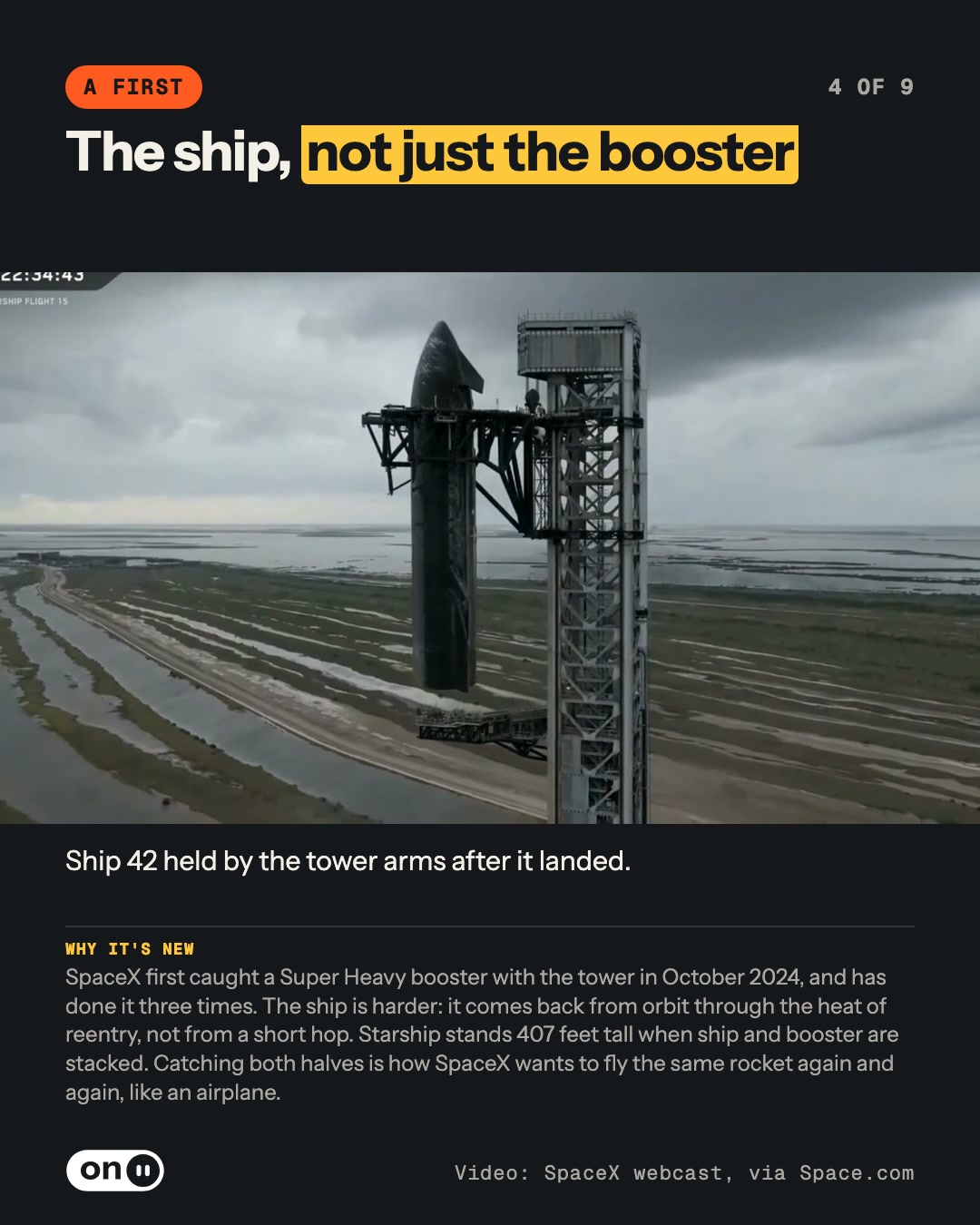
SpaceX first caught a Super Heavy booster with the tower in October 2024, and has done it three times. The ship is harder: it comes back from orbit through the heat of reentry, not from a short hop. Starship stands 407 feet tall when ship and booster are stacked. Catching both halves is how SpaceX wants to fly the same rocket again and again, like an airplane.
The booster never came home
SpaceX planned to catch the booster too. A low-fuel alarm cut Booster 22's boostback burn short, so it skipped the tower and was destroyed over the Gulf of Mexico. SpaceX first pointed to a guidance issue; Musk said the engines slightly underperformed. No written root cause has been published yet. Musk says the loss does not change SpaceX's timeline.
Next stop, the Moon
NASA wants a Starship lander to put astronauts on the Moon in 2028, which needs many tanker flights refueling in orbit. It's hedging with Blue Origin's Blue Moon lander, while Blue Origin's New Glenn rocket has been grounded since April. Musk says Flight 16 will try to fly a reused booster and ship. Would you watch a rocket land on a tower live?
Swipe the post







Sources
More AI news

Spent your weekend on sale posts? One photo could have made all of them.
Your pay stub link still opens. Here's how to lock it.