A MILLION AI DATA CENTERS OVER YOUR HEAD
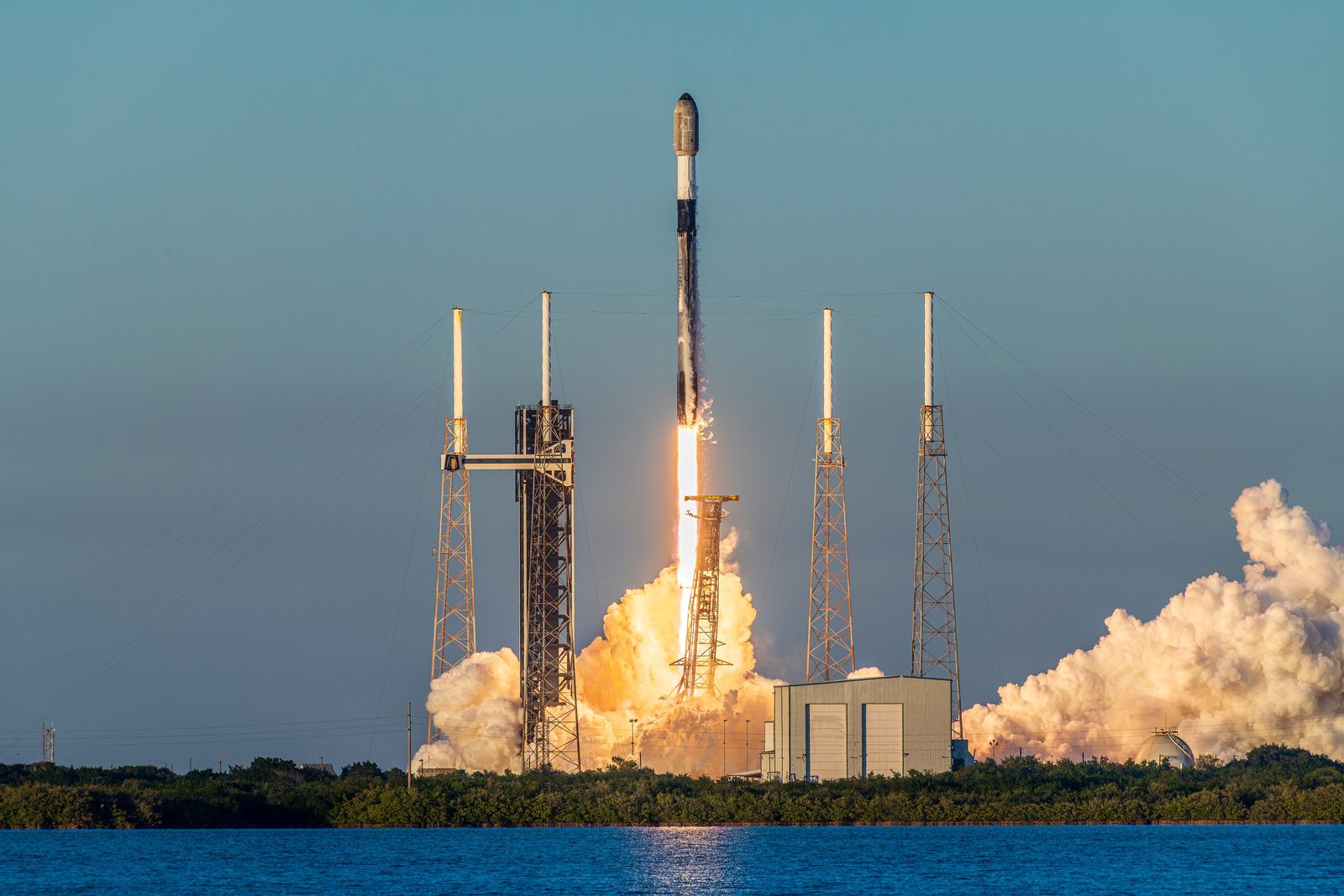
On Nov 25 the FCC's Space Bureau granted SpaceX's Starmind: up to 1,000,000 satellites that work as solar-powered computers for AI, linked by laser to Starlink. There are about 17,316 active satellites in orbit today. Amazon told the FCC it was "a lofty ambition rather than a real plan," Viasat objected, and the American Astronomical Society said it was "disheartened and dismayed." All three petitions were denied, and the order says the night sky falls outside FCC rules. It isn't a done deal: the plan for bringing old satellites down is still deferred, the first satellite is due by 2033, and CNBC reports SpaceX can't build these yet.
By Bots on Payroll, with 10 sources below
The short version
- The FCC said yes
- Computers that run on sunlight
- 58 times every satellite up there
Watch the video
0:56, sound onThe FCC said yes
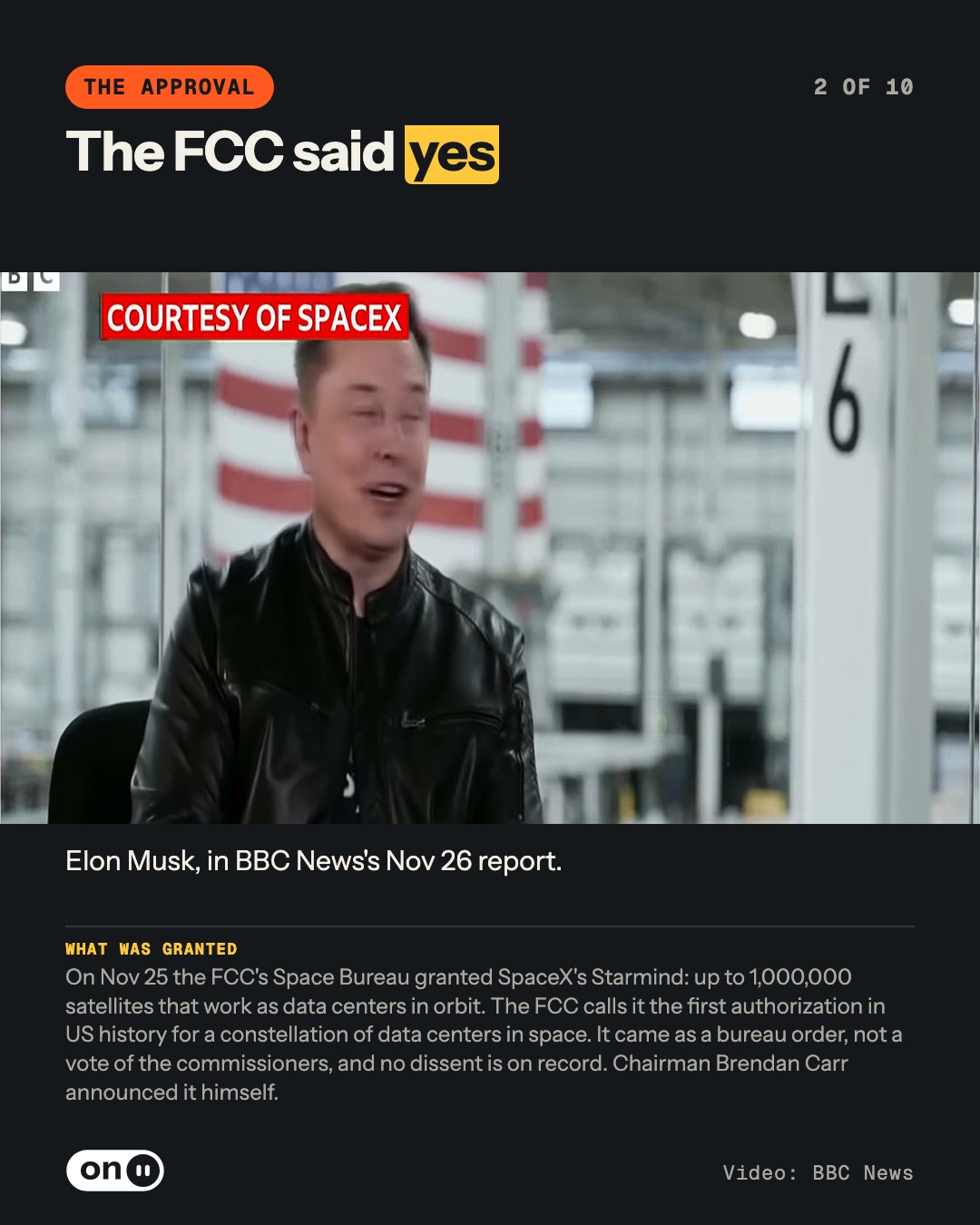
On Nov 25 the FCC's Space Bureau granted SpaceX's Starmind: up to 1,000,000 satellites that work as data centers in orbit. The FCC calls it the first authorization in US history for a constellation of data centers in space. It came as a bureau order, not a vote of the commissioners, and no dissent is on record. Chairman Brendan Carr announced it himself.
Computers that run on sunlight
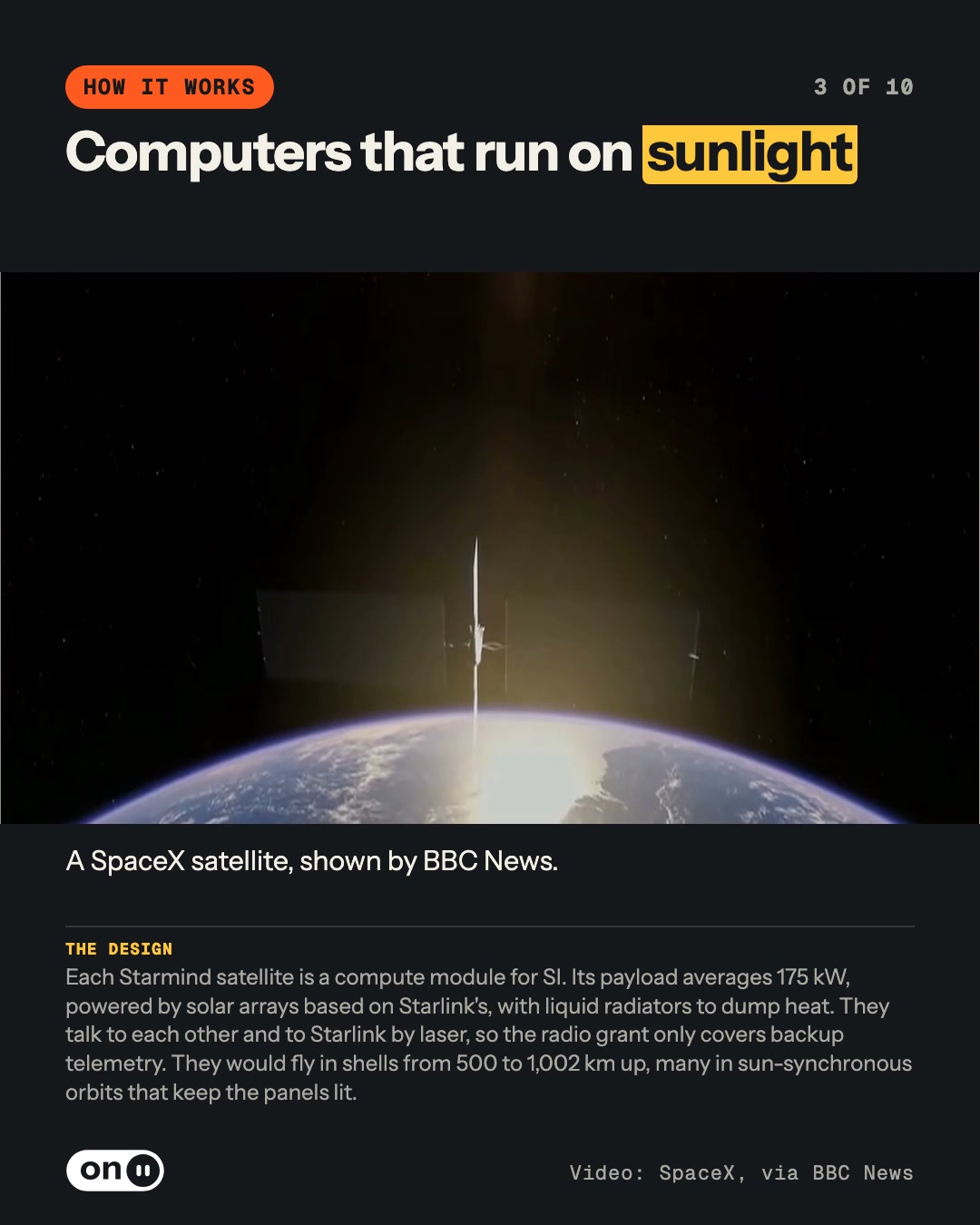
Each Starmind satellite is a compute module for AI. Its payload averages 175 kW, powered by solar arrays based on Starlink's, with liquid radiators to dump heat. They talk to each other and to Starlink by laser, so the radio grant only covers backup telemetry. They would fly in shells from 500 to 1,002 km up, many in sun-synchronous orbits that keep the panels lit.
58 times every satellite up there
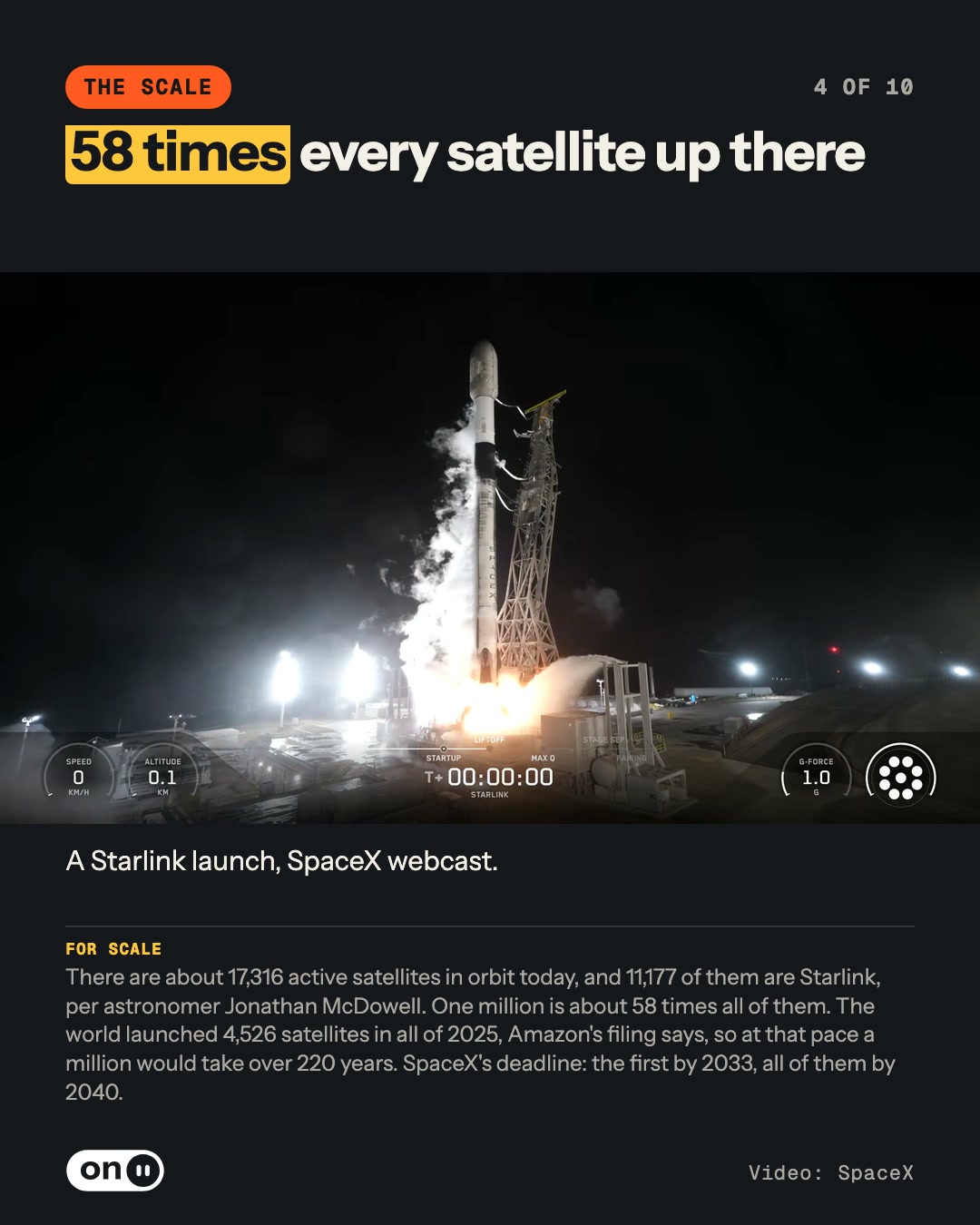
There are about 17,316 active satellites in orbit today, and 11,177 of them are Starlink, per astronomer Jonathan McDowell. One million is about 58 times all of them. The world launched 4,526 satellites in all of 2025, Amazon's filing says, so at that pace a million would take over 220 years. SpaceX's deadline: the first by 2033, all of them by 2040.
"A lofty ambition"
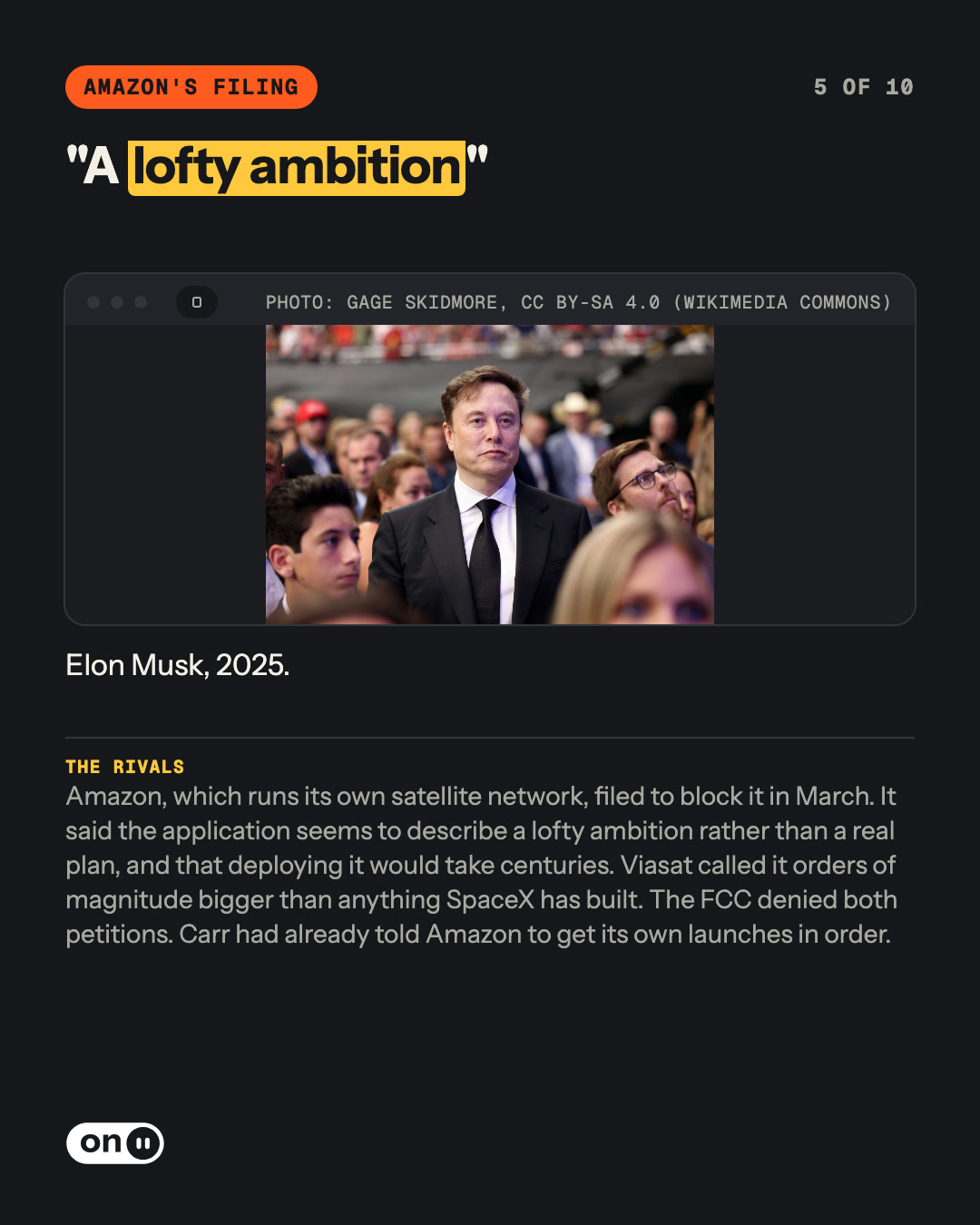
Amazon, which runs its own satellite network, filed to block it in March. It said the application seems to describe a lofty ambition rather than a real plan, and that deploying it would take centuries. Viasat called it orders of magnitude bigger than anything SpaceX has built. The FCC denied both petitions. Carr had already told Amazon to get its own launches in order.
More satellites than stars?
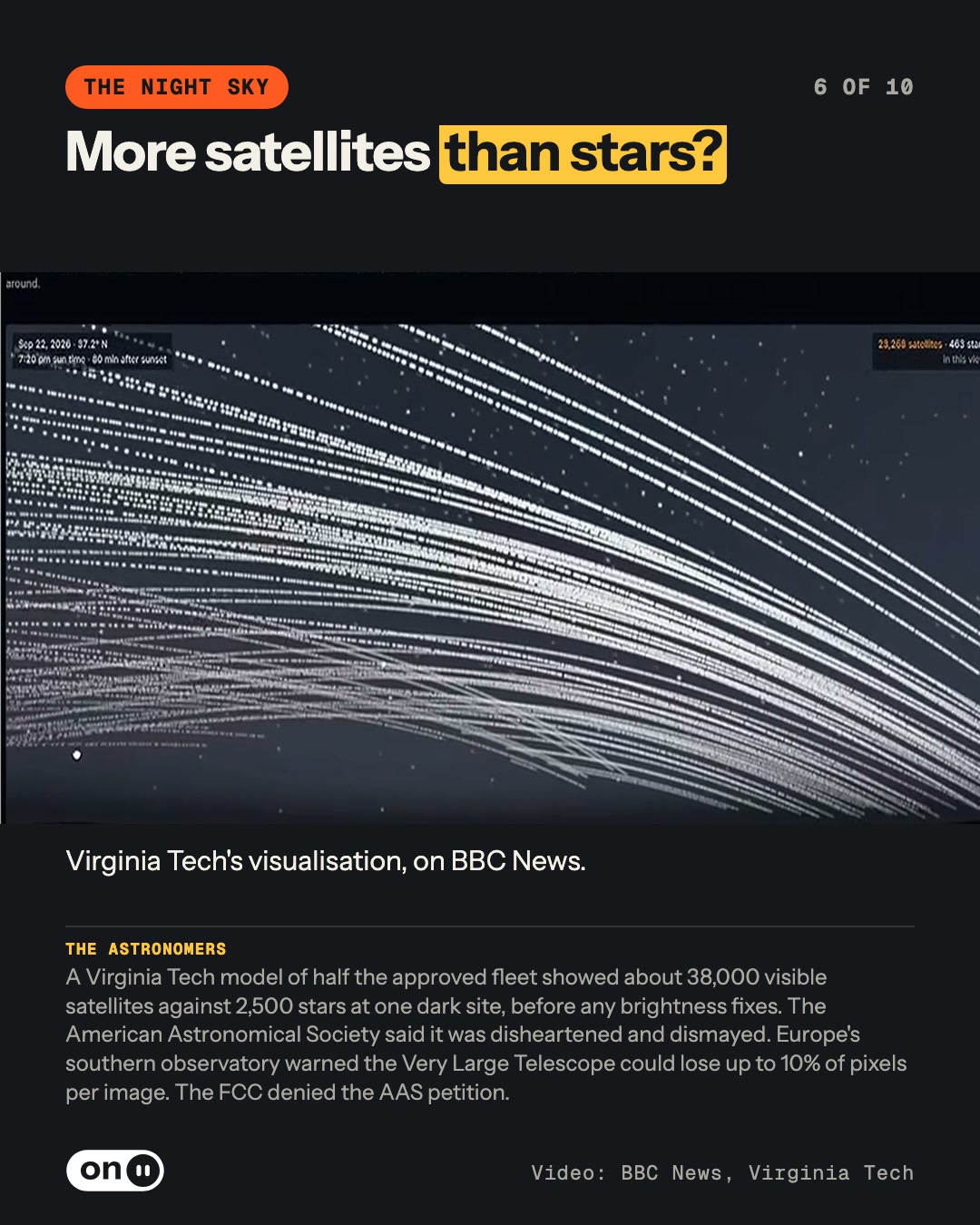
A Virginia Tech model of half the approved fleet showed about 38,000 visible satellites against 2,500 stars at one dark site, before any brightness fixes. The American Astronomical Society said it was disheartened and dismayed. Europe's southern observatory warned the Very Large Telescope could lose up to 10% of pixels per image. The FCC denied the AAS petition.
"The era of super intelligence"
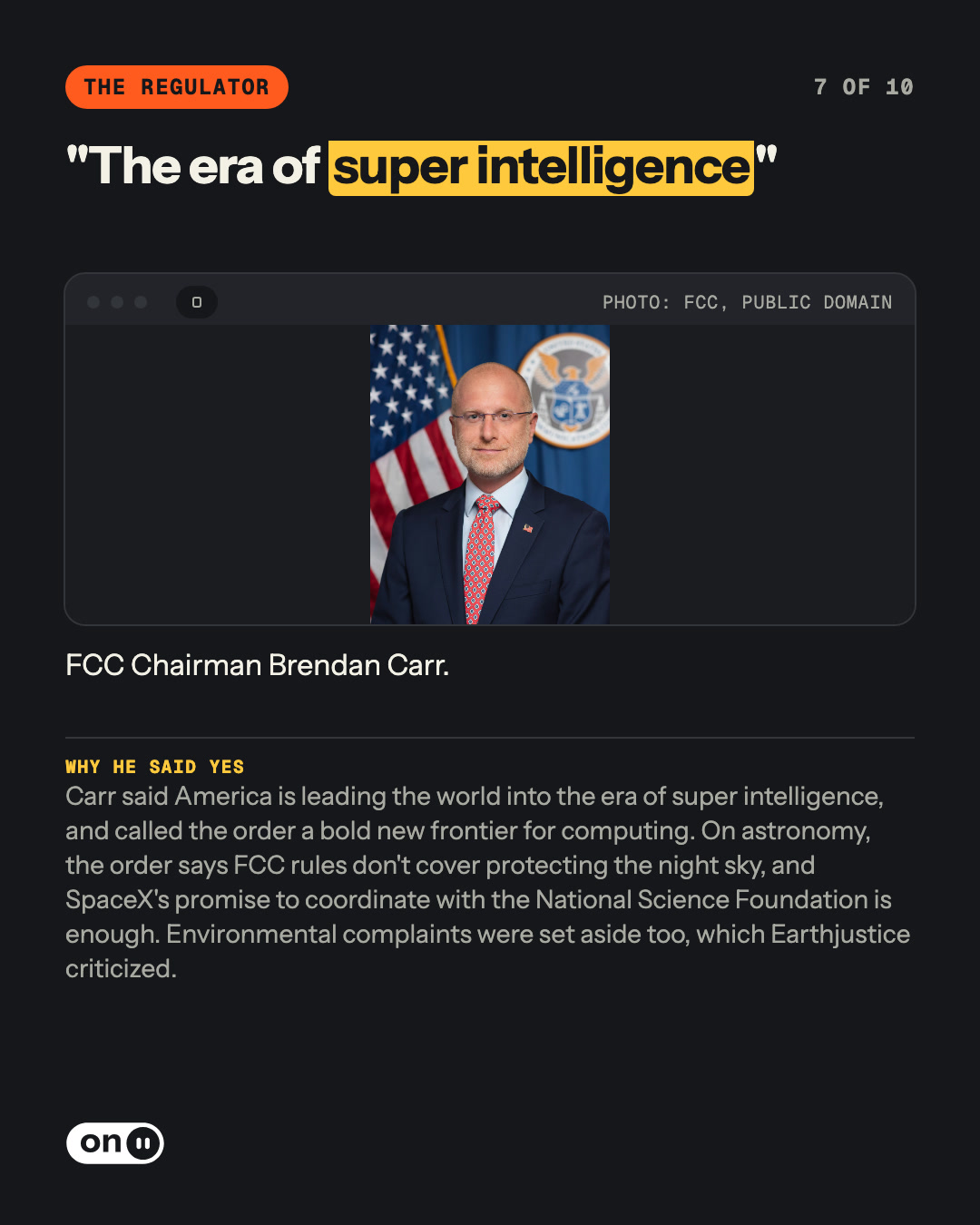
Carr said "America is leading the world into the era of super intelligence", and called the order a bold new frontier for computing. On astronomy, the order says FCC rules don't cover protecting the night sky, and SpaceX's promise to coordinate with the National Science Foundation is enough. Environmental complaints were set aside too, which Earthjustice criticized.
Approved, but not built
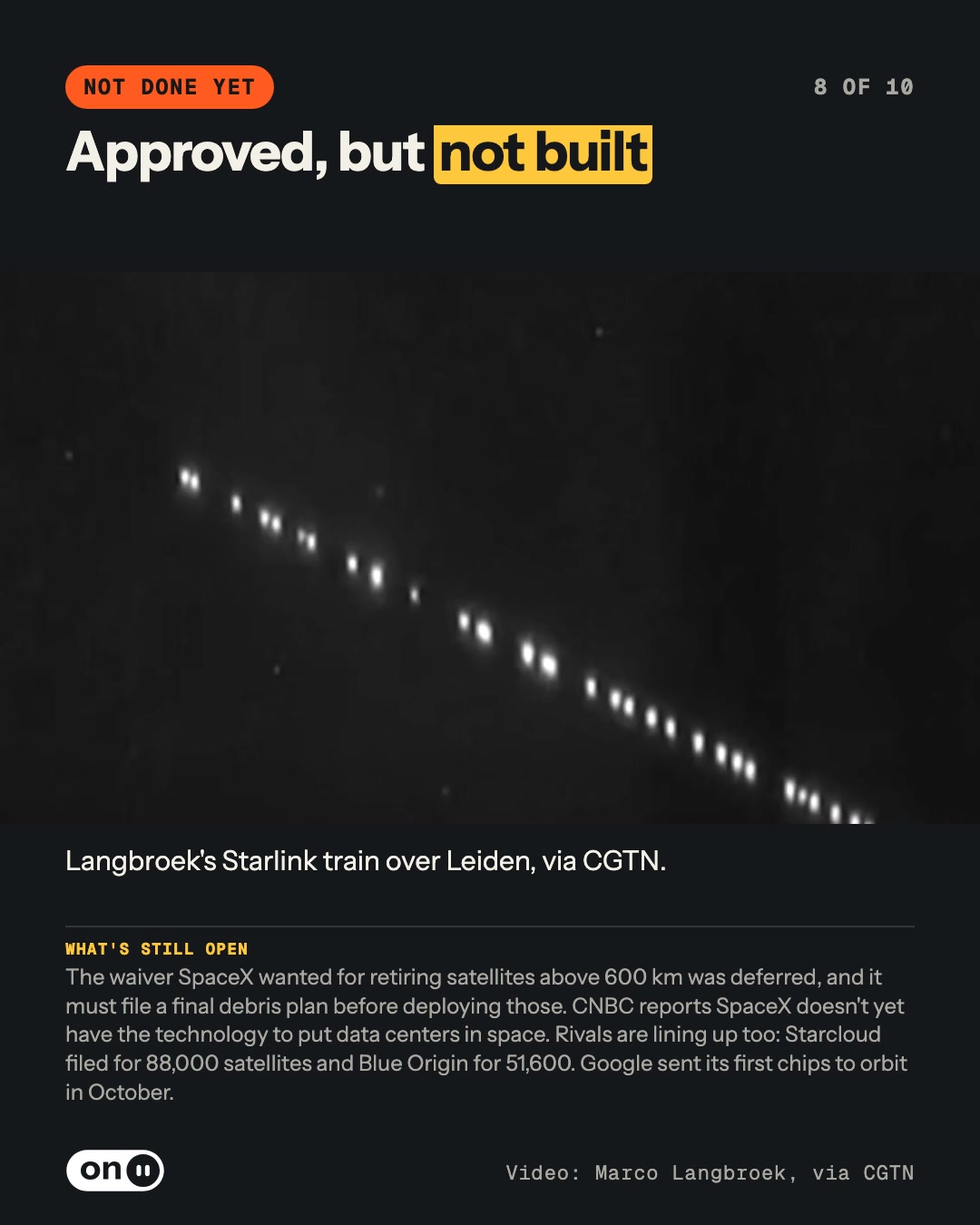
The waiver SpaceX wanted for retiring satellites above 600 km was deferred, and it must file a final debris plan before deploying those. CNBC reports SpaceX doesn't yet have the technology to put data centers in space. Rivals are lining up too: Starcloud filed for 88,000 satellites and Blue Origin for 51,600. Google sent its first chips to orbit in October.
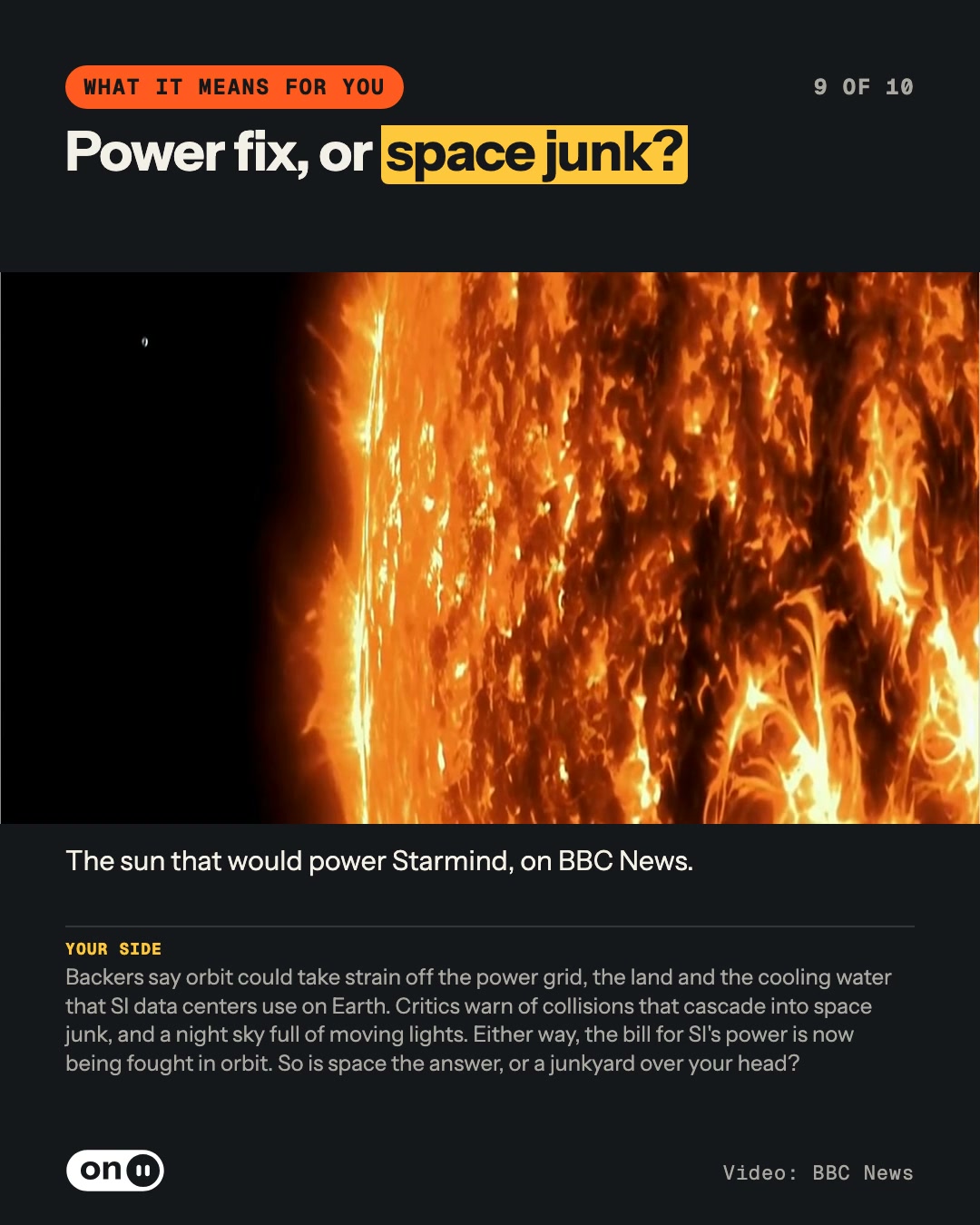
Power fix, or space junk?
Backers say orbit could take strain off the power grid, the land and the cooling water that AI data centers use on Earth. Critics warn of collisions that cascade into space junk, and a night sky full of moving lights. Either way, the bill for AI's power is now being fought in orbit. So is space the answer, or a junkyard over your head?
Swipe the post


Sources
More AI news

Spent your weekend on sale posts? One photo could have made all of them.
Your pay stub link still opens. Here's how to lock it.